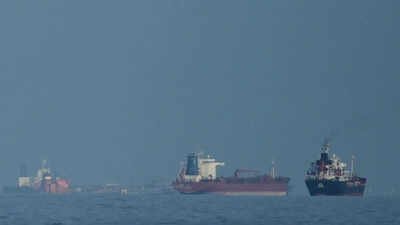
As tensions rise in Middle East and vessel safety in the Strait of Hormuz comes under renewed focus, the flag a ship flies has emerged as a key factor in maritime security, regulation and state protection.Flagging a vessel means it is registered with a country and must comply with that nation’s maritime laws and regulations. It also gives the flag state powers to investigate and penalise violations of domestic and international laws. Since regulations differ across countries, shipowners often choose jurisdictions that best suit operational and commercial needs, according to an ET report.An Indian-flagged vessel is a commercial ship registered with the Directorate General of Shipping and authorised to fly the national flag. Such vessels are governed by the Merchant Shipping Act and operate under Indian jurisdiction as a sovereign extension on the high seas.These ships are taxed by Indian authorities and must comply with Indian maritime safety, labour and environmental rules. To qualify for Indian flagging, vessels must come to domestic waters for registration and the owning company must be incorporated in India.Indian-flagged ships also receive strategic backing. India protects their interests through naval and diplomatic intervention when required. Experts say this creates a higher compliance burden than “Flag of Convenience” jurisdictions such as Panama and St Kitts.According to Rajeev Kumar Yadav, as quoted ET, director at Vertex Marine Services, Flag of Convenience systems allow vessels to be flagged from anywhere in the world within “3-4 days”.Indian-flagged ships calling at domestic ports can also benefit from lower port levies and tax liabilities, along with priority in government cargo movement and public sector charter contracts.During the Iran crisis, more than two dozen Indian ships were stranded west of the Strait of Hormuz after strict high-risk area classifications were imposed. The Indian Navy escorted several tankers to safety, though some vessels remain in the Persian Gulf.No direct attacks have been reported on Indian-flagged vessels so far, largely due to India’s balanced diplomatic approach in the crisis.However, being Indian-flagged does not give the government powers to decide freight rates or commercial destinations. The state’s role is limited to enforcing civil, criminal and regulatory laws onboard, along with international safety, environmental and labour compliance norms.India’s flagged fleet has been expanding. The Indian-flagged vessel fleet reached 14.2 million Gross Tonnage (GT) in March, with 92 vessels of 1.5 million GT joining during FY26.The long-term Maritime Amrit Kaal Vision 2047 aims to sharply raise India’s share of the global flagged fleet and increase utilisation of Indian-flagged ships from about 7 per cent currently to 30-40 per cent by 2047.