
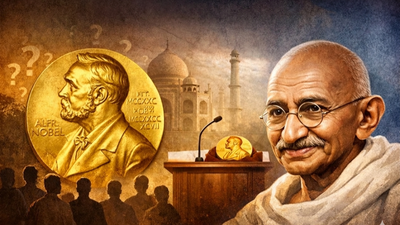
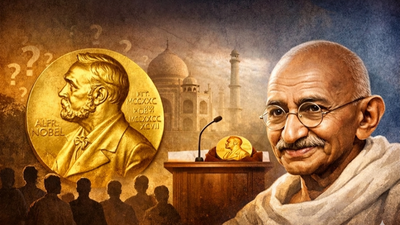
Almost 130 years after Alfred Nobel’s death, the prize named after him continues to be among the world’s most coveted honours, recognising extraordinary achievements in fields such as physics, chemistry, medicine, literature, peace, and economic sciences.A widely recounted, though sometimes disputed, story about the Swedish businessman, chemist, and inventor of dynamite suggests that the idea of the Nobel Prize may have been born out of an unusual moment of introspection. In 1888, a French newspaper mistakenly published Alfred Nobel’s obituary, confusing him with his deceased brother, and reportedly described him as the “merchant of death” who had made a fortune “by finding ways to kill more people faster than ever before.” Disturbed by the prospect of leaving behind such a legacy, Nobel is believed to have reconsidered how he wished to be remembered.When Alfred Nobel died in 1896 in San Remo, Italy, his will directed that the bulk of his fortune be used to establish prizes for those who had “conferred the greatest benefit to humankind.” Since 1901, the Nobel Prizes have been awarded annually by institutions such as the Royal Swedish Academy of Sciences, the Karolinska Institute, the Swedish Academy, and the Norwegian Nobel Committee.Yet, despite its long and celebrated association with intellectual excellence, India has seen relatively few Nobel laureates in recent decades. While individuals of Indian origin continue to appear on the global stage, the country itself has experienced long gaps between Nobel recognitions.
India’s history at Nobel stage
India’s first Nobel Prize was awarded in 1913 to Rabindranath Tagore for Literature. Rabindranath Tagore became the first Asian Nobel laureate, honoured for his “profoundly sensitive, fresh, and beautiful verse.” In science, C.V. Raman won the Physics Nobel Prize in 1930 for discovering the Raman Effect, a groundbreaking insight into light scattering.
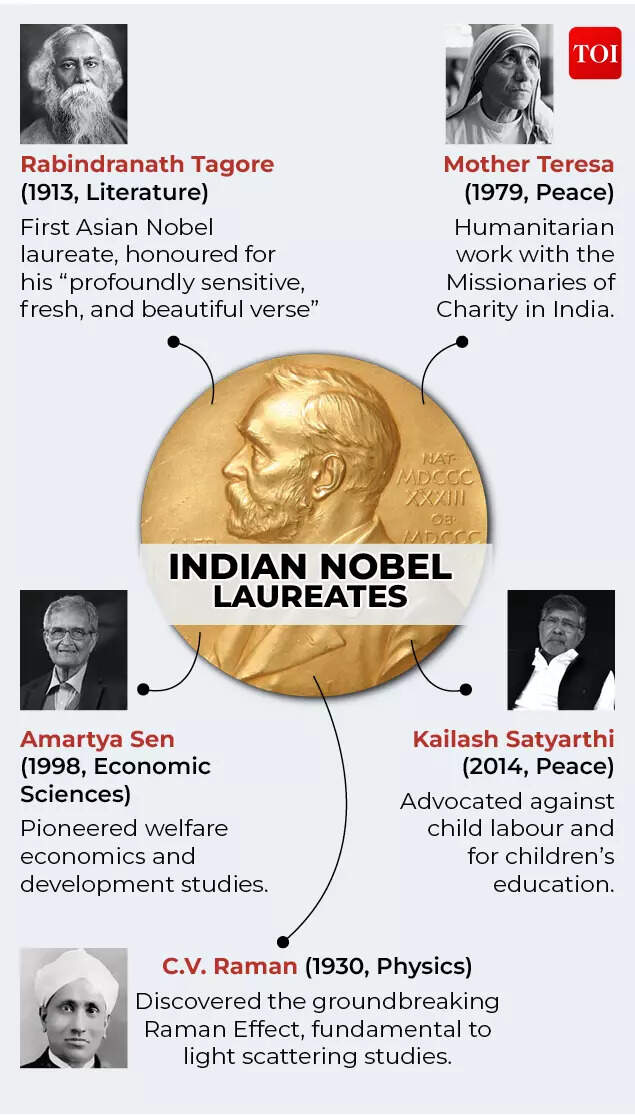
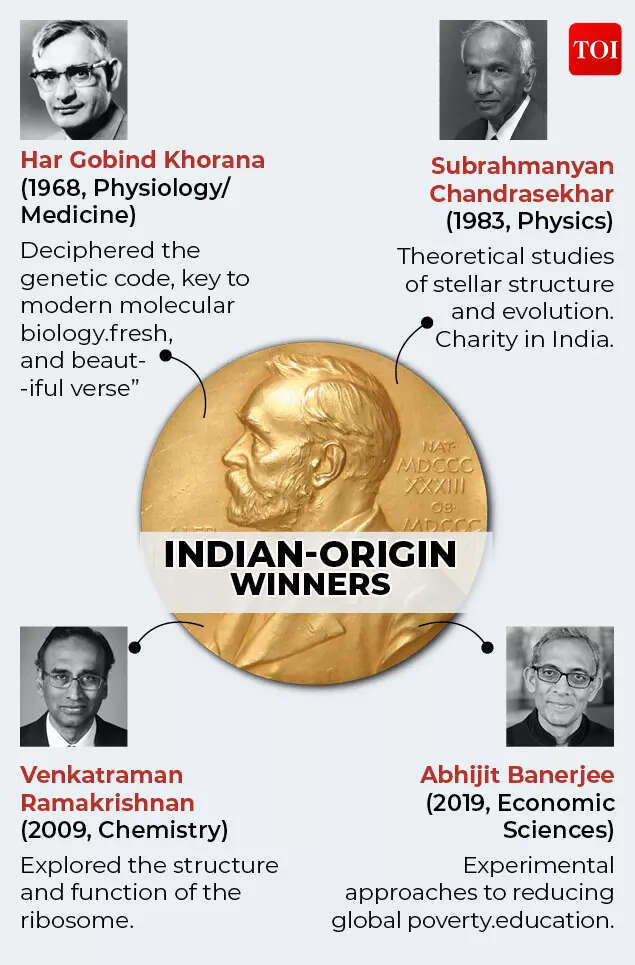
Hargobind Khorana (Physiology/Medicine, 1968), Venkatraman Ramakrishnan (Chemistry, 2009), and Kailash Satyarthi (Peace, 2014) are among other laureates who have brought global recognition to India. In addition, several Indian-origin scholars like Amartya Sen (Economics, 1998) and V.S. Naipaul (Literature, 2001) have been honoured for their contributions while affiliated abroad. Together, these achievements highlight India’s rich intellectual tradition.However, the intervals between such recognitions have often been long, prompting debate about the country’s research ecosystem, institutional support for fellowship, and the pathways through which groundbreaking work gains global visibility.
.
India’s last Nobel Prize in a science category was C.V. Raman in Physics, 1930. From 1930 to 2026, that makes it 96 years without a Nobel in Physics, Chemistry, or Physiology/Medicine.
Why Mahatma Gandhi remained the missing laureate – A case study
However, the prize seems to hold complex layers beyond recognizing achievement alone, as the story of Mahatma Gandhi illustrates. Widely revered as the most powerful symbol of non-violence in the 20th century, Gandhi pioneered satyagraha, a philosophy of peaceful resistance, first in South Africa and later during India’s struggle for independence.Mahatma Gandhi, affectionately known as Bapu, was nominated for the Nobel Peace Prize five times- in 1937, 1938, 1939, 1947, and shortly before his death in January 1948. Yet he was never selected for the recognition. Historians and Nobel scholars point to several reasons. Committee members admired him personally, but they were cautious about awarding the prize amid complex political conflicts, particularly the communal violence surrounding India’s partition. Some advisers questioned whether Gandhi’s efforts were primarily nationalist rather than universally applicable, while others interpreted statements he made in 1947 as less than strictly pacifist. Up to 1960, the Nobel Peace Prize was awarded almost exclusively to Europeans and Americans, and Mahatma Gandhi did not fit the traditional profile of laureates of that era.After his assassination, the Nobel Committee seriously considered a posthumous award, which was allowed under the rules at the time, but ultimately decided against it, citing that there was “no suitable living candidate.” Øyvind Tønnesson, Peace Editor from 1998–2000, wrote in his piece “Mahatma Gandhi: The Missing Laureate” that nobody had ever been awarded the Nobel Peace Prize posthumously. However, according to the statutes of the Nobel Foundation in force at that time, the prizes could, under certain circumstances, be awarded posthumously. This means it would have been possible to give Gandhi the prize.Mahatma Gandhi left no organization, property, or will, which complicated the practicalities of awarding the prize. Later, members of the committee publicly regretted his omission, and his legacy has often been invoked as a moral benchmark. When the Dalai Lama was awarded the Peace Prize in 1989, the committee chairman described it as “in part a tribute to the memory of Mahatma Gandhi.” Nelson Mandela also referred to Gandhi’s ideals as a guiding force in his own struggle against apartheid.
Why has India not produced frequent Nobel winners?
It is important to note that the absence of frequent Nobel wins does not necessarily translate into a lack of scientific or literary excellence or merit. However, it does raise a deeper and important question: why do some countries consistently produce Nobel laureates while others, despite immense intellectual potential, experience prolonged gaps?
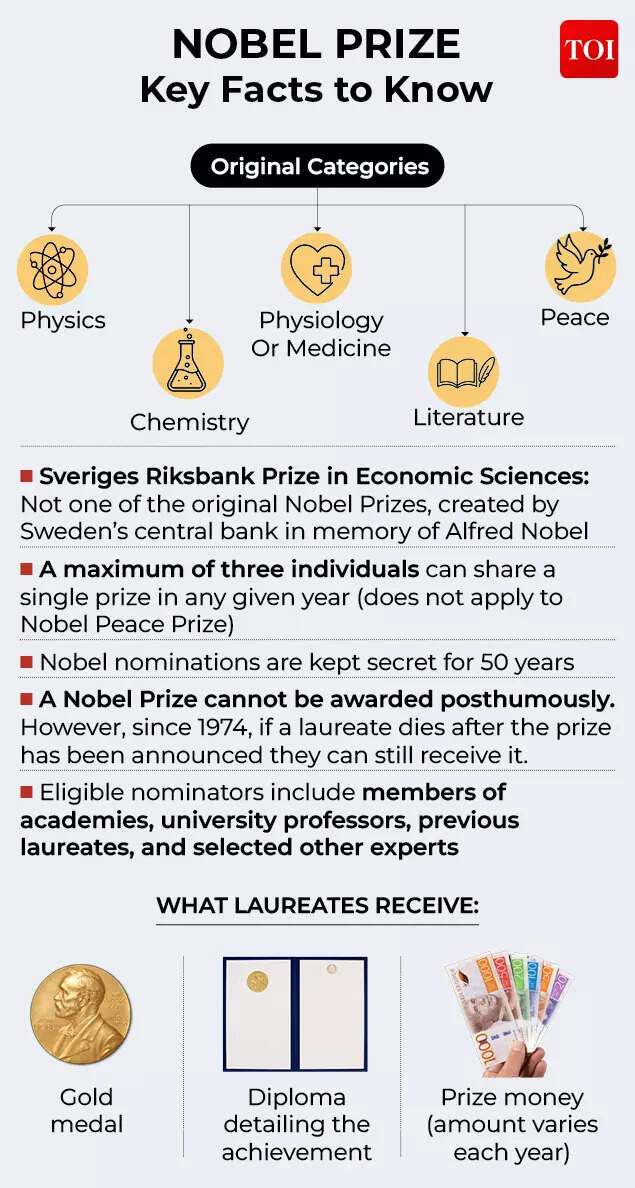
To understand this pattern, it is worth examining the structural, institutional, and cultural factors that may shape the journey from promising research to Nobel-winning discovery and external factors that might be at play. Nobel nominations are kept secret for years – The Norwegian Nobel Committee keeps all nominations confidential for 50 years, including details about who nominated them, how many people, and the names of all who were shortlisted. This means we often don’t know who was proposed or considered, making it impossible to judge how close India’s scholars or leaders came to winning in many cases. Mahatma Gandhi, for instance, was nominated multiple times before his death, but the public only came to know the details decades later from archival research.The Rule of Three – A Nobel Prize can be shared by up to three individuals, which excludes research teams, laboratories, or entire collaborative groups. Many groundbreaking discoveries can be the result of large team efforts, making it difficult to single out a few individuals as having made the highest contribution. As a result, many achievements by large research groups or think tanks may remain underrepresented. This is one reason why some major contributions from India or Indian-origin scientists may not have led to a Nobel Prize despite their significance. However, this rule does not apply to the Nobel Peace prize.
–
Brain drain – According to a 2024 study by A. Shaji George and Dr. T. Baskar on brain drain in India, many skilled professionals are leaving the country due to limited opportunities and better prospects abroad. India has seen a steady exodus of talented researchers and scientists, many leaving in search of better funding, modern labs, and opportunities to collaborate internationally. With R&D investment at only ~0.64% of GDP and a limited number of academic positions, talented individuals often face difficult choices between pursuing their research dreams or seeking stability abroad. Overseas institutions appear to provide greater resources, better fellowships, access to global networks, and recognition, which can be felt to some as hard to achieve at home. Strengthening domestic research support and infrastructure could help retain this talent, allowing India’s brightest minds to thrive while boosting the country’s global scientific impact.The social safety with conventional career options – Choosing research as a career in India often comes with institutional and social concerns. PhD scholars have reported facing limited job opportunities, uncertain career paths, and modest funding or fellowships. In addition, parental or societal pressure for more stable employment can weigh heavily. Researchers also experience pressure to publish for placement rather than long-term innovation, which can compromise the pursuit of groundbreaking work. These challenges create a perception of instability, influencing career choices and sometimes prompting talented individuals to pursue more conventional or secure paths in other fields.Historical trend: Euro-American dominanceUp to 1960, most Nobel Prizes were awarded to Europeans and Americans. Early breakthroughs in physics, chemistry, medicine, and literature were concentrated in Western institutions, while research from countries like India had limited access to international networks and global visibility. The Nobel Peace Prize during this period was almost exclusively awarded to Western laureates, frequently raising questions about whether the horizon of the Norwegian Nobel Committee was too narrow to recognize contributions from non-Western and post-colonial nations.Excessive focus on publicationsDespite being globally ranked 3rd in research publications, it is paradoxical that India has seen a long gap in Nobel recognitions. PhD scholars in India often report that the work culture prioritizes publications, particularly in high-impact journals, over long-term innovation. As Bhargav Jyoti Bora and Anshid, two PhD scholars in chemistry, told TOI:“Here, the work is mainly focused on the publication. People are looking for better impact factor journals so that they can get jobs. Otherwise, there is no option for placement.”This pressure to publish for career survival can limit the pursuit of novel or risky ideas, which are often the foundation of globally recognized research. He contrasts this with the approach of many Nobel laureates:“If you look at people who have got the Nobel Prize, their entire career is based on one topic, or several aspects of one topic. All their students work on similar topics, which helps them create novel or Nobel-worthy ideas” they added.This focus on immediate career needs often limits deep, long-term exploration of a single research area.Limited funding and R&D expenditureLimited funding and infrastructure remain major bottlenecks. Tushar Goyal, a JRF researcher at Jawaharlal Nehru University, said while speaking to TOI that these challenges continue to hinder high-quality research.“Without financial support, many scholars become dependent on part-time jobs and gigs to meet their basic needs. It hampers their academic focus and research quality. India’s R&D expenditure is approximately 0.64% of GDP, significantly lower than in many research-intensive economies.The Non-NET fellowship, which provides Rs 8,000 per month for PhD students in central universities, was last revised in 2012. Despite significant increases in the cost of living, the fellowship amount has remained unchanged for the last 14 years,” he added.Another factor contributing to India’s relatively low R&D spending is the limited participation of the private sector. According to a written reply to a parliamentary question in the Rajya Sabha in 2025 by Jitendra Singh, minister of state (independent charge) for science and technology, the private sector accounts for only about 36% of India’s Gross Expenditure on Research and Development (GERD), whereas in several advanced economies, private industry contributes over 70% of total R&D spending.Anshid, a PhD scholar in chemistry, adds that “It is very difficult for faculties, especially new ones, to get funding. The research infrastructure is minimal in universities or institutes. Students have to struggle to get access to instruments or labs, wasting valuable research time.”Other students often face similar frustrations, making it harder to complete ambitious projects or pursue high-impact research.Collaboration often driven by resourcesAnother issue that emerged from conversations with researchers is the nature of research collaborations. They further highlighted how research-based collaborations, which should ideally foster shared knowledge and innovation, are often pursued for material support instead. Bhargav Bora observes:“Most collaborations are not for knowledge or field similarity, or even for gaining insights. The main purpose is access to instruments and funding. Ideally, collaboration should help in better understanding the field, then it will be beneficial for a better idea.”This practical approach can limit intellectual exchange, which is often essential for groundbreaking discoveries.Career uncertainty and societal pressureResearch in India can often feel like a precarious career choice. Limited job opportunities and uncertain career paths make it difficult for young researchers to plan long-term.PhD scholars also opened up on the societal and parental expectations that favour more stable professions. “There is pressure to choose a secure job,” one scholar said, adding that many researchers feel compelled to prioritise publications for placements rather than pursuing long-term innovative work.Together, these factors contribute to a sense of instability within the research ecosystem, shaping career choices and sometimes pushing talented individuals toward more conventional career paths.Cinema, often called the mirror of society, has also explored how the lives of scientists intersect with institutional and social pressures. Films like Ek Doctor Ki Maut (1990), a masterpiece of parallel cinema, directed by Tapan Sinha, portray how groundbreaking research can be met with apathy, indifference, and sheer skepticism. The film follows Dr. Dipankar Roy (played by Pankaj Kapur), who discovers a cure for leprosy but is ridiculed by the medical association and the scientific community for his claim that, as a side effect, the vaccine could treat women’s infertility. Bureaucratic hurdles further stall his work, and his passionate devotion to the discovery comes at the cost of neglecting other aspects of his life. In the film, he has set up a lab within his own home, highlighting his obsessive devotion to research and how such dedication can blur the line between professional pursuit and personal life and how bureaucratic, social, and institutional pressures can stifle scientific inquiry and groundbreaking discoveries.Outdated coursework and limited global exposure Many PhD programs in India still rely on outdated coursework, which may not fully align with current global debates or modern research methodologies. Tushar Goyal, JRF researcher at JNU and media educator, highlights another challenge, “Limited opportunities for international exposure and collaborations restrict integration into global academic networks. Without such exposure, even high-quality research can remain under-recognized internationally.”Updating curricula and creating more pathways for international collaboration could help researchers gain skills, perspectives, and networks essential for achieving global visibility.The role of translation in global recognitionDitsa Mandal, a research scholar in Liberal Arts at IIT Hyderabad, observes that translation infrastructure also plays a crucial role in determining whether literary works gain global recognition. She notes, “Translation infrastructures are the most important criteria determining a work’s capability to travel—publishers willing to invest in certain kinds of works and languages, the presence of skilled translators, grants, representation in international book fairs, and academic promotion abroad all affect visibility. Literary works with limited translation funding may remain locally visible but not globally celebrated.”This insight underscores how structural support, not just literary merit, shapes the reach and recognition of works on the international stage.
Global recognition: How awards reflect research ecosystems
Awards like the Nobel Prize not only honor individual scholars but also signal the strength of a country’s research ecosystem. Tushar Goyal notes that such recognition lends credibility to both the researcher and their institution, reflecting long-term support, funding, and intellectual freedom. Factors like media coverage, translation, and international collaborations also play a critical role. Research published in widely accessible languages or circulated through global networks is more likely to be cited, discussed, and nominated for prestigious awards, highlighting the importance of international exposure and academic partnerships.
The road ahead
Who receives a Nobel Prize, and who does not, often remains a matter of speculation, as the Nobel Committee keeps nominations confidential for 50 years and many factors may shape the final decision. The decisions are complex and not always predictable. India’s journey with the Nobel Prize reflects a complex interplay of history, institutional structures, and global visibility. Yet it is not a story of failure; intellectual excellence continues to thrive through persistent inquiry, innovation, and resilience. From the literary contributions of Rabindranath Tagore to C. V. Raman’s discoveries on the scattering of light, India has produced thinkers whose work has had global impact. The country has long produced minds that have shaped global thought. Strengthening research ecosystems, maintaining robust scientific infrastructure, fostering meaningful collaboration, and valuing long-term dedication can help ensure that future Nobel-worthy discoveries reflect not only individual brilliance but also the country’s systemic strength on the global stage.