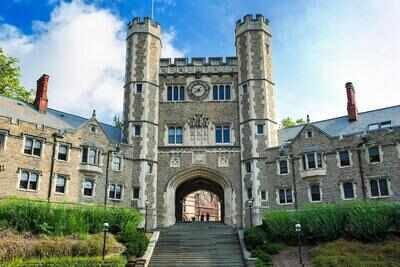
Faculty and administrators at Princeton University are reviewing a proposal that could require proctoring for all in-person examinations. If approved, the policy would mark a significant change from the university’s long tradition of unproctored exams under the Honor Code.According to The Daily Princetonian, the proposal could take effect as early as fall 2026.
Proposal enters faculty review process
The proposal was discussed during a meeting between Honor Committee leadership and Dean of the College Michael Gordin on February 25, 2026.Currently, only individual and small group examinations are proctored. Most in-person exams at Princeton take place without proctors. The practice has been part of the university’s Honor Code since it was introduced in 1893.Under this system, students pledge not to engage in academic dishonesty and agree to report any violations they witness.Gordin told The Daily Princetonian that any policy change would require formal approval through the faculty governance process.“The prohibition on proctoring is formalized in ‘Rules and Procedures of the Faculty.’ Any change to that policy would have to pass through the relevant committees and be voted on by the full faculty,” Gordin said in a statement, The Daily reports. He added that the review process has not yet begun and that the timeline remains uncertain.
Several stages before a final vote
According to Nadia Makuc, the proposal would pass through multiple stages of review involving both faculty and administrators before it reaches a faculty vote.Makuc said the process would involve four stages.She also said that the structure of Princeton’s Honor Constitution and the university’s Rights, Rules, and Responsibilities document does not require student approval for such a change.“Because of the way the Honor Constitution and Rights, Rules, and Responsibilities is written, there is actually no need for student approval,” Makuc wrote in a statement, The Daily reports. She added that the administration is still seeking student input.Student leadership groups, including the Undergraduate Student Government Academics Committee and the Honor Committee, have been consulted. However, these bodies do not have the authority to approve or block policy changes.
Earlier expansion of proctoring
An expansion of proctoring rules already took place earlier in the academic year.Makuc told The Daily Princetonian that in November faculty were instructed to proctor all individual and small group exams. This included make-up exams, exams taken by student athletes while traveling, and exams taken with disability accommodations.The Honor Committee itself is a student body that investigates and adjudicates alleged Honor Code violations.Honor Committee Chair Minh Truong said the policy will still go through several discussions before a vote.“The policy will be voted on by the faculty after other procedural processes, including extensive discussions between the Committee on Discipline and Faculty Advisory Committee on Policy,” Truong wrote in a statement to The Daily Princetonian.
Concerns about academic integrity
According to Makuc, the discussion around proctoring has been influenced by rising concerns about academic misconduct.She said recent changes in learning practices have increased pressure to reconsider the current system.“What we have right now maybe isn’t working,” Makuc told The Daily Princetonian, referring to an increase in reported cases of academic misconduct.She added that the use of artificial intelligence and other digital tools since the COVID period has changed academic practices and contributed to more reported violations.Truong said the proposal would mainly affect how faculty administer exams and how certain policies are written in university regulations.However, she added that the Honor Committee’s Constitution and procedures would remain unchanged.
Possible impact on investigations
If proctoring becomes mandatory, it could also affect how academic integrity cases are reviewed.William Aepli, co-chair of the Peer Representatives, said the organization could see changes in the type of evidence presented during investigations.Peer Representatives advise students accused of Honor Code violations.Aepli told The Daily Princetonian that more proctors in exam rooms could result in more eyewitness accounts during hearings.“There is a possibility that we could be working with more evidence than we previously would,” Aepli said.He also cautioned that testimony from faculty members should not automatically be treated as stronger than student testimony.“Just because someone comes from a position of authority doesn’t mean their word is 100 percent accurate,” Aepli said.
Questions about implementation remain
Even if the proposal is approved by fall 2026, several logistical questions remain unresolved.These include who would serve as proctors, how proctoring would be standardized across departments, and how many proctors would be required per class.Makuc said discussions about proctoring have taken place for several years.“This has been a conversation since my freshman year,” she told The Daily Princetonian. She added that the current stage of the discussion includes gathering student opinion on whether the university should move forward with the policy.