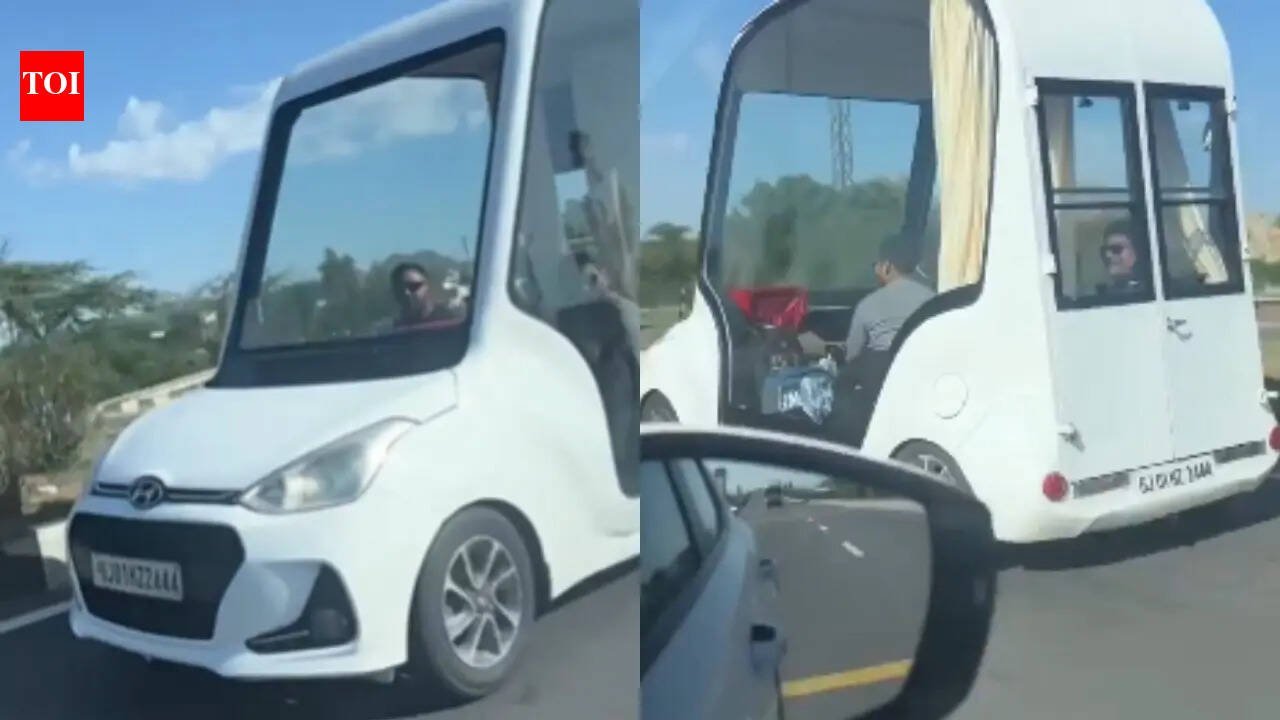
A modified Hyundai Grand i10 from Gujarat has gone viral, and it’s easy to see why. In a video doing the rounds on Instagram, the small hatchback looks completely different from what we’re used to. The biggest change is the roof. It has been raised quite a bit, giving the car a tall, almost boxy stance.Look closer, and you’ll notice how much higher the roof sits. But the result is quite dramatic. The Grand i10 now looks taller and more upright, almost like a mini van or a stretched-out cart. Social media, of course, is having fun with it. Many users are calling it a “mini flat” Inside is where this change probably makes the most sense. More height means more space, especially for passengers at the back. It looks like the focus here was comfort. The cabin seems roomier, and the seating appears to be set up for a more relaxed experience compared to the stock car.
Are these kinds of modifications safe and legal in India?
Are these kinds of mods safe or even allowed? That’s where things get tricky. Changing something like the roof isn’t a small job. It affects the car’s original structure, which can have an impact on safety and how the car behaves in a crash. In India, such modifications fall under the Motor Vehicles Act. Structural changes usually need proper approvals. Some builds can be legal if everything is certified, but not all of them meet the rules.
There are other concerns too. A taller car can feel different to drive. The centre of gravity changes, which may affect balance and stability, especially at speed. Then there’s insurance. If the modification isn’t approved, getting a claim cleared could become difficult.For context, this build is based on the older Grand i10. It came with a 1.2-litre petrol engine making 83 bhp and 114 Nm, and a 1.1-litre diesel with up to 190 Nm. Both had a 5-speed manual gearbox, while the petrol also offered a 4-speed automatic. Today, Hyundai Grand i10 NIOS is the version you’ll find on sale in India.