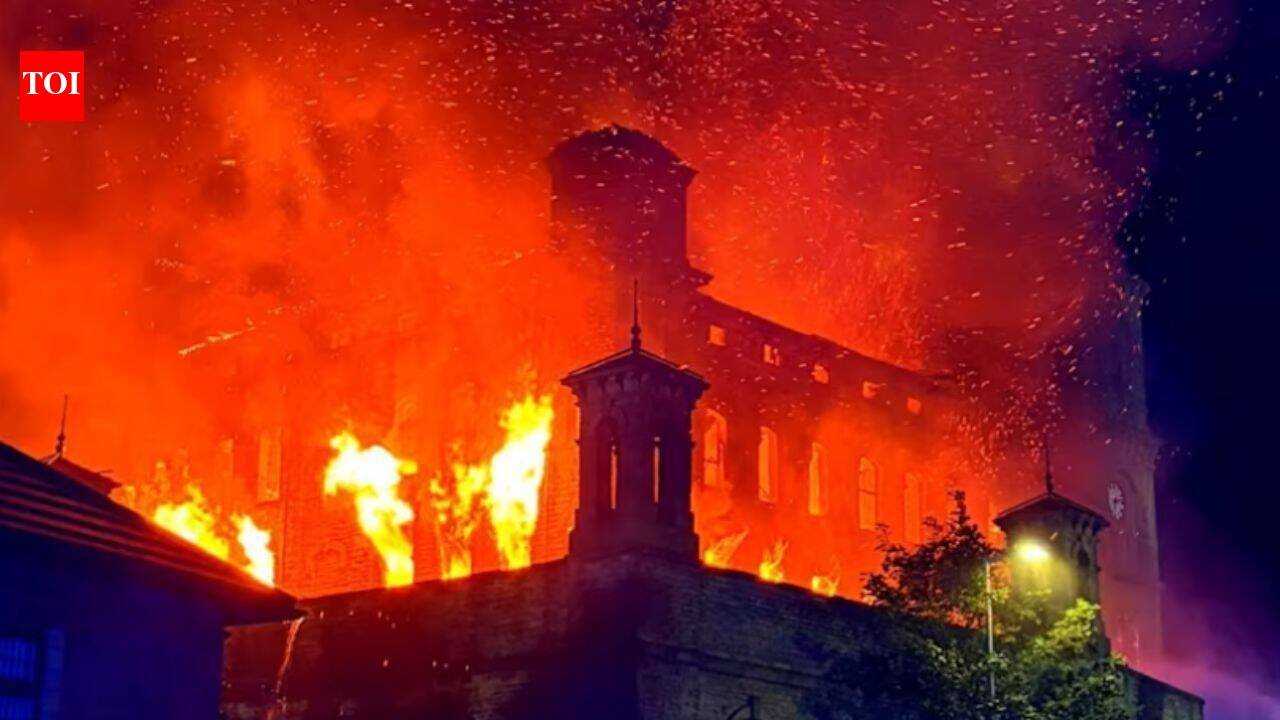
Dalton Mills in Keighley has lived several lives. Built as a Victorian textile complex, it once employed more than 2,000 people and helped drive the town’s industrial growth. Decades later, its empty rooms found a new audience as filming locations for productions including Peaky Blinders and Downton Abbey. Now the Grade II listed site is again at the centre of public attention after a large fire broke out on Saturday evening, 12 September 2026. Twelve fire engines were sent to the scene, nearby residents were evacuated and roads were closed while crews worked through the night. As reported by ITV News, the fire was brought under control by Sunday morning, but the latest incident has renewed concern about the future of a historic building already damaged by previous fires.
From industrial powerhouse to landmark
Dalton Mills was built during the height of Yorkshire’s textile industry. Keighley and surrounding towns were shaped by mills that processed wool, manufactured cloth and employed thousands of local people. The buildings were not merely workplaces. They influenced housing, transport, family life and the economic identity of entire communities. At its peak, Dalton Mills employed more than 2,000 people. Workers arrived each day to operate machinery, move raw materials and produce textiles for domestic and international markets. The complex formed part of the industrial network that made West Yorkshire one of the world’s most important manufacturing regions. The mill’s scale reflected the confidence of the Victorian era. Large brick buildings, tall windows and industrial machinery were designed for production rather than decoration. But the architecture lived on as a visual record of people and industries that once powered the region.With the decline of textile manufacturing, the building lost its original purpose. Like many former mills, it faced an uncertain future. Some spaces were repurposed for new uses while other parts remained empty and at risk of neglect. Dalton Mills would later gain a second identity as a filming location, a new life on screen. Its industrial interiors and weathered brickwork provided filmmakers with an authentic period setting without the need to build elaborate sets.The site appeared in Peaky Blinders, the television drama about a Birmingham gang operating after the First World War. The mill’s dark industrial spaces suited the show’s atmosphere and helped create the visual world of warehouses, factories and illicit businesses. It also featured in Downton Abbey, including the 2019 film, which used the former mill as the setting for an underground jazz club. The contrast was striking. A building originally created for textile production became a backdrop for fictional worlds separated by decades and social circumstances. The appearances introduced Dalton Mills to audiences far beyond Keighley. People who had never visited the town recognised the building through television and film. The site became a cultural landmark as well as a piece of industrial heritage. However, fame did not solve the building’s practical problems. A historic complex requires security, maintenance and investment, especially when it is vacant or only partly occupied.
The latest fire
Emergency services were called to Dalton Mills at approximately 8pm on Saturday 12 September 2026 after a large fire was reported. At one stage, 12 fire engines were at the scene. West Yorkshire Fire and Rescue Service worked through the nite to contain the blaze and prevent it from spreading, reports said. Because of the severity of the incident, some nearby residents were evacuated. Police closed Dalton Lane and advised people to avoid the area while crews operated. Residents in the vicinity were also told to keep doors and windows closed because of the smoke. By Sunday morning, the situation had been brought under control, although two fire engines remained at the site. The full extent of the damage and the cause of the fire were still being investigated.The response showed the scale of the challenge posed by derelict industrial buildings. Open space sizes, damaged roofs and combustible materials can compromise access for firefighters. Hidden voids in historic structures can allow fire to travel behind walls or floors. A pattern of recurring fires The fire of 2026 was just the latest blow for Dalton Mills. A devastating fire in March 2022 led to arson charges against two teenagers, followed by another outbreak in July 2025 that brought twelve fire crews rushing to the scene .Every fire further cripples restoration efforts at the historic site, and drives up costs exponentially. Heat, smoke and water continually degrade structural brickwork, rot timbers, and destroy original architectural details. And beyond the physical destruction, the repeated pattern has left nearby residents nervous and frustrated. One fire is a tragedy, repeated fires are a chronic failure to secure and safeguard the property. Now, local neighbors and heritage campaigners are demanding urgent action before the historic mill is lost for good.
Why Grade II listing matters
Dalton Mills is a Grade II listed building, meaning it is recognised as having special architectural or historic interest. The listing recognises the building’s importance as an example of Victorian industrial heritage. A listed status does not protect a building from fire or guarantee it will be restored. It does mean, however, that demolition and alteration are limited. Owners and authorities planning for repair or redevelopment need to take into account the building’s historic importance. Listing can also make restoration more difficult, requiring a balance to be struck between the need to meet modern safety, accessibility and commercial criteria and the preservation of original materials and features. But it also recognises that the building has value in its own right, beyond its commercial use. Dalton Mills tells the story of labour, manufacturing and community development in Keighley. Its significance lies not only in its brick walls but also in the people who worked there and the industries that shaped their lives.
Calls to secure the site
After the latest fire, concerns about security became more urgent. The Keighley Civic Society and fire chiefs have called for action to secure the building and reduce the risk of further incidents. Securing a complex as large as Dalton Mills is not simple. Openings must be sealed, fences repaired and access points monitored. Temporary measures may prevent trespassing, but long-term protection requires a viable plan for the site. A building that remains empty for years is difficult to defend against vandalism, accidental fires and deliberate acts. Restoration costs can discourage investors, particularly when the scale of the work is uncertain. At the same time, every delay may increase the damage and make future redevelopment more expensive. Some former mills have been converted into apartments, offices, studios, restaurants or cultural spaces. Others have become museums or mixed-use developments. Dalton Mills could potentially support a new purpose, but the latest fire may limit the options available.
The challenge of preserving industrial heritage
Across Britain, historic mills face similar pressures. Their large footprint and strong structures make them attractive for redevelopment but their age and condition present significant financial hurdles. Preservation is more than simply keeping a building standing. It involves deciding how the site can serve modern needs without losing the features that make it historically valuable. That may include retaining machinery, original windows, loading bays, roof structures and evidence of workers’ routines. For Dalton Mills, the industrial past remains part of its appeal. Filming companies have used the atmosphere created by the old spaces, but a sustainable future would require more than occasional production work. The building needs regular occupation, income and maintenance. The mill’s future may depend on cooperation between owners, local authorities, heritage organisations, investors and the community. Each group brings different priorities, but the immediate need is shared: prevent further deterioration and establish a clear plan.
A building remembered in different ways
Older residents may remember Dalton Mills as a place of work, while younger visitors know it through television. Both connections are valid. The mill’s history includes the ordinary lives of workers as well as the fictional characters later created inside its walls. A place can carry several meanings at once. It can be a symbol of industrial hardship, a source of local pride, a valuable filming location and a dangerous derelict site. Those meanings sometimes conflict, but together they explain why the building remains important. The 2026 fire has made the risks impossible to ignore. A structure that survived industrial decline, changing technology and decades of uncertainty may not survive repeated neglect and fire without intervention. For Keighley, the question is not simply whether Dalton Mills can be restored. It is whether its history can be given a future that is practical, safe and worthy of its importance.
What happens next
Fire investigators will continue examining the cause of the blaze and assessing the damage. Structural engineers will have to figure out what’s safe, and heritage experts will decide what can be restored or preserved. In the short term, the focus will be to secure the site and protect area residents and emergency crews. In the longer term, the owner and authorities will need to decide whether restoration, partial redevelopment or another solution is possible. Dalton Mills has already survived one major transition, from working textile factory to cultural and filming landmark. Its next chapter will depend on whether the community can move quickly enough to protect what remains. The flames may have been brought under control, but the larger emergency continues. A historic building that once employed more than 2,000 people is now waiting for a new purpose, and every delay increases the risk that its industrial story will survive only in photographs and television scenes.