A Canadian couple argued that an old access agreement let them drive across a developer’s land to reach their lakeside home, but a British Columbia court ruled against them on a key part of their case, deciding that the disputed stretch of road was not covered by the agreement. The fight centered on a vacation property next to Upper Arrow Lake in British Columbia, where Jeno and Luminita Fabian said they had the right to use a road that ran across land owned by property developer Halcyon Point Development ULC.On 25 November 2026, the Supreme Court of British Columbia ruled that an easement registered in 1997 did not give the couple the right to use the disputed land north of their house, and it also turned down their backup request for a statutory easement over that land. In her ruling, Justice Lyster found that the agreement covered only the road that existed when the easement was granted, and the evidence did not show that the northern section was part of that road in 1997. The ruling, reported in Halcyon Point Development ULC v. Fabian, 2026 BCSC 2289, settles how to read the access agreement while leaving other claims between the neighbours to be handled later in separate proceedings.
How the access agreement became a legal dispute
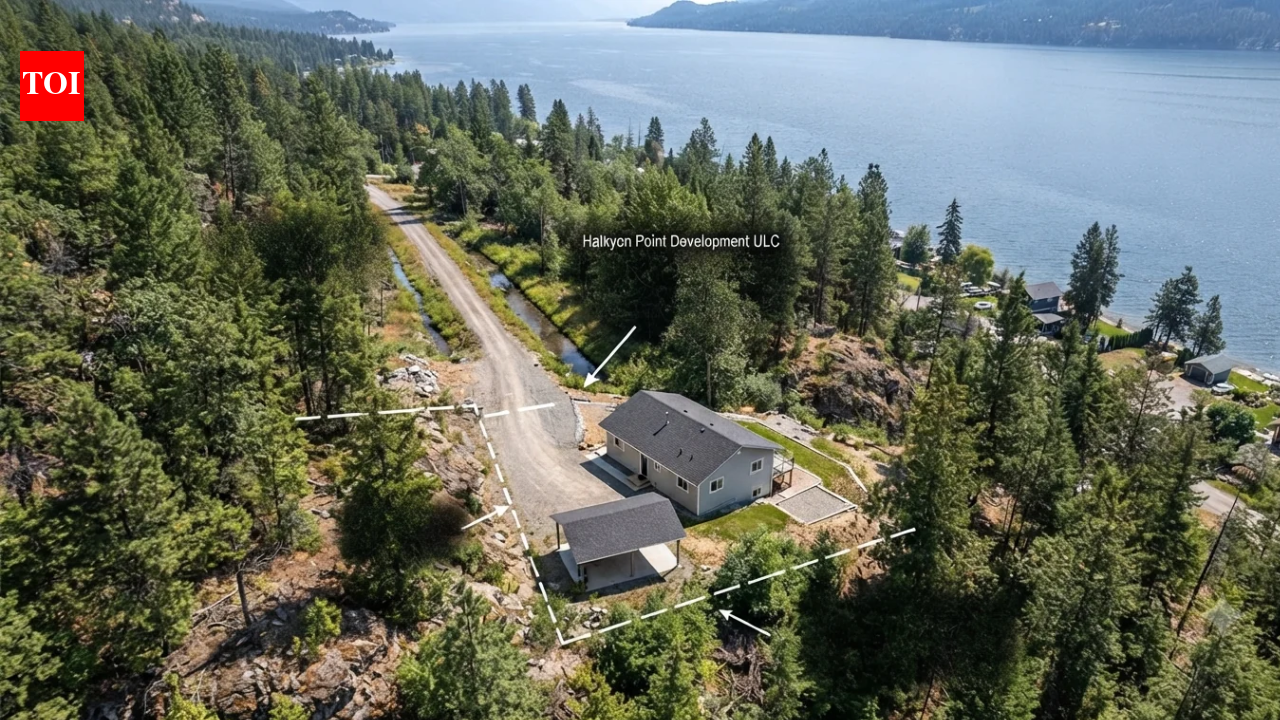
Halcyon owns a 16.31-acre property called District Lot 2683 on the east side of Upper Arrow Lake, while the Fabians own a neighbouring vacation property, Lot 4, of about 0.52 acres, where their lakeside house sits. According to the court judgment, drivers can reach the couple’s property only by using a road across Halcyon’s land and another neighbouring property, Lot 3. An easement registered in 1997 gave owners of several lots, including Lot 4, the right to cross the developer’s land, letting people, vehicles, animals and equipment use the existing road.The argument began over what counted as the road when the agreement was registered. The Fabians said the route included a northern branch running past the north side of their house toward the lake, whereas Halcyon said the original road covered only a southern section and that a northern extension was built later. This difference mattered because part of today’s driveway reaches past the Fabians’ property line onto Halcyon’s land.
Disputed section measured about 71 square metres
The land at the center of the fight was about 17 metres long and 4.2 metres wide, covering roughly 71 square metres. The Fabians said they needed the extra space so larger vehicles could reach the front door of their home and service the septic tank. The judgment notes that the shortest gap between the north corner of the house and the property line was about 3.4 metres, and the couple said that space was too tight for larger vehicles, so they needed to use the neighbouring land. They said septic trucks needed to drive through the area once or twice a year to empty the tank, and delivery trucks bringing appliances or furniture also needed access to the front of the house from time to time. Halcyon disagreed that the couple needed to cross its land, arguing that the 3.4-metre space was wide enough for vehicles to reach the home without crossing onto its property. The fight was not just about the route, as the neighbours also argued over where their shared property line sat.
Survey exposed the extent of the encroachment
Where the boundary sat became another point of conflict after the Fabians bought their property in August 2011. The couple said survey markers were already there when they bought the land, and they thought those markers showed the true northern boundary. In July 2023, Halcyon’s principal, Dale Tortorelli, accused Jeno Fabian of moving the markers farther north to make his backyard bigger, which Fabian denied. The couple also said Tortorelli assaulted Fabian during a clash on 5 August 2023 and then moved the markers despite objections, a version Tortorelli disputed while saying the two men had several heated arguments and that he called the Royal Canadian Mounted Police once. The court did not rule on those claims as part of the easement application.Both sides hired land surveyors in August and October 2023, and both surveys reached the same result, showing that the original markers were in the wrong spot before surveyors put them on the right line to settle that issue. A later survey ordered by the Fabians in April 2026 put the disputed overlap at 46.2 square metres. According to the survey by Tracey Peet of Selkirk Land Surveying, the road was three metres wide on the couple’s side of the line and 4.5 metres wide on Halcyon’s land, and a ditch about one metre deep also ran between the house and the edge of the road.
Court examined photographs and earlier property records
Justice Lyster looked at whether the northern part of the driveway was there when the easement was registered in 1997. The Fabians pointed to property appraisal photos from August 2010 and June 2011, arguing they showed the northern route and backed their claim that it was part of the original road. However, the judge found that the photos showed bare ground north of the house rather than a built road, and did not show that the bare ground stretched across the property line onto District Lot 2683. The court also reviewed aerial photos showing that vehicles could use the area as it looks today, yet those photos did not show what the route looked like when the agreement was signed.Halcyon pointed to evidence from Tortorelli, who said there was no road north of the house before the Fabians bought the property in 2011. He also said the couple built a carport south of their house that blocked access from the existing driveway, and added that they brought in large amounts of fill in May 2024 to build a terrace between the house and the lake, while maintaining that vehicles could still reach the front of the house without crossing onto its land. After looking at the evidence, Justice Lyster decided that the original road looped back toward Lot 3 south of the house and did not have a northern branch crossing the boundary, adding that the Fabians had the duty to prove that the disputed area was part of the original easement and did not prove it.
Alternative request for a new easement rejected
After their argument over the 1997 deal failed, the Fabians asked the court to grant a new statutory easement under section 36(2) of British Columbia’s Property Law Act. That law lets the Supreme Court grant an easement, transfer ownership, or order the removal of an encroachment in certain cases involving a building crossing onto a neighbour’s land or a fence wrongly enclosing another property. The couple argued that the law should be read broadly enough to cover their disputed driveway, pointing to earlier court rulings that read “building” or “fence” more broadly in encroachment cases, including cases about access roads.Halcyon opposed the request, arguing that a plain dirt road is neither a building nor a fence under the law, and Justice Lyster agreed with the developer. The judge reviewed earlier rulings, including Bland v. Bland and Allen v. 0990199, to see if the disputed area fit the definitions in the law, and found in the judgment that the overlap was not a fence, never held one, and was not a building, a structure with walls and a roof, or a key part of the couple’s house. The judge said larger vehicles used the disputed area now and then to reach the front of the property, but that use was not enough to bring it under section 36(2), so the court ruled it had no power to grant the statutory easement the Fabians wanted and did not need to decide if extra access would be fair or convenient because the legal test for using that power was not met.
Remaining allegations still to be resolved
The ruling focused on how to read the existing easement and on the couple’s backup request for a statutory right of access, leaving the broader legal fight between the neighbours separate. Halcyon originally filed a civil claim saying the Fabians trespassed on its land by building a road and parking area and adding other features, including gardens and recreation spots, while asking for an injunction and damages for trespass and nuisance. The Fabians denied trespassing and filed a counterclaim against Halcyon and Tortorelli, saying Tortorelli trespassed on their property and assaulted Jeno Fabian and asking for damages and other remedies, claims that were not decided in this application and remain part of the wider case.In her 25 November judgment, Justice Lyster granted the request to separate the property questions from the rest of the claims, dismissed the Fabians’ request to treat the northern road as part of the 1997 easement, and rejected their backup request under the Property Law Act. Halcyon was found to have succeeded in large part on the issues decided and was awarded its costs for the application, in any event of the cause.