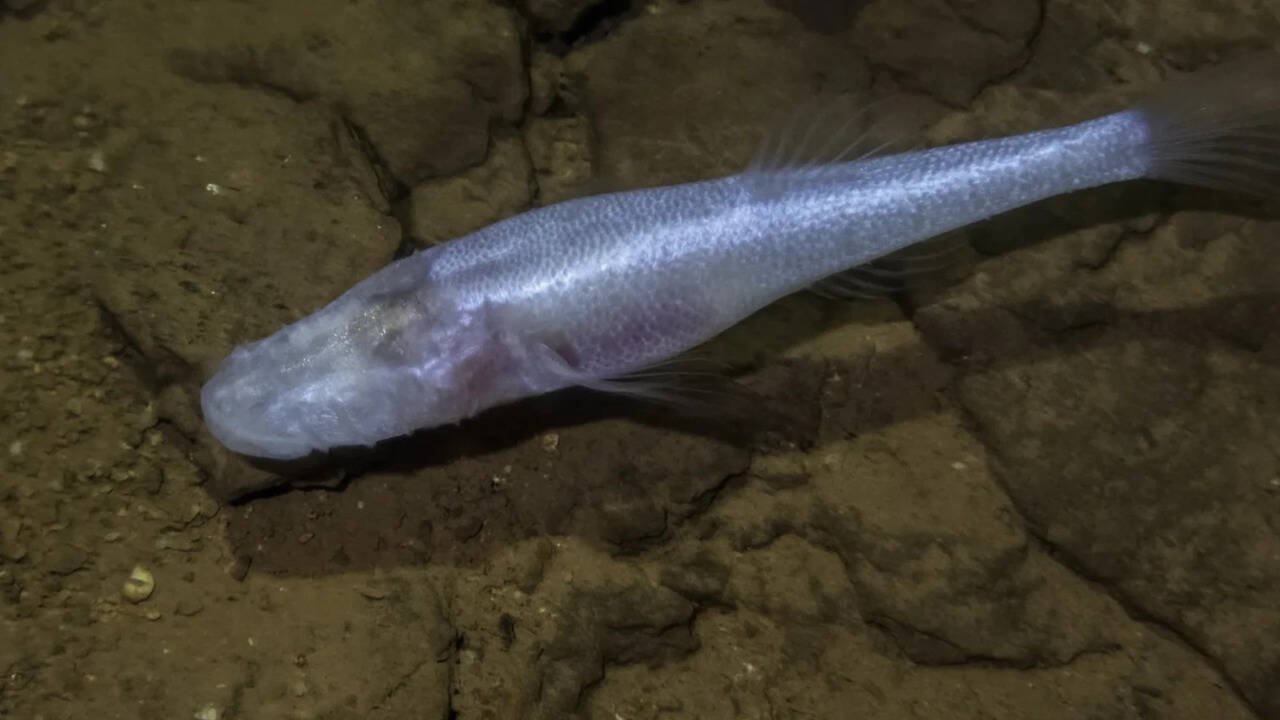
A clumsy fall into an underground pool beneath an active US military base has led to the discovery of a strange, eyeless fish named after a TV series monster.Matthew Niemiller, an associate professor of biological sciences at the University of Alabama in Huntsville, was carrying out routine environmental monitoring in February 2025 when he slipped. The accident happened inside Bobcat Cave, a restricted cave system located on the western side of the Redstone Arsenal military base in northern Alabama.“I slipped and fell into a pool,” Niemiller says. “And in my clumsiness, I spooked a cavefish from under a shelf.”The startled creature turned out to be a completely unknown genus and species of cavefish. Because it spent millions of years evolving in complete darkness beneath a busy military installation, scientists named it Demogorgonichthys arcanus. Its common name is the “demon cavefish”, inspired by the underground monster from the Netflix science-fiction series Stranger Things.
An accidental discovery in the dark
The discovery, described in a newly published study in the journal Scientific Reports, surprised researchers because Bobcat Cave is not an unexplored place. For decades, scientists have regularly visited the cave to study and monitor the Alabama cave shrimp, a federally endangered species.During the February 2025 visit, Niemiller and his research team, including his wife K. Denise Kendall Niemiller and several university students, were working in an area of the cave known as the “shrimp room”. After falling into the pool, Niemiller quickly captured photos and video of the fish he had disturbed, but he did not closely examine the footage until a week later.
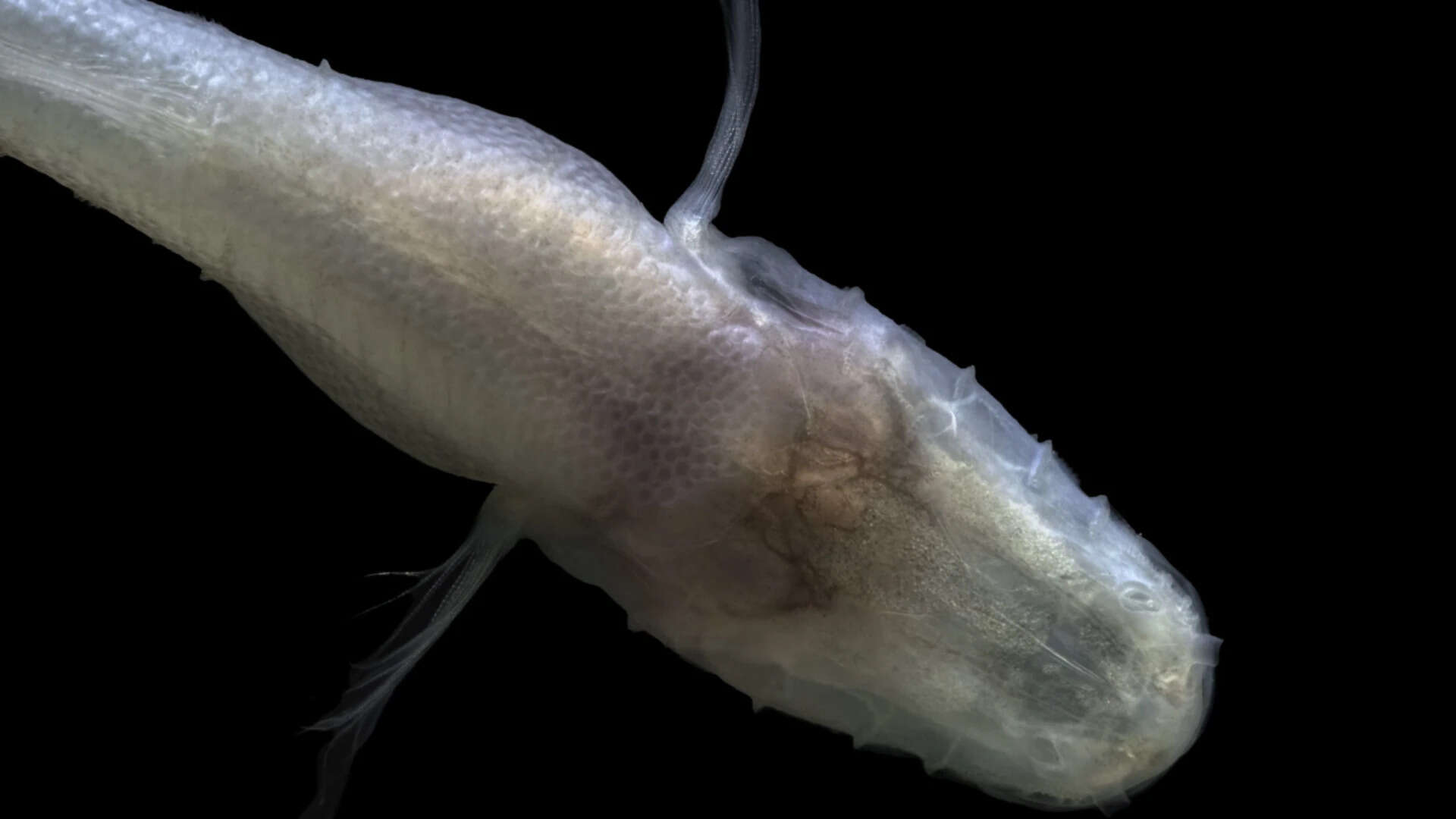
The demon cavefish has an entirely different lineage from another cavefish found in the same small cave (Photo: Matthew Niemiller)
When he finally reviewed the images, he noticed that the fish did not match the Southern cavefish, a species already known to live in the same waters. The unknown fish had a different head shape and unusual fin structures.Curious about the discovery, Niemiller returned to the cave and collected a few specimens. He worked with other scientists, including Pamela Hart and Michael Sandel, to study the fish’s physical features and genetics. The results confirmed that the fish was not only a new species but also belonged to a completely new biological genus within the Amblyopsidae family.
Naming the Beast from the ‘Upside Down’
The idea of naming the fish after a fictional monster came from co-author Pamela Hart. The researchers wanted to avoid using geographical names, which they considered less interesting.The name Demogorgonichthys combines “Demogorgon”, the underworld creature from Greek mythology and the modern Stranger Things villain, with “ichthys”, the Greek word for fish. The second part of its scientific name, arcanus, means “hidden” or “secret”, reflecting how the creature remained unknown for so long.“I’m an ’80s kid from Indiana, so ‘Stranger Things’ resonates,” Niemiller tells Axios. “It fits so well.”The demon cavefish’s appearance shows how it has adapted to its extreme environment. Living permanently in darkness, the fish has no eyes and no body colour. It appears translucent white or pale electric blue, with some pinkish-red shades caused by blood vessels visible beneath its skin.
Two apex predators in one pool
The discovery has raised new questions for scientists. Underground environments usually have limited food and can often support only one top predator. However, the demon cavefish shares its small cave system with the Southern cavefish.“It’s really bizarre that two top-level predators” would be in the cave side by side, having evolved independently over 10 million to 13 million years, Niemiller says.Both species are blind, adapted to cave life, and hunt smaller creatures in the darkness. However, they are not closely related. Their survival together suggests that different fish groups entered the underground water system at different times and separately adapted to life without sunlight.
Safe havens on military land
Bobcat Cave is made up of a network of narrow, water-filled tunnels connected by muddy passages. Water levels in the cave can change dramatically, rising or falling by almost four metres after heavy rainfall. During dry periods, the water disappears into isolated pools in the “shrimp room”, forcing the fish to gather in small areas.The cave is located inside a part of Redstone Arsenal that was historically used to dispose of conventional and chemical weapons. Over the past two decades, environmental monitoring has found small amounts of metals, including lead, chromium, and cadmium, in the cave’s water.Despite these past pollution concerns, the military base has unintentionally protected the land above the cave from the growth of nearby Huntsville. If the area had been developed for homes or businesses, construction and paved surfaces could have changed groundwater movement and damaged the fragile underground ecosystem.The demon cavefish is currently known to exist only in this single cave system, but researchers believe it may live in other inaccessible parts of the deeper underground water network. For now, the discovery shows that unique wildlife can still survive in unexpected places, hidden directly beneath major human infrastructure.