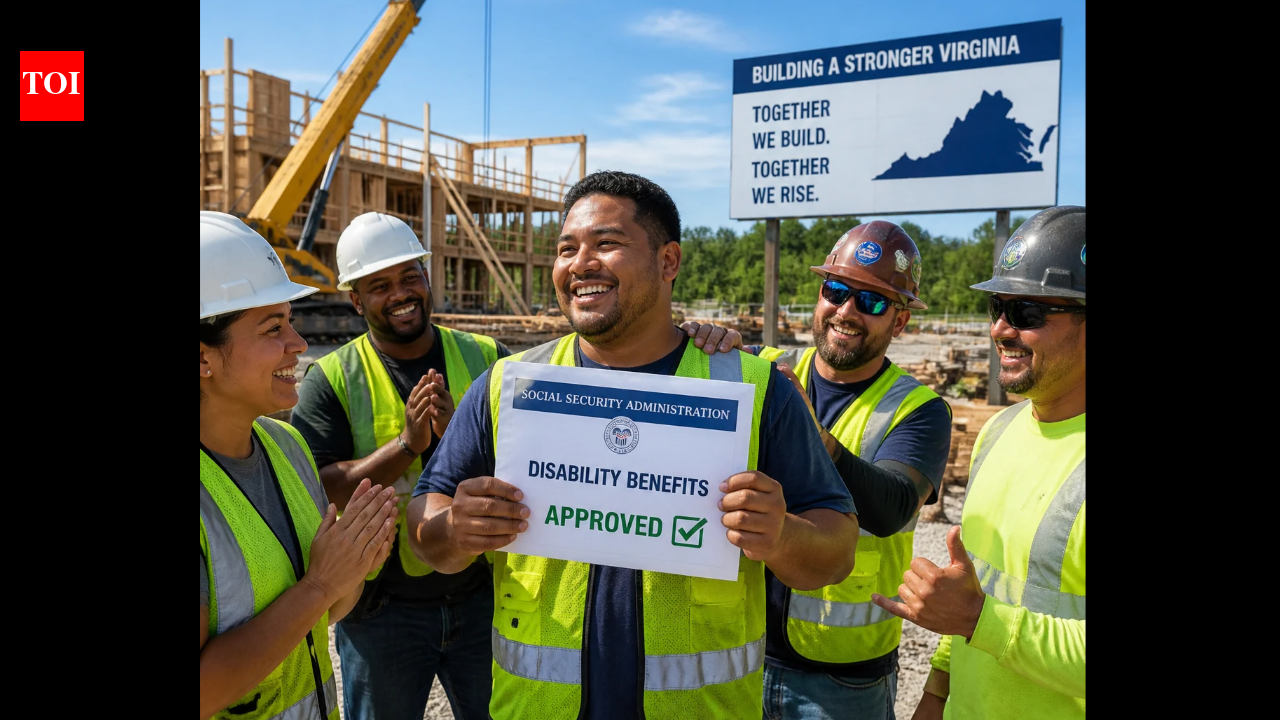
A Virginia appeals court has upheld ongoing temporary total disability benefits for construction worker Olegario Felipe Valles, who fell roughly 20 feet while installing siding in 2019 and underwent spinal fusion surgery. The Court of Appeals of Virginia on Nov. 24, 2026, issued its unpublished decision rejecting American Building Dynamics, Inc. and its insurer’s attempt to terminate the benefits, according to details on Justia U.S. Law.The ruling matters because it affirms that an injured worker does not lose disability protection simply because years have passed or because the employer argues that the worker can do some kind of work. The court found no error in the Virginia Workers’ Compensation Commission’s conclusion that Valles remained unable to perform his pre-injury job and had not shown he was capable of suitable alternative work.
How the injury happened
Valles was working for American Building Dynamics on June 20, 2019, when he fell approximately 20 feet while performing siding work. The fall caused serious injuries and led to surgeries and continuing medical treatment. The Workers’ Compensation Commission later awarded him temporary total disability benefits and lifetime medical benefits for the consequences of the workplace accident.In January 2022, Valles underwent lumbar fusion surgery, a major spinal procedure intended to stabilize part of the lower back. Even after the operation, his treating physician, Dr. Zafar, noted that Valles continued to struggle with symptoms and functional limitations. The case therefore moved beyond the immediate aftermath of the fall and into the long-term question of whether he could return to meaningful work.The employer and insurer eventually filed an application to terminate Valles’s temporary total disability payments. Their position was that he had reached maximum medical improvement and could perform work within his physical restrictions. The Commission disagreed, finding that the employer had not met its burden to prove that suitable work was available to him.
What the employer argued
American Building Dynamics and its insurer asked the Court of Appeals to overturn the Commission’s decision. They argued that Valles could perform light-duty work and that the Commission had wrongly continued benefits despite evidence that he was capable of some employment. The appeal focused on whether the Commission’s factual findings and legal conclusions were supported by the record.The company relied on the idea that Valles’s condition had improved enough after surgery to allow work within restrictions. But the court found that the evidence did not establish that he could perform his former construction job, nor that the employer had made a genuine offer of suitable alternative employment that he could physically perform.Virginia workers’ compensation law places the burden on an employer seeking to end temporary total disability benefits to show that the employee is able to return to work. That usually means identifying work that fits the employee’s physical limitations and showing that the job is actually available. A general assertion that light-duty work exists is not enough.
Why the court affirmed
The Court of Appeals reviewed the Commission’s findings under a deferential standard. It does not reweigh evidence as though it were hearing the case for the first time. Instead, it asks whether the Commission’s decision was supported by credible evidence and whether it made an error of law. The court concluded that the Commission’s denial of the termination application was supported by the record.The court noted that Valles continued to have significant limitations after lumbar fusion surgery. Dr. Zafar’s observations about his ongoing difficulties supported the Commission’s conclusion that he had not recovered sufficiently to resume his prior work. The appellate court also found no basis to disturb the Commission’s assessment of the medical and vocational evidence.The decision does not say that Valles will receive benefits forever without further review. Temporary total disability benefits can be changed if his condition improves, if he returns to work, or if the employer later proves that suitable work is available. But as of this ruling, the employer had not carried that burden.
Seven years after the fall
The length of the case is striking. Valles fell in 2019, had spinal fusion surgery in 2022, and was still litigating the continuation of benefits in 2026. That timeline reflects the reality that serious workplace injuries can create years of medical treatment, rehabilitation, disputes over work capacity, and appeals.For injured workers, the case shows why medical documentation matters. Reports from treating physicians, evidence of continuing symptoms, restrictions on lifting, bending, standing, or climbing, and testimony about the physical demands of the old job can all affect whether benefits continue. The court’s decision rested on the Commission’s evaluation of that evidence, not on a simple assumption that surgery should have restored the worker to full capacity.For employers, the decision is a reminder that terminating benefits requires proof, not merely an argument that a worker should be able to return to some job. The employer must establish both the worker’s ability to perform a particular job and the availability of that job. Without that connection, a request to end benefits is likely to fail.
What it means for workers
The ruling is a practical win for Valles because it preserves income support while he remains unable to work in his former role. It also reinforces an important protection in Virginia’s workers’ compensation system: an injured employee is not expected to prove that no job anywhere exists. The employer bears the burden when it seeks to cut off benefits.The case is also a reminder that back injuries can have lasting effects even after major surgery. A fall from height can cause damage that does not resolve cleanly, and spinal fusion may reduce pain or stabilize the spine without restoring the physical capacity needed for demanding construction work. The court’s decision recognized that reality by leaving the Commission’s findings intact.Seven years after the fall, Valles’s benefits remain in place. The employer’s appeal failed, and the Court of Appeals affirmed the Commission’s decision to continue temporary total disability payments.