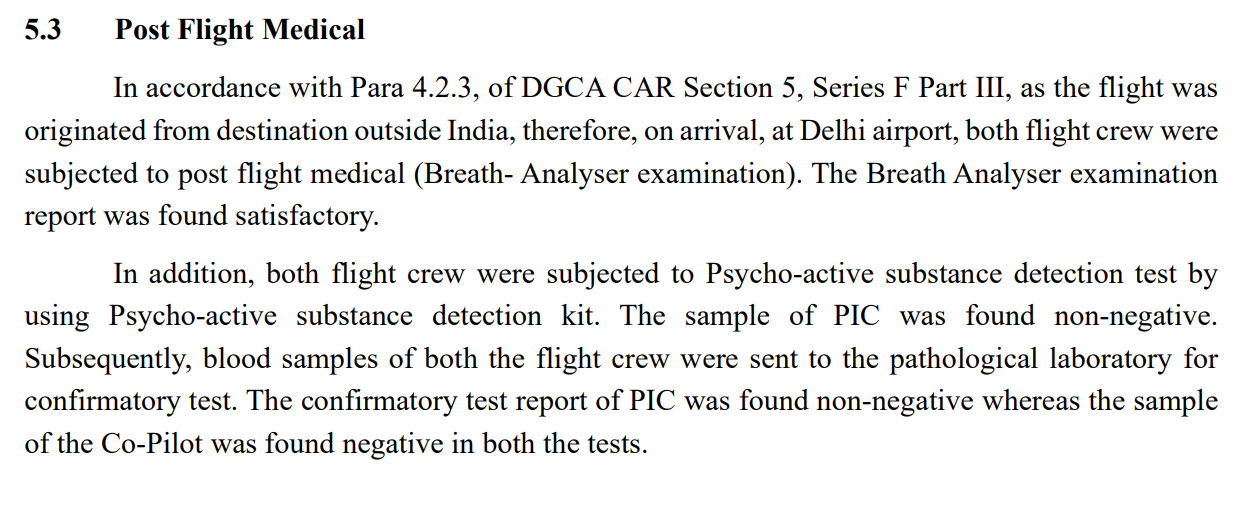
There is something inherently unsettling about flying. Thirty thousand feet above the ground, hundreds of passengers sit inside a pressurised metal tube travelling at hundreds of kilometres per hour, trusting a handful of people with their lives for the duration of the journey. Yet every day, millions of us make this decision without thinking twice.And then, once in a blue moon, an incident happens that makes us pause and wonder just how much we can actually trust those handful of people.On August 4, an Air India A320 flying from Phuket to Delhi was cruising at 36,000 feet when it suddenly climbed 372 feet before dropping nearly 300 feet. Twenty-four people on board, including passengers and crew, were injured badly enough to require hospitalisation. Twenty were discharged shortly afterwards, while four sustained serious injuries and remained hospitalised for further treatment. Many passengers also took to social media and spoke to news reporters about how frightening the experience had been.A preliminary report shows that, over those eight seconds, the aircraft lost all three of its hydraulic systems and the autopilot disengaged. The hydraulic systems recovered within seconds, and the aircraft subsequently landed normally.On the surface, it was a technical failure. But a second finding in the incident became the headline across news outlets.As part of the standard procedure following such incidents, the crew is tested on various parameters to ensure that investigators have a complete picture of what happened. In this case, both pilots underwent the mandatory psychoactive-substance test after arriving in Delhi, a requirement for flights originating outside India.The co-pilot’s sample came back negative twice. The pilot-in-command’s report, however, raised concerns. The Aircraft Accident Investigation Bureau’s (AAIB) preliminary report used the term ‘non-negative’ to describe both the screening test and the confirmatory laboratory report.
AAIB preliminary report
What was reported as ‘positive’ in headlines was not, in fact, the language used in the report. In aviation investigations, that distinction matters. The AAIB’s responsibility is not to point fingers, but to establish what happened and identify measures that can prevent a recurrence.The preliminary report does not conclude that substance use caused the hydraulic failure. It does, however, flag a serious concern regarding psychoactive substances and recommends that the Directorate General of Civil Aviation (DGCA) take appropriate action.The DGCA is the apex regulatory body responsible for overseeing safety standards in civil aviation. Its rulebook is extensive and is regularly revised to address emerging risks and ensure that flying remains safe for passengers and crew.Alcohol testing has been mandatory since the mid-2000s. The framework was built around Rule 24 of the Aircraft Rules, 1937, which originally required that crew members not consume alcohol within 12 hours of a flight. The rule has since been revised several times. A 2023 revision, for instance, warned that medicines and other substances containing alcohol could trigger a breathalyser reading, specifically citing products such as mouthwash and tooth gel. Crew members taking medication are required to consult their company doctor before flying.
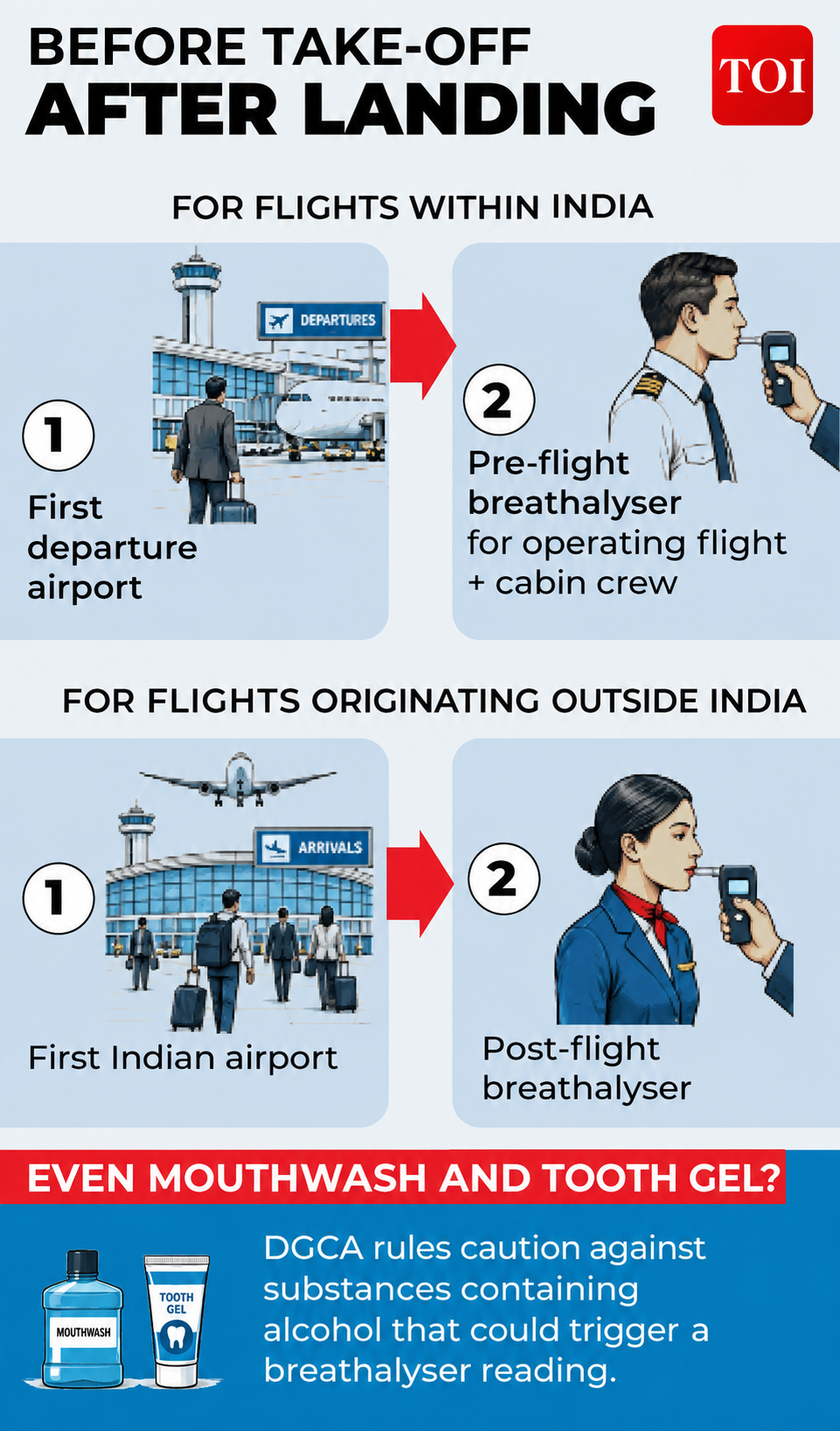
For scheduled operators, flight and cabin crew are subject to pre-flight breathalyser testing at the first departure airport during a duty period. For flights originating outside India, post-flight testing is required at the first Indian airport of landing.Being fit to fly is a regulatory requirement. But while the rules around alcohol have been in place for decades, psychoactive substances present a more complicated challenge.Drug testing is relatively new. The DGCA introduced the framework based on a 2019 report by the Ministry of Social Justice and Empowerment, which estimated that 2.8% of Indians had used cannabis in the previous year and 2.1% had used opioids. From 2019 to 2026, these numbers have only increased.These figures should not be taken as evidence that aviation personnel use drugs. Rather, they indicate the potential scale of the threat that the misuse of psychoactive substances can pose to aviation safety.
What happens when a pilot gets tested for drugs?
The drug-testing system applies to flight crew and air traffic controllers. Testing is required before employment, following accidents, through random checks and as follow-up in previously confirmed cases.Random testing is currently designed to cover at least 10% of an organisation’s employees each year at specified airports. The testing panel is broad, covering substances including amphetamines, methamphetamines, cocaine, opioids, benzodiazepines, marijuana/hashish, MDMA and several others.The system is also designed around confirmation, rather than treating an initial screening result as conclusive. It is consequently more time- and resource-intensive than an alcohol test.
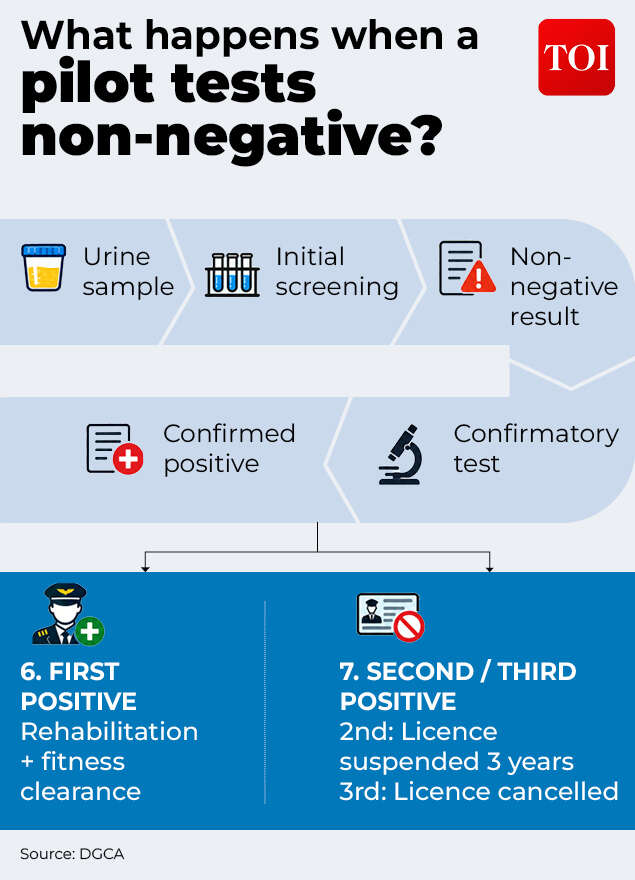
A urine sample is divided into A and B portions. The initial screening is conducted under controlled conditions. If the A sample screens positive, the B sample is sent to a DGCA-authorised laboratory for confirmatory testing, with procedures in place to maintain the chain of custody.A person who returns a positive screening result is removed from safety-sensitive duties until the confirmatory report is received.If a first confirmed positive is established, the rules provide for de-addiction and rehabilitation, followed by repeat testing and clearance from a treating psychiatrist and the organisation’s chief medical officer before the person can return to active duty.A second confirmed positive, however, carries a far more severe consequence: cancellation of the licence.In other words, the regulatory system is built around two competing principles: aviation cannot afford to ignore substance use, but neither can it treat every initial test result as proof of impairment or permanently write off a person without due process.
Crew perspective
TOI spoke to aviation personnel to understand their perspective on the DGCA rules governing substance use in the industry.A senior pilot lauded the system, saying the DGCA maintains strict standards to protect the safety of the countless passengers who entrust their lives to the aviation system every day. But he said the responsibility does not rest with the regulator alone. A moral responsibility also falls on the crew entrusted with those lives.“The number of variables when it comes to substances in the market has increased and having access to them has become easier, but that does not mean that it can be used as an excuse. A soldier at the border is stressed too, but he has a responsibility to his nation to do his duty properly and honestly. So do we,” the pilot, who did not wish to be named, said.A cabin crew member, meanwhile, said drinking after work and, in some cases, using substances is not unheard of among crew. But she said there is a clear boundary between what happens off duty and the responsibilities that come with being in the air, and that most crew understand the implications of bringing such behaviour into the workplace.At the same time, she pointed to the pressures that come with the job.“I have been grounded for acne, for weight gain, I was once even grounded because my nails were too long,” she said.For cabin crew, the demands of the job extend beyond safety procedures and passenger service. Strict appearance standards, long and irregular working hours and constant interaction with passengers can add to the pressures of a profession in which employees are expected to maintain a high standard of presentation and hospitality at all times.These pressures, however, are difficult to separate from the broader conversation around substance use.It is this tension that sits at the heart of the debate. The pressures of the job are real, and an environment that leaves people constantly stressed can create conditions in which some may turn to alcohol or other substances. But for those sitting in the cockpit, stress cannot become an explanation for abandoning the responsibility that comes with the job.
The net gets wider
The Phuket incident has already prompted the regulator to widen that net.The DGCA has directed Indian airlines to conduct a one-time psychoactive-substance test on all their pilots by July 2027. The exercise will cover the country’s nearly 14,000 airline pilots. Air India had already begun its own one-time testing programme for about 5,000 pilots across Air India and Air India Express following the August 4 incident.
Share your thoughts in the comments
Be respectful · TOI community guidelines
The move comes as the DGCA works on a revision of its existing rules governing psychoactive-substance testing. The current framework requires random testing, with organisations expected to cover at least 10% of their employees annually. The proposed changes are expected to make the system more stringent.The senior pilot said the next step could also involve newer testing methods capable of delivering conclusive results faster, allowing airlines to test a much larger pool of crew rather than relying primarily on periodic random checks.The DGCA can test, regulate and punish. Airlines can monitor and intervene. But ultimately, the last line of defence is also the person sitting in the cockpit.