
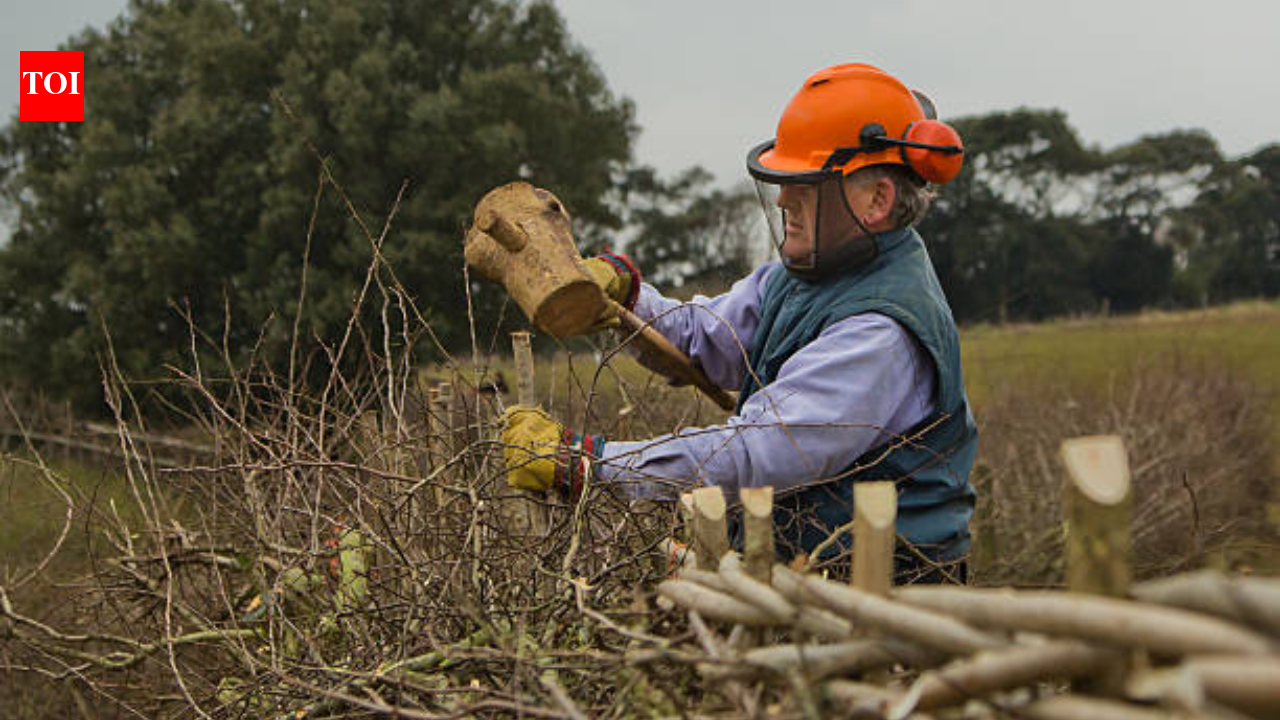
It’s seeing a revival and how. The ancient craft of hedge laying is back in trend among farmers as they are using the technique dating back to 18th and 19th centuries in order to boost wildlife, capture carbon and help tackle flooding. Hedge laying which restores and revives mature hedges to keep them fresh was among the four most popular categories of capital grants selected by farmers out of a total pot of £225m provided by the government this year to support practical environmental improvements on farms and across the countryside.The 2,500 farmers across England who applied for grants to restore and maintain their mature hedgerows using the craft that dates back to thousands of year will lay 1,300 km of mature hedgerows, if the grants are approved. According to Megan Gimber, the key habitats officer for the People’s Trust for Endangered Species said that hedge laying was one of the most effective tools farmers had to respond to the climate crisis. “Hedge laying really stopped after the war, so it has been over a generation since it was a normal part of farm management and we have seen a huge decline in hedgerows as a result,” she said.“These grants will give 1,300km of potentially ancient hedges a new lease of life, to help plug the gap, and it is fantastic that it is such a popular grant application.”Mature, maintained hedgerows are a carbon sink that capture more carbon in every hectare than forests. They support thousands of species, provide shade for livestock, reduce soil erosion and slow down, absorb and store vast amounts of rainwater to help reduce flooding. “They are massively important,” said Stephen Budding, the chair of the National Hedgelaying Society. “The greatest biodiversity gain is from hedge laying older hedges. “Our members are seeing quite a surge in work, but I don’t think this would be happening without the government grants available.”
The art of hedge laying
Hedge laying involves cutting through the hedge stems almost completely, then laying them at an angle to the ground. Laying the branches down invigorates growth at the point where they have been cut, filling gaps in the hedges and restoring youth and freshness.The craft is done by hand by skilled layers, many of whom will also be competing next month at the National Hedgelaying Championships in Chipping Norton. It was extremely common until World War II, post which there was a massive shift toward industrialised farming, cheap manufactured fencing and also severe shortage of labour.Robert Rose, who farms 220 acres of grassland for beef cattle and arable fields at Rosewood Farm in Ellerton in Yorkshire’s Lower Derwent valley, is waiting for the Department for Environment, Food and Rural Affairs (Defra) to approve his application for a grant to lay old blackthorn, newer hawthorn and ash and willow hedges across his farm. “We lay the hedges in a modern conservation style that retains more of the bushy growth for the benefit of nesting birds as well as stock proofing,” said Rose, who farms with his brother and wife.The trio planted new hedges about 20 years ago, but maintaining them is vital to keep them working to store carbon, support wildlife and retain water. “We taught ourselves how to do the laying, which was a bit of trial and error,” he said. “It is only recently that we have noticed how much other farmers are talking about hedge laying online, in community groups, it really seems to be taking off.” The grant Rose has applied for will aid him in laying about 50 metres of hedges along with planting new hedgerows and coppicing others. Peak hedge laying season starts in October and ends in February, so farmers like Rose are hoping for quick decisions from Defra. “There are so many benefits with hedge laying for wildlife, for livestock, for conservation. We see a lot more birds using the hedges and a lot more small mammals around the bottom of mature managed hedges,” said Rose.Along with grant requests for hedge laying, about 5,000 applications are for planting new hedges, representing approximately 2,500 km of new hedgerows. But these will not survive without management. The centre also discovered that 61% of the newly planted hedges surveyed existed as hedges in their 2007 survey, but had since been lost and required replanting.“Hedgerows are succession habitats, made up of trees and shrubby woody species, that naturally change over time,” said Gimber. “They require management to maintain the valuable mid-succession stage of bushy, low growth and prevent them developing into lines of trees.”“This government is putting its full weight behind farmers – giving them the funding, tools and opportunities they need to succeed. In July, we opened a new round of environmental land management capital grants with increased funding of up to £225m available to support investment in infrastructure that boosts productivity, strengthens resilience and supports environmental outcomes, which has now closed following strong uptake,” said a Defra spokesperson.