An Iowa man who thought he was buying four acres of land has lost his legal fight for the property after an appeals court ruled there was no proven agreement to sell the land and said the landowner could keep the $9,000 already paid based on the man using the land for storage, the trees he cut down, and his refusal to take back the money earlier. The Iowa Court of Appeals upheld a lower court’s decision on October 7, 2026, where Bob Robbins claimed he had a verbal deal with Caleb Wilson to buy the land for $40,000 paid over four years, while Wilson said the payments were just rent for storing items on his property and maintained he never agreed to sell the land.
Disagreement over what the payments meant
Robbins and Wilson had known each other for years through work, and in 2017, Robbins began renting an old farmhouse on the same property where Wilson lived in rural Warren County under a verbal agreement to pay rent and fix up the house to make it livable, with rent starting at $400 a month and later going up to $500. Robbins made several improvements to the farmhouse, including installing a new underground power line, a new breaker box, and a water heater, and clearing a large amount of trash from the house, continuing that arrangement until April 2019, when a fire destroyed the farmhouse and most of Robbins’s belongings inside.About a month later, Wilson asked Robbins to move his remaining belongings so cleanup work could continue, saying he agreed to let Robbins store his possessions in a field on another part of the property in exchange for rent. Robbins told a different story, claiming he and Wilson agreed he could buy about four acres of land for $40,000 paid over four years, that Wilson showed him the boundaries of the land, and that Wilson agreed he could start preparing a driveway and installing a culvert while making payments.
Nine payments of $1,000
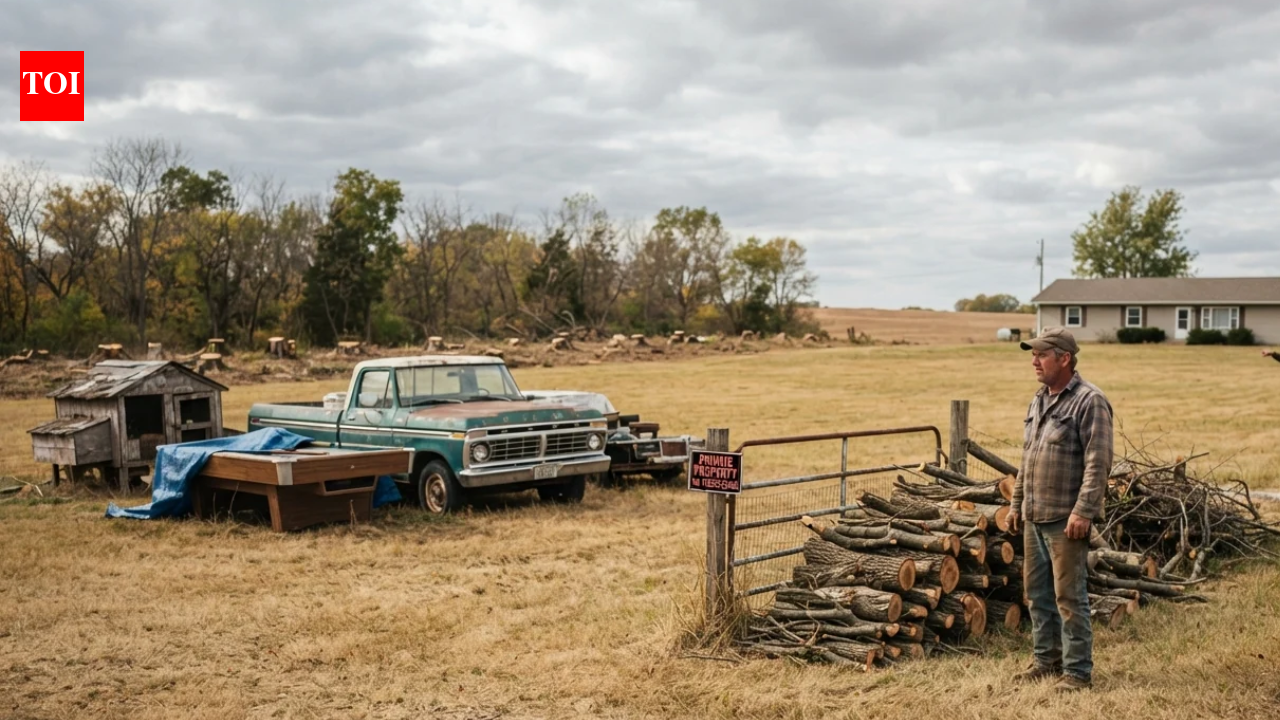
Between July 2019 and August 2020, Robbins gave Wilson nine $1,000 cashier’s cheques with numbered payment references, accidentally skipping number three when numbering them, and Wilson deposited all nine cheques totaling $9,000. Robbins said the payments were instalments toward buying the land, while Wilson said they were rent for storing Robbins’s belongings there, including a pick-up truck, a pool table, and a chicken coop.The disagreement became more serious when Robbins began clearing brush and cutting down trees, saying he believed he was preparing the land for a home he planned to build and claiming Wilson knew about the work, whereas Wilson said he did not know Robbins was changing the land until the summer of 2020 and told Robbins to stop, stated the property was not for sale, and asked him to remove his belongings when he saw the trees being cut down. Wilson’s story was supported by a neighbor who testified he heard chainsaws, saw Robbins cutting trees, and heard Wilson tell Robbins he could not cut the trees and was not selling the land, as well as by Wilson’s wife, who testified she never discussed selling the property with Robbins and explained that she and her husband made major financial decisions together and would have discussed any proposed sale.
Additional $30,000 in cheques
The dispute continued into 2021 when, after another argument about the trees, Robbins left two $15,000 cashier’s cheques at Wilson’s home dated December 1, 2020, and June 30, 2021, though Wilson said they were both delivered during the summer of 2021 only a few weeks apart. One cheque had “LAND PAYMENT” written on it and the other said “PAYMENT IN FULL,” and instead of cashing them, Wilson arranged to meet Robbins and tried to return both cheques along with a separate cheque to return the original $9,000.Wilson told Robbins, “here is all your money back, get your stuff off my property,” but Robbins refused to take the money back and threatened to sue Wilson unless he agreed to sell the land. In April 2022, Robbins filed a lawsuit claiming Wilson broke their alleged verbal agreement, asking the court to order the sale of the land and return the $39,000 he said he had paid, while Wilson denied making any agreement to sell the land and filed counterclaims against Robbins for trespassing, cutting down trees, and damaging his property.
Judges found no proven sale agreement
The case went to trial in July 2024 in the Iowa District Court for Warren County, where the judge heard testimony from Robbins, Wilson, Wilson’s wife, and the neighbor who saw the argument. The district court found Wilson’s testimony more believable, noting Robbins was unsure about several dates and details while Wilson’s testimony was supported by the neighbor and his own actions and there was no clear reason why Wilson would change his mind about selling if a deal had truly been made.Robbins appealed the decision, arguing the evidence showed the two men had agreed on the purchase price, the size of the land, and how payments would be made. The Court of Appeals stated that anyone trying to enforce a verbal agreement to transfer land must prove it with clear, satisfactory, and convincing evidence, a very high standard in civil cases, and in its October 7 decision agreed that Robbins had not met that requirement, accepting that Robbins may have genuinely believed Wilson was willing to sell him the land while saying the evidence did not establish that both men had actually agreed to a sale, so the court upheld the rejection of Robbins’s claim seeking ownership of the four acres.
Why the owner could keep the $9,000
Robbins also challenged the decision allowing Wilson to keep the $9,000 paid through the nine cashier’s cheques, arguing the money was meant to be part of the purchase price and should be returned because the court found there was no sale agreement. The appeals court rejected this argument as well, finding Wilson provided something of value by letting Robbins store his belongings on the land for more than a year and acknowledging that $9,000 was a large amount for storage compared to the $500 monthly rent Robbins previously paid for the farmhouse.However, the court also considered the damage caused by cutting down the trees, noting Wilson got an estimate of over $28,000 to replace the lost trees that the judges thought was likely too high because of limited evidence about the exact number and types of trees removed, while labour just to clean up the cut branches cost nearly $3,000, so the judges concluded the storage arrangement, cleanup costs, and at least part of the estimated loss of the trees meant it was not unfair for Wilson to keep the $9,000. The judges also considered Wilson’s earlier attempt to return the money along with the two uncashed $15,000 cheques that Robbins refused to accept, affirming the lower court’s decision so Wilson is entitled to keep the $9,000 and remain the owner of the land, while the two additional $15,000 cheques were never cashed and the ruling did not require Wilson to accept the proposed sale.