
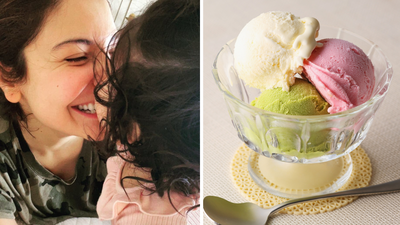
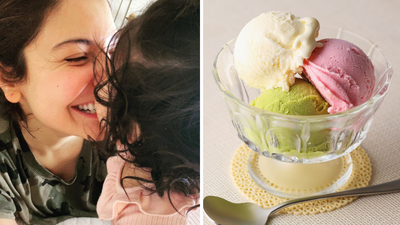
For many parents, taking a child to an ice-cream museum and then saying, “Eat as much as you want,” may sound like the opposite of teaching healthy eating. But when Anushka Sharma tried it with her daughter Vamika, she noticed something that made her rethink the way children learn to regulate what they eat.Anushka, who has spoken openly about trying to build healthy food habits in her children from an early age, recalled the incident at an event in 2024. Her daughter, she said, loves ice cream and is “obsessed” with it. So when the opportunity came to indulge, Anushka decided not to impose a restriction.
22 Sept 2026 | 14:56
Does your child tell you everything about school? What helps them open up?
“I took her to an ice cream museum because she loves ice cream. She is obsessed. There, I told her, ‘Eat as much as you want.’ What happened next was what stayed with her.She didn’t eat that much,” Anushka said. “So, I think when you inculcate the right kind of habits in the beginning, they don’t stuff themselves with 10 ice creams. She must have had two, and then she was like, ‘I am done.’ So if you inculcate the right habits in the beginning, they’ll make the right choice,” she said.The incident offers an interesting window into a question many parents grapple with: Does constantly telling children that certain foods are “bad” or “not allowed” actually make those foods more tempting?
Anushka’s approach: explain rather than simply restrict
Anushka has described healthy eating as something she tries to teach through conversations rather than simply banning foods. She explained that she talks to Vamika about why different foods make the body feel different.“I think the only way I have managed to, and I am still trying, is that I do explain it to her. I tell her that there are some foods that give us energy so you can play and do different things. Some foods give that to us very quickly and then we have no energy left to do other things. Other foods give us energy in a way that we can keep playing,” she said.But she also admitted that a child does not necessarily accept every carefully prepared parental explanation.“I make it sound more interesting than I am making it to you guys right now. But I feel like she doesn’t buy most of the times, she is like, ‘Whatever, just give it!’” Anushka said.Her solution? Make the conversation playful.“I also pick days and give very lengthy explanations, which I try to make fun. I bring out the actress in me…” she added.That admission is perhaps one of the more relatable parts of her story. Teaching children about food is rarely a single conversation. Parents may explain, negotiate, repeat themselves and try different approaches- only to hear a child respond with an unimpressed “Whatever.”The ice-cream museum experience is particularly interesting because Anushka did not describe Vamika’s response as the result of a strict rule. Instead, the child was given an opportunity to have the food she loved without being told that she had to stop after a predetermined amount.

Anushka Sharma and Virat Kohli focus on healthy habits for their children
Why calling food “bad” can complicate the conversation
When parents repeatedly describe sweets, pizza, chips or ice cream as forbidden foods, children can begin to associate them with excitement precisely because they are restricted. On the other hand, presenting every food as equally nutritious would also be misleading.A more practical approach can be to help children understand that foods serve different purposes. Some foods provide nutrients needed for growth, while others are foods children can enjoy occasionally. The emphasis can remain on variety and balance rather than turning eating into a test of obedience.That is broadly consistent with what Anushka describes: she talks about energy, playing and how different foods affect the body, while also allowing her daughter to encounter foods she enjoys.Her earlier comments about family food routines also show that she places importance on consistency. In another September 2024 interaction, Anushka said she and Virat Kohli try to cook foods they grew up eating so that family recipes are passed on to their children. She also said she maintains fixed meal and sleep timings even while travelling, describing routine as a way of giving children “a sense of control.”
The larger lesson for parents
The ice-cream museum story is not really about whether a child should be allowed two ice creams, five ice creams or none. It is about what happens when parents move away from making food a battle.Anushka’s experience suggests that healthy eating habits may involve more than keeping junk food out of the house. Children also need opportunities to understand food, experience different tastes and gradually develop their own awareness of hunger and fullness.At the same time, every child is different. Appetite, age, sensory preferences, family routines and medical or nutritional needs can all affect eating behaviour. Parents should not interpret one celebrity parent’s experience as a universal formula.For Anushka, though, the surprise came in a simple moment: she gave her ice-cream-loving daughter permission to have as much as she wanted- and Vamika eventually decided she had had enough.Perhaps that is the part worth remembering. Sometimes the goal of teaching children healthy habits is not to make them afraid of the foods they love, but to help them understand their choices well enough that they do not need a parent standing beside them saying, “No more.”