
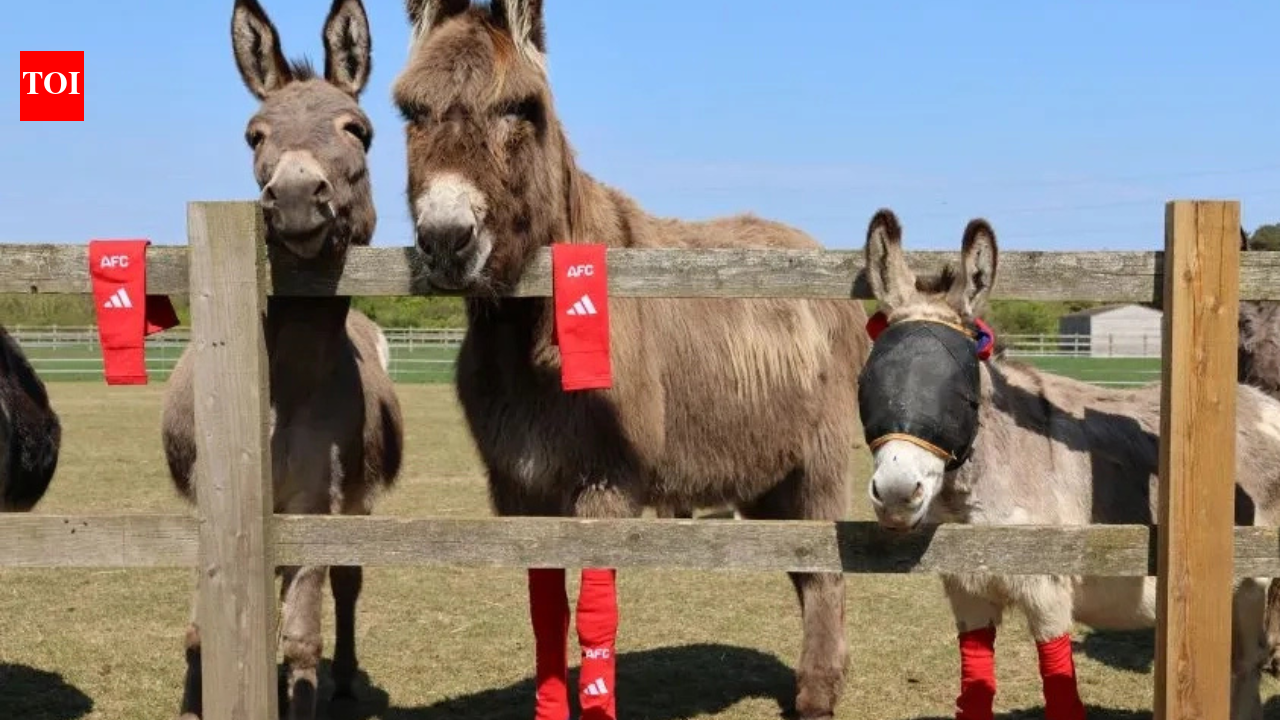
When football clubs replace worn equipment, most fans assume it ends up in storage or is thrown away. Arsenal’s old player socks have taken a very different path. The Premier League club recently donated around 40 pairs of footless red socks to Redwings Horse Sanctuary, Britain’s largest equine rescue charity. What sounds like an unusual gift has become a practical tool for caring for rescued horses and donkeys. The long sock sleeves are now being used to protect sore legs, keep flies away and secure bandages during treatment. Staff say the donation has already proved useful in daily animal care, while some of the sanctuary’s donkeys have discovered an entirely different use for the bright red socks.
Why Arsenal’s old socks are useful for rescued donkeys
The donation works because modern football socks are no longer used in the way many fans might imagine. In professional football, players often cut off the foot section of their club socks and wear separate grip socks inside their boots. The result is a durable, tube-shaped sleeve that is usually discarded once it is no longer needed on the pitch.At Redwings Horse Sanctuary, those sleeves have found a surprisingly practical second life. The long red tubes fit comfortably over the lower legs of horses and donkeys, where they can be used to cover sore skin, hold bandages in place and protect treated areas during recovery. Staff also use them during hoof care and veterinary procedures, when keeping a leg covered can help shield sensitive skin from dirt and irritation.The socks are particularly useful during the warmer months, when flies become a persistent challenge for equines. Biting insects are drawn to wounds, scabs and areas of inflamed skin, often causing discomfort and slowing the healing process. Horses and donkeys can also develop fly-related skin conditions that require ongoing management and treatment.By creating a lightweight protective barrier, the donated Arsenal socks help keep flies away from vulnerable areas while allowing the skin underneath to heal. According to sanctuary staff, the sleeves have already reduced the need for some veterinary attention by protecting sore legs and preventing minor skin problems from becoming more serious. What began as discarded football kit has become a simple yet effective tool in the day-to-day care of rescued animals.
A practical aid during hoof care
The socks are proving useful in other ways as well. Caretakers can slide them over parts of an animal’s leg during hoof trimming and treatment sessions, helping to protect sensitive areas while work is carried out.Because the material is stretchy, durable and easy to remove, it offers a convenient solution for a sanctuary that cares for large numbers of rescued animals. Small innovations like this can make routine care easier and more efficient.Not every use for the socks was planned by staff.Some of the donkeys have started treating the sleeves as enrichment toys. Caretakers can place bananas or other treats inside the sock tubes, encouraging the animals to pull out the rewards. The activity keeps the donkeys engaged and provides mental stimulation alongside their daily care.
Britain’s largest equine rescue charity
Redwings Horse Sanctuary was founded in 1984 and has grown into Britain’s largest horse and donkey welfare charity. The organisation cares for thousands of horses, ponies, donkeys and mules that have been rescued from neglect, abandonment and abuse.The story has attracted attention as a piece of sports equipment that had reached the end of its usefulness on the pitch is now helping protect rescued animals and enrich their lives.For Arsenal, the socks were no longer needed. For the horses and donkeys at Redwings, they have become protective coverings, medical aids and even toys. It is a simple example of how creative recycling can produce benefits far beyond its original purpose.