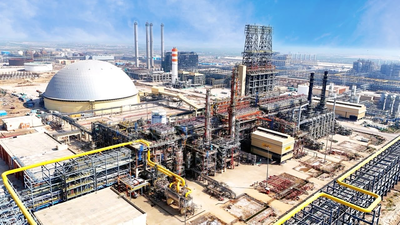
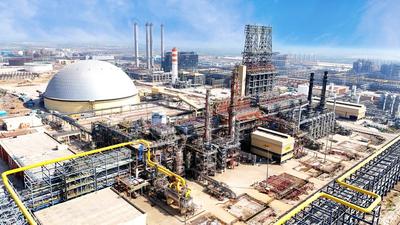
The Strait of Hormuz disruption served as a stark reminder of how vulnerable global energy supplies can be. Now, India is responding with a major push to strengthen its energy security.Prime Minister Narendra Modi on Saturday inaugurated the HPCL Rajasthan Refinery Limited (HRRL) project, the country’s first greenfield integrated refinery-cum-petrochemical complex. He also launched and laid the foundation stone for development projects worth around Rs 1.06 lakh crore across petrochemicals, urban transport, railways, roads, renewable energy and power transmission.The inauguration comes at a crucial time for India’s energy landscape. For a country that imports more than 85% of its crude oil, the Pachpadra refinery is expected to become more than just another industrial project.Furthermore, its ability to process multiple grades of crude gives India greater flexibility to source oil from Russia, the Gulf, the United States and other suppliers depending on prices and geopolitical developments. The integrated petrochemical complex is also expected to support manufacturing, boost exports and improve India’s resilience against future supply disruptions.Calling the refinery a major milestone for Rajasthan, PM Modi said it reflected the importance of self-reliance. “Every particle of this land has taught us the importance of self-respect. Self-respect is possible only when one is self-reliant,” he said, adding that the project would create employment for thousands while marking “a major step” towards making Rajasthan self-reliant.Commenting on the global energy front, PM Modi said that the Middle East conflict had created one of the biggest energy crises of the 21st century. He said India was able to navigate the disruption because it “took timely decisions, assessed the situation correctly and formulated the right strategy”, while effectively using “India’s diplomatic strength” to emerge from the crisis.
Why refining capacity matters
At the same time, Union petroleum and natural gas minister Hardeep Singh Puri also described the refinery as far more than an infrastructure project. Minister Puri said that it would generate employment, bring prosperity to the region and enhance India’s self-reliance across economic and commercial sectors.He also compared India’s refining expansion with global trends, noting that no greenfield refinery had been built in the United States in the last 50 years, while Europe’s refining capacity continued to decline. In comparison, he said, India’s refining capacity is set to increase from around 270 million metric tonnes per annum to between 310 and 320 million metric tonnes by 2030.He said, “This oil refinery is no ordinary project for Rajasthan. It will generate new employment opportunities in the region. It will bring prosperity to the lives of the common people and enhance India’s self-reliance across various economic and commercial sectors. Prime Minister, you have dedicated two refineries to the nation over the past decade. Yet, if we look globally, no greenfield refinery has been built in the United States in the last 50 years. Meanwhile, in Europe, refining capacity is declining by 2 lakh 20 thousand barrels per day. By 2030, the region’s refining capacity will stand at 75 million metric tons. In contrast, between now and 2030, our own refining capacity, currently around 270 million metric tons per annum, is set to rise to between 310 and 320 million metric tons.”
Lessons from the Hormuz disruption
Puri said the recent disruption around the Strait of Hormuz demonstrated why expanding India’s refining capabilities had become strategically important. Recalling the crisis, he said nearly 60% of India’s LPG requirement was met through imports, with 90% of those supplies passing through Hormuz before “war conditions brought that supply to a near-halt”.“You can imagine the massive crisis that was looming over our country… As soon as the crisis began, we focused on leveraging our refinery capabilities. Refineries that previously produced other products were directed to manufacture LPG, and within just seven days, LPG production increased. Domestic LPG production rose from 35,000 metric tonnes to 54,000 metric tonnes during the crisis. Refineries that had never produced LPG before were reconfigured to do so. The government also ensured that the entire burden of cooking gas demand did not fall solely on LPG. A campaign was launched to expand PNG connections. In a very short span of time, India connected over 1.1 million households to PNG…. Given the prevailing circumstances, the price of a domestic gas cylinder could have soared to Rs 2,000, a figure predicted by major market experts. Yet, even now, a domestic LPG cylinder is being provided for less than Rs 950,” he added.According to the minister, India quickly turned to its domestic refining network, redirecting refineries to manufacture LPG and even reconfiguring facilities that had never produced the fuel before. As a result, domestic LPG production increased from 35,000 metric tonnes to 54,000 metric tonnes within seven days. The government also expanded PNG connections, linking more than 1.1 million households in a short span, while ensuring domestic LPG cylinders continued to be sold for less than Rs 950 despite market predictions that prices could have climbed to Rs 2,000.
Cushioning consumers and widening energy ties
Puri said the government also cushioned consumers from the broader impact of the crisis. Despite companies absorbing losses of more than Rs 75,000 crore on diesel and petrol between April and June, and the Centre reducing excise duty by Rs 10 per litre, he said there were no major supply disruptions across the country except for minor hiccups in some remote areas.He further credited India’s diplomatic outreach for broadening the country’s energy basket during the conflict. While India sourced fuel from only 25 or 26 countries before the crisis, it expanded supplies to more than 40 countries during the disruption, sending “a clear message to the world that national interest and the welfare of its citizens are paramount”, he said.Apart from inaugurating the refinery, the Prime Minister also unveiled the new airport terminal at Jodhpur, saying its architecture reflected Rajasthan’s identity and would provide a boost to tourism, trade and employment in the Marwar region. He also launched a new phase of the UDAN regional connectivity scheme and congratulated around 54,000 people in Rajasthan who received government appointment letters across various departments.