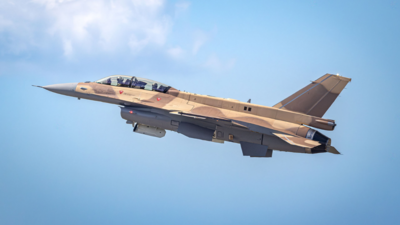
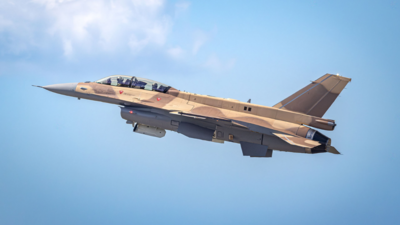
More than half a century after it first took to the skies in 1974, the F-16 Fighting Falcon has reached yet another milestone, with the newest version of the jet, the Block 72, completing its maiden flight on October 6. The two-seat aircraft, built for the Royal Moroccan Air Force at Lockheed Martin’s Greenville facility in South Carolina, now enters flight testing ahead of deliveries scheduled to begin in 2027. The deliveries are part of a Moroccan order for 25 new jets, alongside the upgrade of 23 existing Block 52 aircraft to the same standard.The Block 72 comes fitted with modernised avionics, the AN/APG-83 AESA radar, the Viper Shield electronic warfare suite and enhanced safety systems, making it the most advanced configuration of the aircraft built to date. Unlike the Block 70, the Block 72 uses a Pratt & Whitney powerplant.What makes this moment genuinely remarkable is just how long the F-16’s story has already run. The aircraft’s origins trace back to lessons the US learnt, often painfully, during the Vietnam War, where American pilots found themselves lacking both the training and the aircraft needed to secure reliable air superiority.Drawing on his own experience in the Korean War and years spent as a fighter tactics instructor, Colonel John Boyd, working alongside mathematician Thomas Christie, developed the energy-manoeuvrability theory to model how a fighter aircraft performs in real combat. Boyd’s conclusion was that future fighters needed to be smaller, lighter and capable of manoeuvring with minimal energy loss, backed by a sharply improved thrust-to-weight ratio.By the late 1960s, Boyd had gathered a group of similarly minded reformers who became known as the Fighter Mafia. In 1969, they secured Pentagon funding for General Dynamics and Northrop to study design concepts built around this theory. It’s often said the F-16’s specifications were written in blood, a reference to how directly its requirements were shaped by the air-to-air losses America suffered over Vietnam.That design philosophy has proven remarkably durable. The F-16 has since been procured by 26 other nations beyond the United States, and as of 2026, it remains the world’s most common fixed-wing military aircraft, with approximately 2,102 jets from the F-16 family currently in active service worldwide, accounting for roughly 15 percent of all active combat aircraft globally.Few fighter programmes anywhere have managed to stay this relevant for this long, continuously receiving new engines, radars and mission systems while competing with aircraft designed decades later.The fact that a jet conceived in response to Vietnam-era combat lessons is still receiving brand-new variants and fresh export orders in 2026 says less about nostalgia and more about how sound Boyd’s original design philosophy turned out to be: lightweight, agile and endlessly adaptable. Those qualities have kept the Fighting Falcon relevant across more than five decades of changing air warfare.