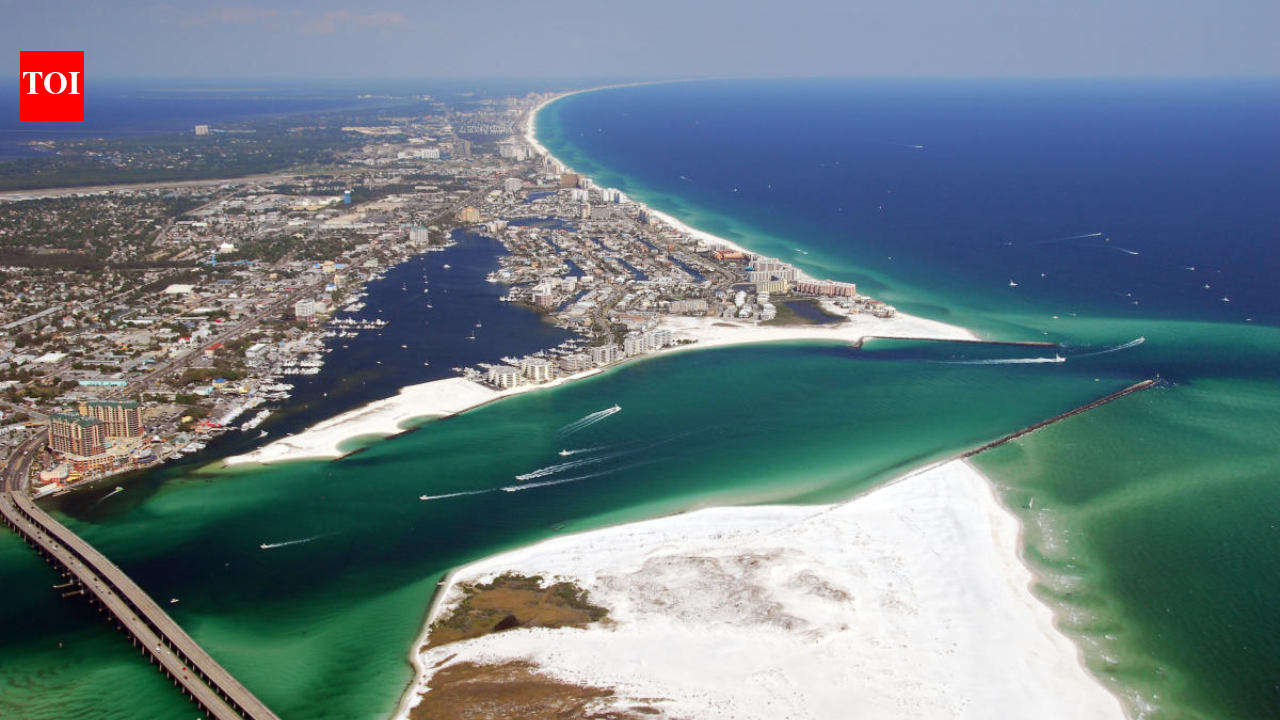
More than 1,300 tonnes of old concrete pipes are being dropped into the Gulf of Mexico to create a series of artificial reefs off the coast of Destin-Fort Walton Beach, Florida. The project uses three million pounds of recycled concrete culverts to create three separate underwater habitats. Each site will receive about 500 tons of heavy material. The project is being led by Okaloosa County’s Natural Resources Team, along with the Fish & Wildlife Foundation of Florida and the Florida Fish and Wildlife Conservation Commission. As reported by regional TV station WJHG, the project is the second major deployment of Florida’s Coastal Corridor, a statewide conservation program designed to connect marine habitats along the Gulf and Atlantic coasts.
Heavy materials dropped off East Pass
Contractors are placing the concrete culverts in approved offshore areas about four to eight nautical miles from East Pass, according to information from the Fish & Wildlife Foundation of Florida. The material is being placed at depths of about 68 to 74 feet below the surface. Workers are arranging the culverts in dense groups to create tall structures on the ocean floor. The hollow concrete pipes provide shelter for marine animals that have few hard surfaces to live on across the Gulf’s mostly sandy seabed. The deployment began in mid-September 2026 and is expected to continue through November 2026.
Supporting marine life and local fisheries
Once the concrete settles on the seafloor, its hard surfaces give algae, sponges, barnacles, and soft corals places to attach and grow. These organisms then provide food and shelter for crabs, baitfish, and larger species such as grouper and snapper. State wildlife officials said these structures can help support healthy fish populations in the region. “Thoughtfully planned artificial reefs can play an important role in conserving and enhancing marine habitat while supporting the long-term health of Florida’s fisheries,” said Roger Young, Executive Director of the Florida Fish and Wildlife Conservation Commission, in an official statement released by the Fish & Wildlife Foundation of Florida. “Projects like this bring together sound science, careful site selection, durable materials, and strong local partnerships to create habitat that supports marine life and helps sustain healthy marine resources for generations to come.”
Statewide network expands to the Panhandle
The Okaloosa County project is part of a larger effort to connect underwater habitats across Florida. The first official deployment under the Coastal Corridor program took place off Naples in early September 2026, when prefabricated reef units were placed underwater. Local officials said these regional projects need to work together to protect marine species that move across the Gulf of Mexico. “These collaborations are necessary to continue the statewide effort to improve habitat for marine life in the Gulf,” said Okaloosa County Board Chairman Trey Goodwin in a statement published by the Fish & Wildlife Foundation of Florida. “We appreciate the Fish & Wildlife Foundation of Florida for choosing Destin-Fort Walton Beach to add to our already vibrant artificial reef system.”
Economic and recreational benefits
The new reefs are expected to provide more places for charter boat operators, recreational fishermen, and scuba divers. Okaloosa County has one of the more active artificial reef programs in the United States, managing hundreds of approved sites that include sunken tugboats, military targets, and concrete reef structures. By placing strong, long-lasting concrete culverts in accessible waters near the coast, local officials hope to spread fishing and diving activity across more locations. This could reduce pressure on natural reef areas while creating new destinations for eco-tourism. The Coastal Corridor program plans to continue habitat restoration along Florida’s coast after the Destin-Fort Walton Beach project. Future work will include mangrove planting, seagrass restoration, and more offshore reef projects through the end of the year.