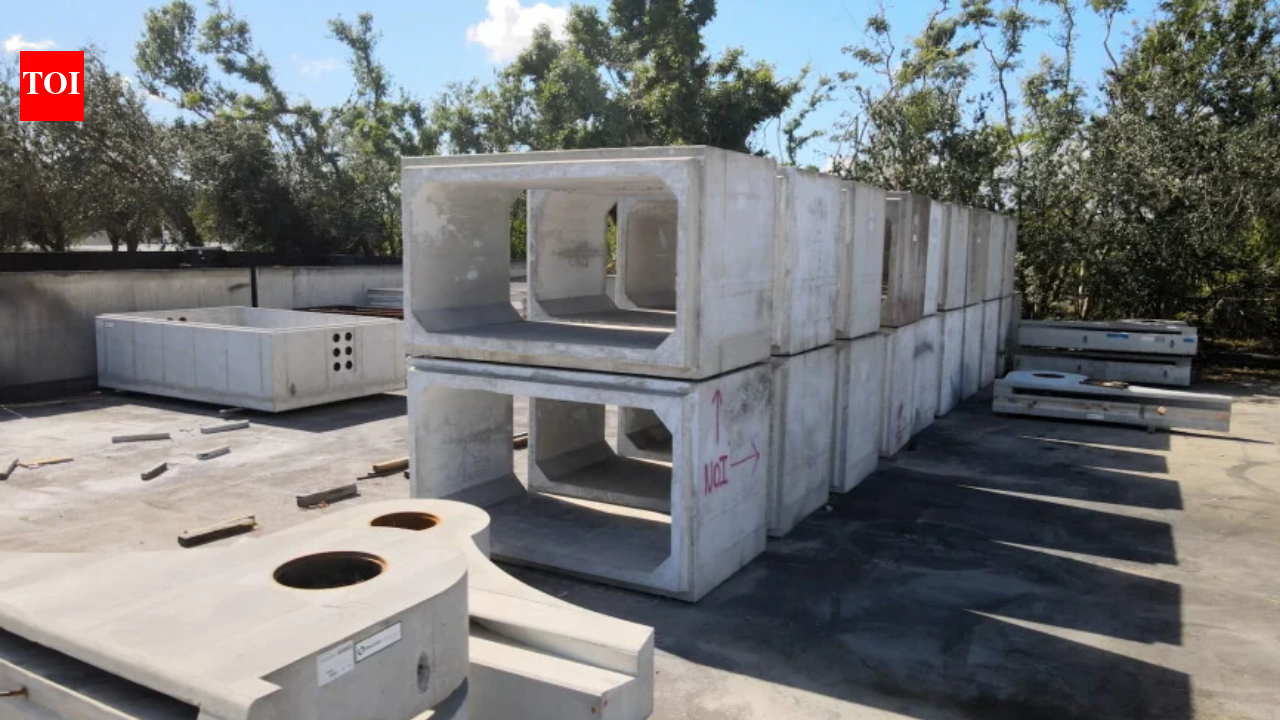
A major marine construction project is underway off the coast of Okaloosa County, where workers have started placing three million pounds of recycled concrete drainage pipes on the seabed to create three artificial reefs. The project involves lowering 1,500 tons of heavy concrete pipes into the Gulf of Mexico near Destin-Fort Walton Beach. Each of the three planned reef sites will receive around 500 tons of material. The pipes will be arranged in large groups to provide shelter and feeding areas for local marine life. According to information released by the Fish and Wildlife Foundation of Florida, the work is expected to continue through November 2026.
Site selection and underwater structure
The concrete pipes are being placed at selected locations between four and eight nautical miles off East Pass. The water depth at the three sites ranges from 68 to 74 feet. Engineers have planned the arrangement of the heavy pipes to create complex underwater habitats on an otherwise flat, sandy seabed. Once the pipes settle on the ocean floor, their concrete surfaces will provide places for algae, barnacles and soft corals to grow and attach themselves. The hollow spaces inside the pipes will give smaller fish places to hide. The larger structures will also create hunting areas for bigger fish, including groupers, snappers and amberjacks. According to the Fish and Wildlife Foundation of Florida, the project aims to create more opportunities for both commercial and recreational fishing, as well as scuba diving in the region.
Part of a broader state network
The project near Destin-Fort Walton Beach is the second official reef placement under Florida’s Coastal Corridor initiative. The statewide programme is jointly managed by the Fish and Wildlife Foundation of Florida and the Florida Fish and Wildlife Conservation Commission (FWC). The first project under the initiative took place off the coast of Naples on 2 September 2026. By adding the Okaloosa County location, project managers are extending the conservation network into northwest Florida. The wider plan aims to connect marine habitats along both the Gulf of Mexico and Atlantic coasts. These include natural coral reefs, artificial reefs, seagrass beds and coastal mangrove forests. “Three million pounds of reef material makes this a big deployment, but what excites us most is what it represents,” said Nick Wiley, Executive Director of the Fish and Wildlife Foundation of Florida, in an official statement. “We are beginning to turn the Coastal Corridor from a statewide vision into real habitat in Florida waters. Okaloosa County has been an outstanding partner, and this is exactly the kind of collaboration that will allow the initiative to grow from one community to the next.”
Local partnerships and scientific planning
Local officials in Okaloosa County worked directly with state wildlife authorities to select the underwater locations. The county already manages several artificial reefs offshore, making it a suitable place to add more marine habitats. Okaloosa County Board Chairman Trey Goodwin welcomed the decision to bring state support and resources to local waters. “These collaborations are necessary to continue the statewide effort to improve habitat for marine life in the Gulf,” Goodwin said in public statements released by the foundation. “We appreciate the Fish and Wildlife Foundation of Florida for choosing Destin-Fort Walton Beach to add to our already vibrant artificial reef system.”State conservation officials said using strong materials such as heavy concrete pipes will help the new reefs survive powerful underwater currents and storm surges for many years. “Thoughtfully planned artificial reefs can play an important role in conserving and enhancing marine habitat while supporting the long-term health of Florida’s fisheries,” said Roger Young, Executive Director of the FWC, in comments documented by the foundation. “Projects like this bring together sound science, careful site selection, durable materials, and strong local partnerships to create habitat that supports marine life and helps sustain healthy marine resources for generations to come.” As the placement work moves towards completion in late autumn, FWC scientists will monitor the new reefs. They will study how quickly fish begin to settle around the structures and how marine growth develops over time.