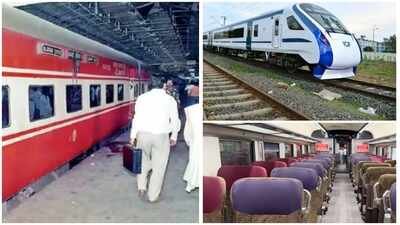
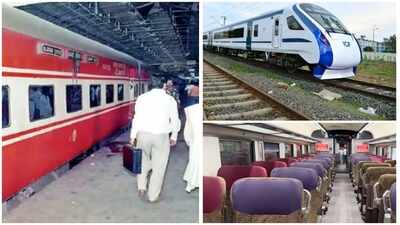
In March 1969, Indian Railways flagged off its first Rajdhani Express train. In many ways the launch of Rajdhani Express trains heralded a new era for the national transporter – a fully air-conditioned train that technically broke the ‘speed barrier’ for Indian Railways.Almost two decades after that came the Shatabdi Express trains – a comfortable, day time travel experience that changed inter-city travel experience, taking it to a new level.Fifty years after the first Rajdhani Express was launched, and over 30 years after the Shatabdi, came the Vande Bharat Express – a technological leap that has changed modern day travel on Indian Railways.As Jagannarayan Padmanabhan, Senior Director and Global Head-Consulting, Crisil Intelligence says, Indian Railways’ passenger journey can be seen as a progression through three important generations of trains.“Rajdhani represented a fundamental shift towards faster, long-distance inter-city travel with a focus on connecting the national capital with major cities. Shatabdi took this further by making daytime inter-city travel faster and more convenient, particularly on shorter and medium-distance routes.”“Vande Bharat represents the next significant evolution, not simply because it is faster, but because it brings together speed, acceleration, passenger comfort, modern interiors, improved onboard services and a more contemporary travel experience,” he tells TOI.In some ways, the story of India’s premium passenger trains is a story of Indian Railways repeatedly pushing the limits of speed, comfort and technology. It is also the story of moving from ICF design coaches to LHB and now train sets with an aim to run trains that meet global standards.
The first Rajdhani and Shatabdi Express trains
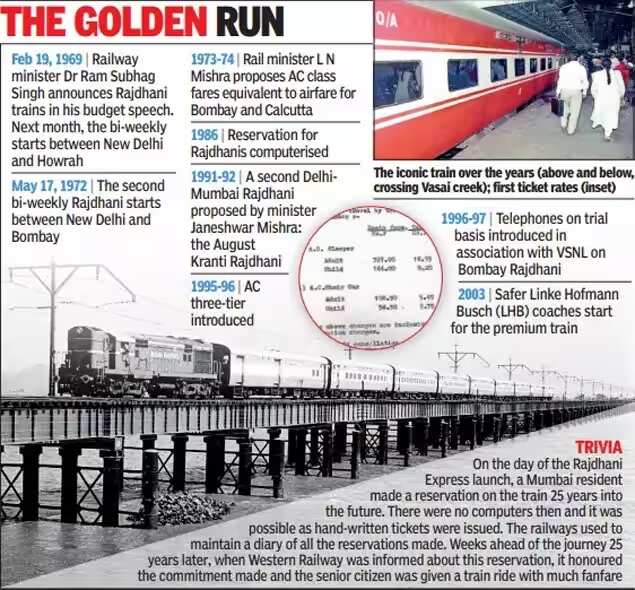
Indian Railways has called the introduction of the first Rajdhani Express service a landmark moment. With its launch, India Railways broke a speed ceiling that had constrained Indian Railways for about a century.The maximum operating speed on broad-gauge routes had at that time been limited to 96 kmph, and RDSO began a systematic study in 1960 to find ways of increasing speeds.The breakthrough came after RDSO’s recommendations were accepted by the Railway Board in June 1968, which concluded that speeds on the Delhi-Howrah route could be raised without large-scale capital investment in tracks, bridges or signalling.Test and prototype rakes were run over the entire Delhi-Howrah route once a month for eight months, with trials conducted at speeds up to 136 kmph.
The journey of Rajdhani Express
The first Rajdhani then began service in 1969, running between New Delhi and Howrah at 120 kmph, covering 1,445 km in about 17 hours 20 minutes with three stoppages.Sudhanshu Mani, retired ICF GM and the architect of the Vande Bharat Express trains calls the introduction of the Rajdhani Express as a watershed moment.“The track technology was improved so that trains could run at speeds of 130 kmph, and in fact because of that the tracks on which these trains were run started being called a Rajdhani-standard track,” he tells TOI.“The concept itself was related to overnight service with all needs taken care of, linen provided. What is also important to note is that at that time very few countries in Asia had trains that could run at speeds of 130 kmph, except for Japan. It was a turning point in terms of fast passenger service,” he explains.The first Shatabdi was introduced in 1988 and was fully air-conditioned and fully reserved, with speeds reaching the 140 kmph mark. It became one of Indian Railways’ fastest passenger services, building on the speed and premium-travel model established by Rajdhani.Sudhanshu Mani notes that the new chair car design became a huge success.G Raghuram, Advisor, The Infravision Foundation points out that Rajdhani and Shatabdi Express trains gave relatively faster travel options than Mail/Express trains and the brand name allowed for higher attention to be paid to service standards.Which is not to say that between Rajdhani, Shatabdi and Vande Bharat Express trains no upgrade in passenger travel took place. From Sampark Kranti and Duronto to Tejas and Humsafar Express – newer train concepts with better passenger amenities repeatedly took the spotlight.“There were other branded trains that were subsequently introduced – Sampark Kranti Express for example, connected one state to the other, with fewer stops in between, and more stops once the train reached the destination state. Duronto Express was launched with fewer stops and premium experience,” he says.The coach technology also evolved. From using ICF design coaches to begin with, Indian Railways adopted the German technology Linke-Hofmann-Busch (LHB) coaches in 2003, with the first set used for Delhi-Mumbai Rajdhani.G Raghuram, Advisor, The Infravision Foundation says ICF coaches were an improvement over existing railway coaches because they were non-telescopic – which meant that in case of a train crash, the coaches did not squash into each other. Then came LHB coaches with anti-climbing features, so that a crash did not cause coaches to climb on top of each other.Indian Railways eventually stopped production of ICF design coaches, and now makes either LHB coaches or train sets.
Vande Bharat Express
Several years after the Rajdhanis and Shatabdis, in 2019 Vande Bharat Express marked the next big milestone for Indian Railways with several firsts. The 16-coach all air-conditioned train set ushered a new era of modern train travel in India.Sudhanshu Mani, the ICF GM at that time spearheaded the project, and the train, called Train 18 at the time for its year of manufacturing (2018), was designed and rolled out in a record 18 months.It marked India’s entry into a semi-high speed self-propelled train set category – a train that could run at speeds of 180 kmph with no locomotive needed to pull it.“Vande Bharat is a train set and it matches a trend world over where trains are mostly run without a locomotive. Vande Bharat brought in a new technology for Indian Railways – a train set that could run at 180 kmph, upgradable to 200 kmph,” Sudhanshu Mani tells TOI.
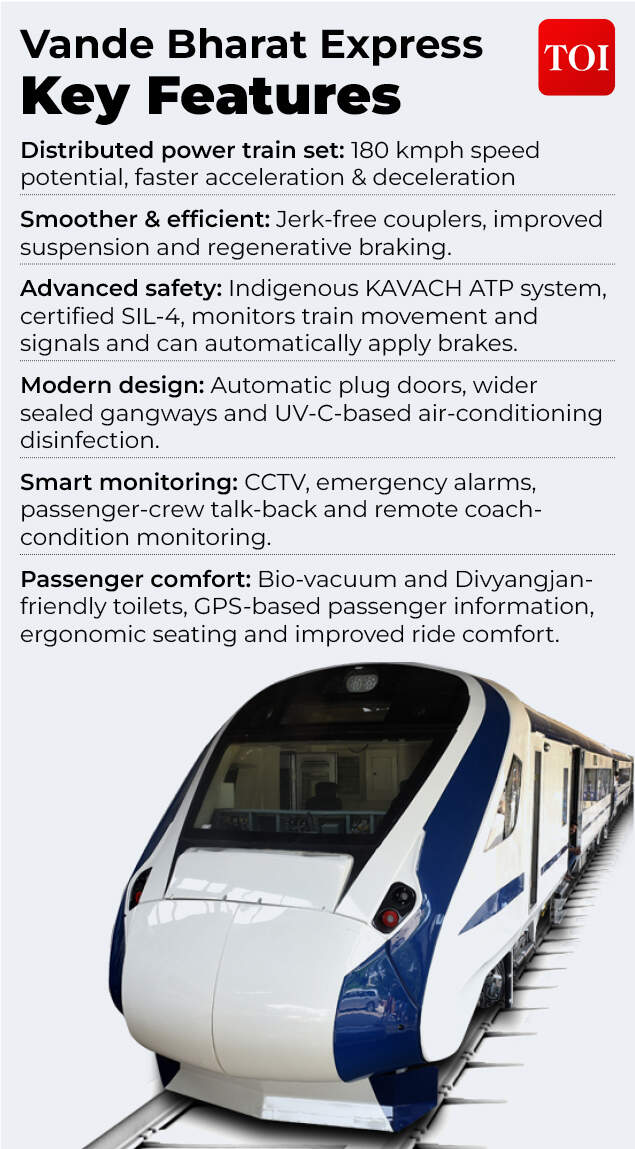
Vande Bharat Express Key Features
And, the change is not limited to running trains faster. It has several important upgrades and features in terms of propulsion, braking, safety, passenger information and onboard systems.The new train was swanky with a bullet train style conical nose and several aircraft style features.One of the key engineering changes is the train’s ability to accelerate and decelerate faster. This allows Vande Bharat to reduce journey times by up to 45% on several corridors.The train boasts of European-style seats, automatic doors, GPS-based passenger information systems, onboard infotainment and regenerative braking, which helps improve energy efficiency during operations.The train’s mechanical design also focuses on improving the ride itself. Semi-permanent jerk-free couplers and improved suspension systems contribute to smoother travel, while regenerative braking allows energy efficiency to be built into the train’s operation.Centrally controlled automatic plug doors and fully sealed wider gangways further integrate the coaches into a single trainset rather than treating them as separate units.Safety is another major technological component. Vande Bharat incorporates provision for KAVACH, India’s indigenously developed Automatic Train Protection system, which is certified to Safety Integrity Level-4.
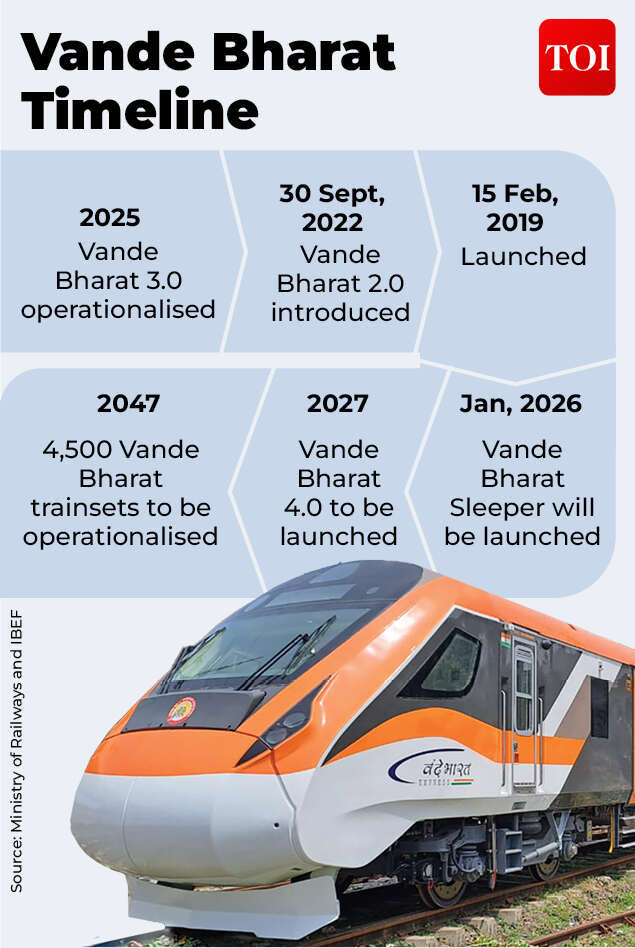
Vande Bharat Express Timeline
The train has constantly been upgraded and Vande Bharat 3.0 can now accelerate from 0 to 100 kmph in about 52 seconds, while also offering lower noise and vibration levels.Another important leap is that the train sets and its systems are manufactured with around 90% localisation.G Raghuram says that in terms of technology, Vande Bharat Express is the third big leap post independence in passenger train operations: from ICF design coaches to LHB coaches, and now a distributed power self-propelled train set.“Vande Bharat Express improves more on the crashworthy features,” he tells TOI. He says that the biggest USP of Vande Bharat Express trains is the fact that they are powered by linear induction motors.“The power is distributed which makes acceleration and deceleration quicker. This enhances the average speed of the train,” he says.“Additionally, the distributed power makes the ride jerk-free. In locomotive-powered trains such as Rajdhani and Shatabdi Express, even with modern technology and semi-permanent couplers, because the power of the train comes from the locomotive, there is a transmission lag, which results in jerkier rides,” he adds.
Vande Bharat sleeper
In 2026, almost seven years after the launch of the first Vande Bharat Express train, its sleeper variant was launched. Two prototype rakes run between Howrah and Guwahati, and many more are either being tested or are in the manufacturing stage.While Vande Bharat addressed day time travel needs, the sleeper variant aims to revolutionise overnight travel. Apart from the benefits of the train set technology, Vande Bharat sleeper trains have passenger amenities and safety features that are superior to Rajdhani Express trains.
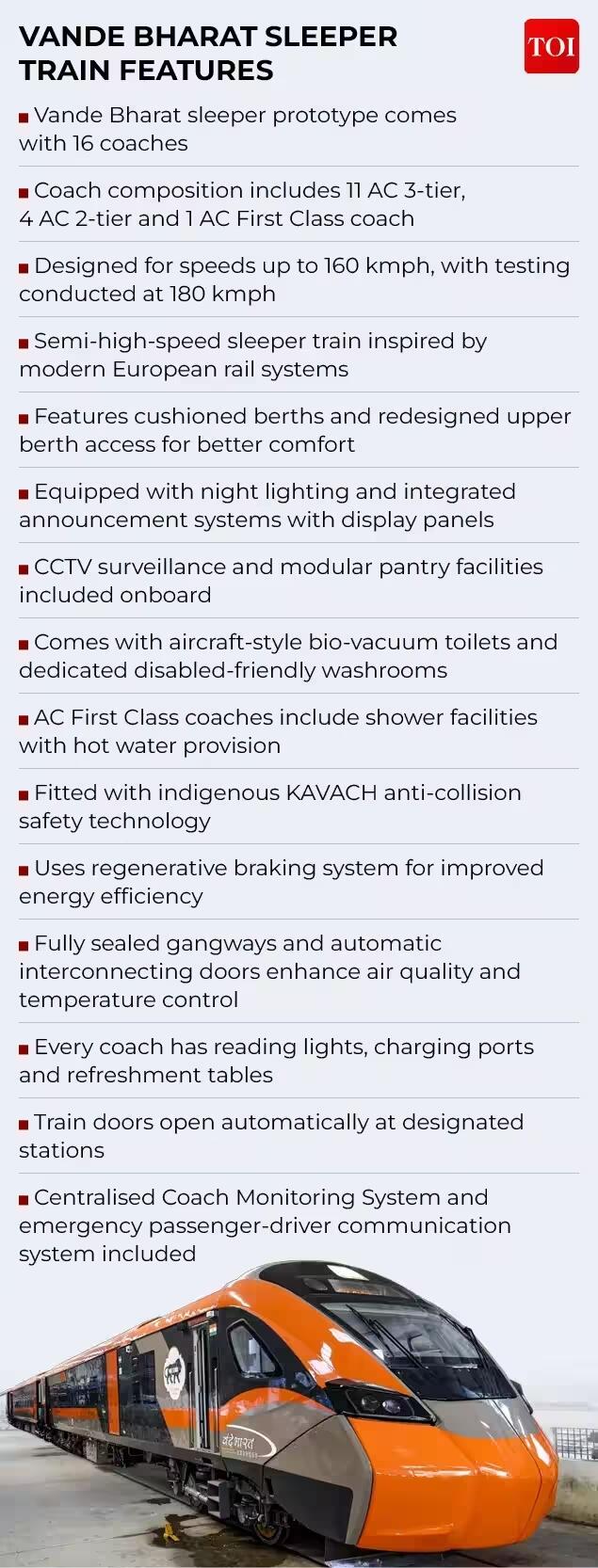
Vande Bharat sleeper: Key Features of the train
Around 260 Vande Bharat Express trains are expected to be rolled out in the coming years, covering high density railway networks, with speeds of over 130 kmph, and possibly even 160 kmph as the network gets upgraded.The first ten train sets are being made by BEML in collaboration with ICF. Another 120 train sets will be made by Kinet (an Indo-Russian JV), and 80 by a BHEL-Titagarh Wagons consortium. ICF itself has been tasked with making 50 Vande Bharat sleeper train sets, with more coaches and a full pantry for longer distance overnight journeys.So, what next?
The way forward
Bullet trains. India is now looking to manufacture its own high-speed train set capable of speeds of 280 kmph. The indigenously designed and developed train set is currently being manufactured by BEML and is expected to be rolled out for trials in early 2027.The bullet train will run on the Mumbai-Ahmedabad high-speed rail corridor, India’s first, a part of which is scheduled to open in August 2027. The Rs 866.87 crore contract is for making two prototype bullet trains.After Vande Bharat Express trains, experts see this as the next big railway engineering leap for India.Railway experts say Vande Bharat Express trains set global standards, and revolutionized travel on Indian Railways. With bullet trains, India now looks to enter a new club.