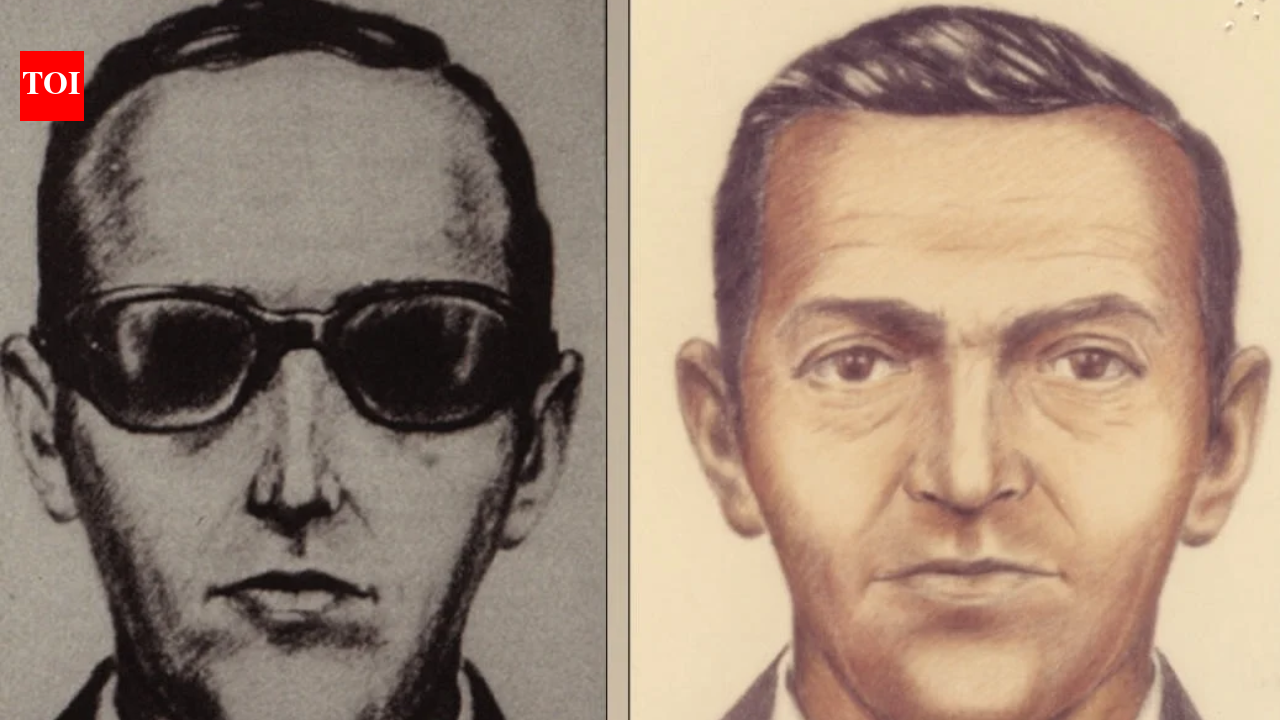
A worn fragment of a $20 banknote linked to the famous 1971 D.B. Cooper hijacking has sold for $134,200 (£102,800) at an auction in Dallas, Texas. The damaged banknote is one of the few pieces of physical evidence ever recovered from the ransom money given to the unidentified hijacker before he parachuted into the wilderness of the Pacific Northwest. According to official sales records published by Heritage Auctions, the 1969-series $20 Federal Reserve Note, with serial number L32796069A, was part of the GACC U.S. Currency Signature Auction held from October 6 to October 9, 2026.Raiden Honaker, Director of U.S. Currency at Heritage Auctions, spoke about the banknote’s unusual historical appeal after the sale. “High denominations always garner attention from the most serious collectors, and the $10,000 that led this auction is an extraordinary example that drew a result fitting of a note of this caliber,” Honaker said in a press release issued by Heritage Auctions. “The $10,000 and $5,000 Federal Reserve Notes are extraordinary pieces of American monetary history, but what makes this auction particularly exciting is the strength of the material across so many different collecting specialties. From an exceptionally rare fractional currency pair to a surviving piece of the D.B. Cooper ransom, collectors had opportunities to acquire notes with compelling histories and remarkable rarity.”
Hijacking and the vanishing extortionist
The story behind the banknote began on November 24, 1971, when a passenger using the name Dan Cooper boarded a Northwest Orient Airlines Boeing 727 flight from Portland, Oregon, to Seattle, Washington. According to case records held by the Federal Bureau of Investigation (FBI), Cooper gave a flight attendant a note claiming he had a bomb in his briefcase. After the plane landed in Seattle, he released 36 passengers in exchange for $200,000 in cash. The ransom consisted of 10,000 unrecorded $20 bills and came with four parachutes. Following Cooper’s instructions, the plane took off again and headed toward Reno, Nevada. Somewhere between Seattle and Reno, over a remote, heavily forested area of southwestern Washington state, Cooper lowered the plane’s rear stairs and jumped into a cold rainstorm at night with the ransom money. Despite a major FBI search known as NORJAK (Northwest Hijacking), federal agents found no trace of Cooper, his parachutes, or the money for nearly a decade.
Discovery on Tena Bar riverbank
The mystery took an unexpected turn in February 1980, when eight-year-old Brian Ingram was digging in the sand to build a campfire during a family outing at Tena Bar. The beach lies along the Columbia River near Vancouver, Washington. According to historical records from the FBI, Ingram found three decaying bundles of ransom money buried in the sand. The bundles contained about $5,800. Federal investigators checked the serial numbers on the damaged bills and confirmed that they matched the official list of $20 notes handed to Cooper during the 1971 hijacking. The discovery led to renewed searches along the riverbanks. However, investigators could not determine whether river currents had carried the money to Tena Bar or whether Cooper had buried it there himself. In 1986, federal authorities allowed the Ingram family to keep some of the recovered bills. These notes have appeared at major currency auctions from time to time over the following decades.
Market interest and auction results
The $134,200 sale shows that public interest in the unsolved case remains strong. The D.B. Cooper hijacking is still the only unsolved skyjacking in commercial aviation history. The $20 note fragment sold by Heritage Auctions has badly damaged edges, water damage, and missing sections. These marks resulted from years of exposure to river sediment before the note was found in 1980. According to official reporting from Heritage Auctions, the D.B. Cooper bill was offered alongside historically important high-denomination banknotes. The auction brought in a total of $8,727,555 from sales of US paper money. The FBI officially ended its active field investigation into the Cooper case in July 2016. The agency redirected its resources to other criminal cases but continues to review physical evidence and serial numbers submitted by members of the public.