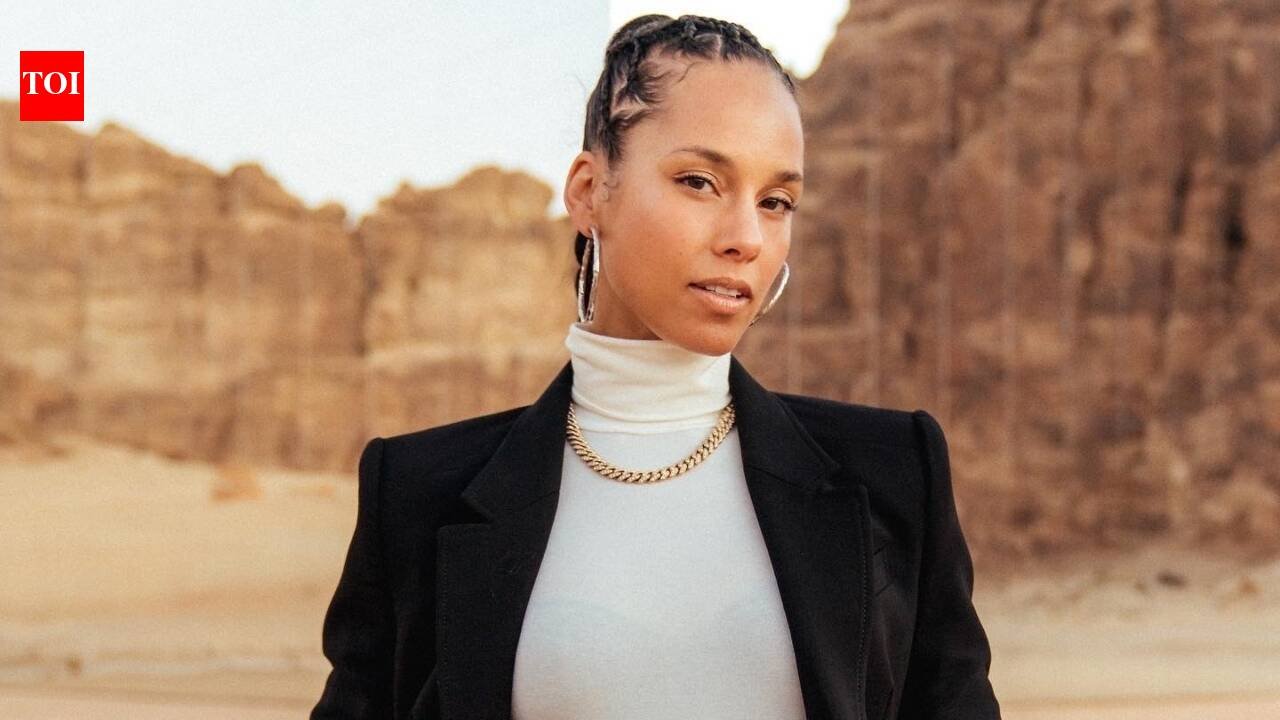
Alicia Keys, 45, is now a mother of five (two biological children and three stepchildren). Motherhood came to her as an adult, but the instinct to look after children was there well before that. Long before she had children of her own, she was already caring about children on the brink of neglect.Alicia Keys was just 20 when she travelled to South Africa as part of MTV’s Staying Alive campaign. During the visit, she went to clinics where pregnant women and new mothers were confronting the reality of HIV/AIDS, including the risk of passing the virus on to their babies. She also witnessed widows and children orphaned by AIDS struggling to survive. “I couldn’t turn my back on all I’d seen,” Keys told WebMD at the time. The experience inspired her to co-found Keep a Child Alive in 2003 alongside AIDS activist Leigh Blake, with the aim of helping children and families affected by HIV/AIDS access life-saving medication and essential support.Twenty years later, the non-profit charity had raised $86.6 million, worked in 28 countries and supported over 9.3 million children, young people and families.
A trip that changed many lives
At 20, Keys travelled to South Africa as part of MTV’s Staying Alive campaign, which focused on HIV and AIDS. What she saw there changed her life and many others for the better. “At the time, a lot of women didn’t realize that if you are positive and you breastfeed your baby, your baby will contract it,” Keys told People in 2019. “The moms just wanted medicine to keep them alive. That was the first time as a 20-year-old that I was aware of the injustice. I thought, ‘How can something be available, but you can’t have it because you’re poor?’ I just felt like that was a death sentence. That’s what outraged me and motivated me. When I came back, I was never the same.” She couldn’t just turn her back on these children and women. She had to do something.
Keep a Child Alive
That something became a non-profit organisation called Keep a Child Alive. True to its name, its mission was to keep children alive. The aim was to support children facing the most challenging circumstances. Keys built the organisation with AIDS activist Leigh Blake, who had already worked on the issue for years. Blake had helped organise a 2001 remake of Marvin Gaye’s “What’s Going On” to raise AIDS awareness, with Bono as co-executive producer, and had funded a clinic in Kenya. Keep a Child Alive launched in 2003 with a simple aim: to get life-saving AIDS medication to children and families who could not afford it. Blake took the lead on the medical and fundraising side, while Keys became the public face. Keys’ contribution over the years has been steady. Its annual fundraiser, the Black Ball, has been a regular fixture on New York’s calendar.The non-profit has 41 partners, according to the organisation. The Hell’s Kitchen partnership was one of the group’s more visible recent efforts. Starting in April 2024, the production and ticketing partner TodayTix Group pledged $1 from every ticket sold for the Broadway run. In October, the show announced that it had donated $1 million, including matching gifts. The charity said that sum would reach 18,250 children across eight countries. A later statement put the total at more than $1.5 million.“I have taken such pride in being a co-founder of Keep a Child Alive since its creation over 20 years ago and all the lives we have been able to touch and all that we have been able to accomplish so far. Hell’s Kitchen is about a 17-year-old girl trying to find her way in NYC. Both Hell’s Kitchen and Keep a Child Alive believe that every child in the world should have the opportunity to thrive. I feel immense gratitude that we can partner, with equal passion, to create an even greater force for change,” Alicia Keys said in a statement released on the non-profit’s website.Keys started the organisation to get antiretroviral drugs to children who had no other route to treatment. It was an emergency effort to reach families in South Africa, Uganda, India, Kenya and Rwanda. Over time, the mission widened to cover health, education and human rights, though HIV remains at its centre.