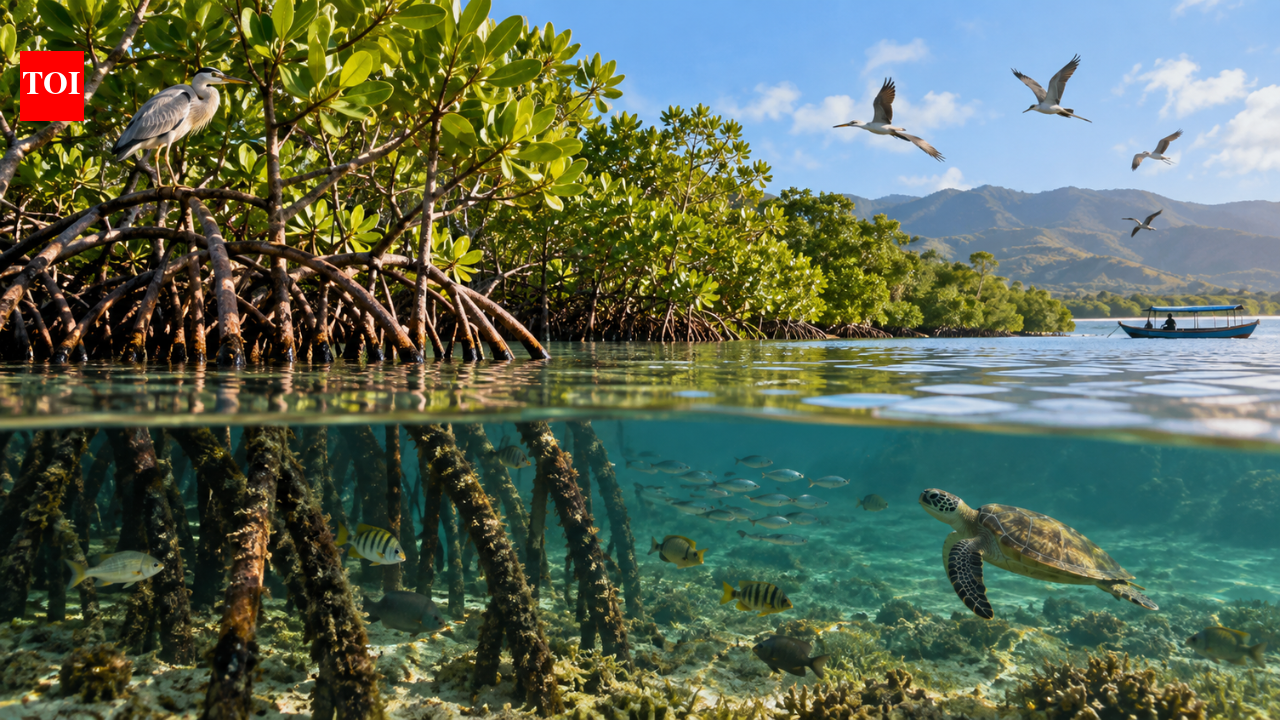
Indonesia’s Flores Island was the site of a mangrove reforestation project launched in 2013, with native seedlings planted along the coast between Ende and Sikka. Ten years later, researchers surveyed restored areas at Bangkoor, Kolisia and Talibura to assess plant and animal diversity, carbon sequestration and energy storage. The study recorded 10 mangrove species and 10 fauna species across the three sites. Kolisia had the highest mangrove species richness, while Talibura had the highest fauna species richness. Restored stands also recorded carbon sequestration, although the researchers found differences in vegetation development between the three locations after a decade.
What did scientists find in Indonesia’s replanted Flores mangroves
According to the study published in Scientific Reports titled ‘Mangroves, fauna compositions and carbon sequestration after ten years restoration on Flores Island, Indonesia’, the survey identified 10 mangrove species from six families across the three locations. Kolisia recorded the highest plant species richness, with eight species, followed by Bangkoor with seven and Talibura with five. The study found that Kolisia had the highest vegetation diversity, while Talibura had a large number of seedlings and saplings.The researchers also identified 10 fauna species across the three reforestation sites. Talibura recorded the highest fauna species richness, with eight species, followed by Bangkoor with seven and Kolisia with six. The animals included the crab-eating macaque (Macaca fascicularis), which the study lists as endangered, along with mudskippers, bivalves, crabs, gastropods, reptiles and birds.
Mangrove restoration stored up to 70.02 Mg CO2 per hectare
After 10 years of reforestation, carbon sequestration in the restored mangrove stands ranged from 28.69 to 70.02 Mg CO2 per hectare. Energy storage ranged from 30.54 × 10⁴ to 54.07 × 10⁴ MJ per hectare. These figures were calculated for Bangkoor and Kolisia because no poles or trees were recorded at Talibura during the assessment.At species level, Rhizophora apiculata had the highest carbon sequestration value, at 47.37 ± 5.68 kg CO2. Bruguiera gymnorhiza recorded the highest energy storage value, at 645.22 ± 201.65 MJ. The researchers estimated carbon and energy storage using above-ground biomass rather than destructive sampling. Carbon storage was calculated using a factor of 0.47.
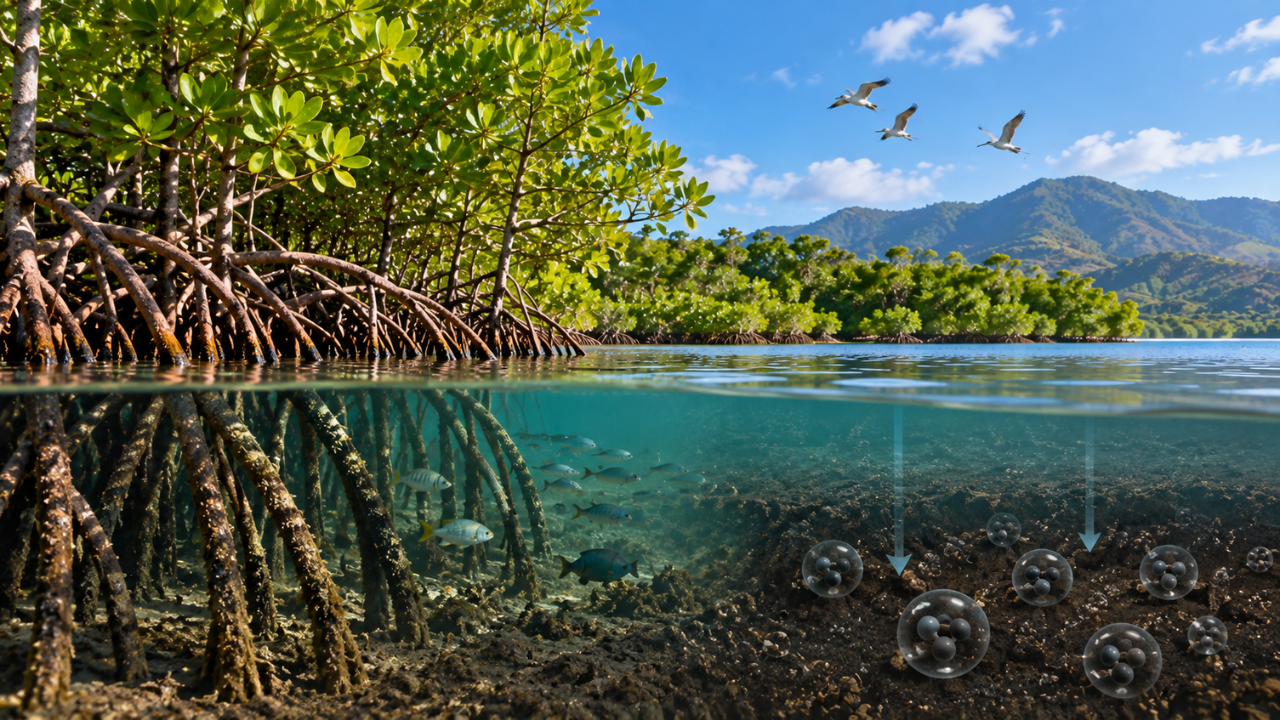
Image AI generated
Mangrove species varied across Flores restoration sites
The researchers found similarities in plant and animal communities between the three restoration sites, although some species occurred only at particular locations. Avicennia marina was recorded only at Kolisia, while Excoecaria agallocha and Lumnitzera rasemosa were recorded only at Bangkoor. Among the animals, Varanus salvator was recorded at Kolisia, while Macaca fascicularis was recorded at Bangkoor.The study found differences in the development of the restored mangroves after 10 years. The researchers reported relatively low levels of species richness, heterogeneity and evenness across the mangrove ecosystems. Talibura had the greatest water depth of the three sites, fewer mangrove species and no poles or trees recorded during the survey. The researchers recommended continued long-term monitoring of mangrove health, resilience and ecological changes.