
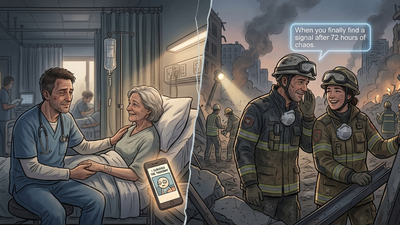
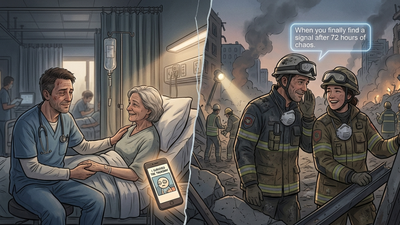
Amid the unendurable, inside hospital wards, in the rubble after a calamity, or in the quiet devastation of personal loss, dark, absurd jokes bubble up like twisted lifelines.“We can either laugh in the face of death or die trying not to,” wrote novelist James Grippando. It’s morbid, it’s wrong, yet it cuts through the horror, reminding us we’re all absurdly alive.George Bernard Shaw put it best: “Life does not cease to be funny when people die any more than it ceases to be serious when people laugh.” The line captures why gallows humour can feel so necessary: it refuses to let death flatten the full, messy complexity of being alive.Far from disrespect or denial, this laughter is humanity’s rawest rebellion – a defiant spark against the void.So today, on World Laughter Day, observed on the first Sunday in May, we honor humour’s weird, healing power.On a day devoted to laughter, perhaps the most profound thing we can examine is not why we laugh when life is good, but why we laugh, almost defiantly, when it is not.“Humour showing up in the middle of crisis isn’t random—it’s one of the mind’s more sophisticated survival tools. When reality feels overwhelming, the brain looks for ways to reduce emotional intensity without denying the situation entirely. Humour allows exactly that,” said Dr Saloni Seth Agarwal Consultant Psychiatrist at Ent and Mind Care ,Indirapuram and associate consultant at Max Vaishali.Dark humor vs. denial: Where’s the line?Not all laughter in crisis is created equal. There is a meaningful, and often misunderstood, distinction between humor that helps people cope and humor that helps them hide.Dark humor, at its most functional, is an act of acknowledgment. It looks suffering directly in the eye and chooses, consciously, to laugh anyway. The cancer patient who jokes about losing her hair, the soldier who trades sardonic quips in the field, the family that dissolves into laughter while sharing embarrassing stories at a funeral, these are not people in denial. They are people in pain who have found a pressure valve.
.
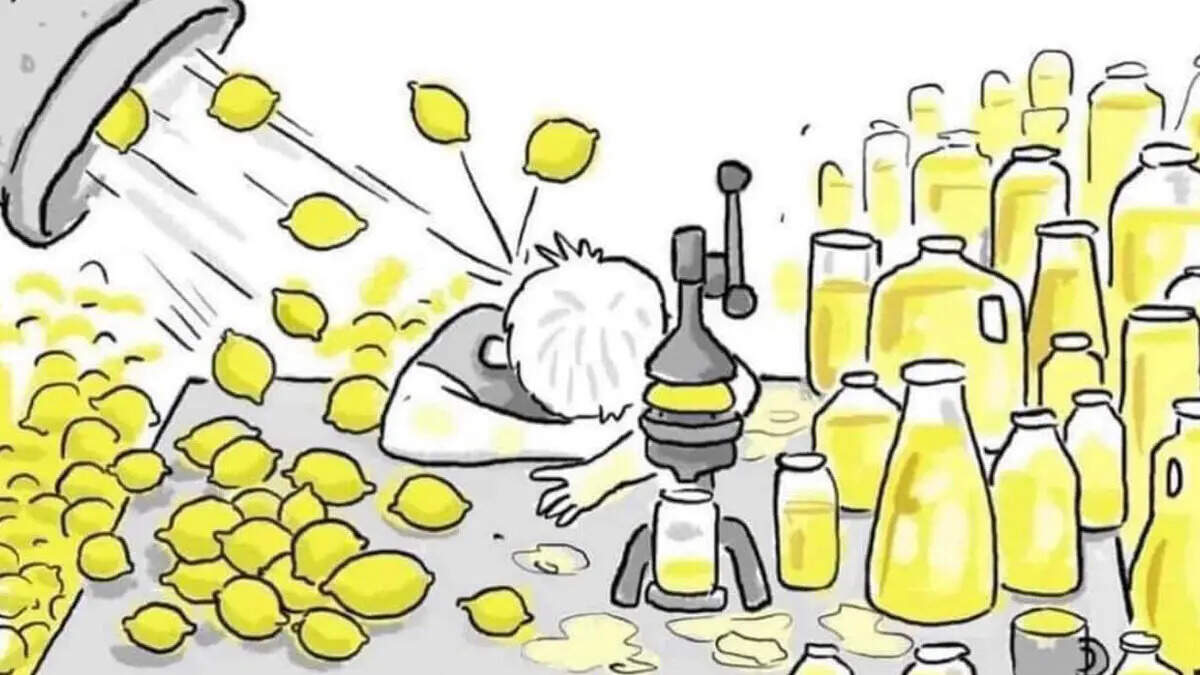
The technical term for this is “gallows humor,” and research consistently shows it can reduce anxiety, foster solidarity, and even improve resilience in high-stress professions like emergency medicine, military service, and disaster relief work. The joke becomes a way of saying: I see this. I am not crushed by it.Denial often operates differently. It does not acknowledge pain and laugh in spite of it, it uses laughter to avoid acknowledgment altogether. It deflects, it minimizes, it keeps difficult emotions permanently at arm’s length. Where dark humor says “this is terrible, and here is how absurd it is,” denial says “this is fine”, and means it. Over time, that distinction carries real psychological consequences. Unprocessed grief does not dissolve; it accumulates.The line between the two is rarely a matter of content, it is a matter of direction. Is the humor moving toward the truth, or away from it? Is it being shared openly among people who understand the weight of what they are laughing about, or is it being used to shut a difficult conversation down?The darkest jokes, told in the right company, can be profoundly honest. It is the laughter that refuses to feel anything at all that should give us pause.
Crisis comedy in the digital age: How Gen Z memes through the pain
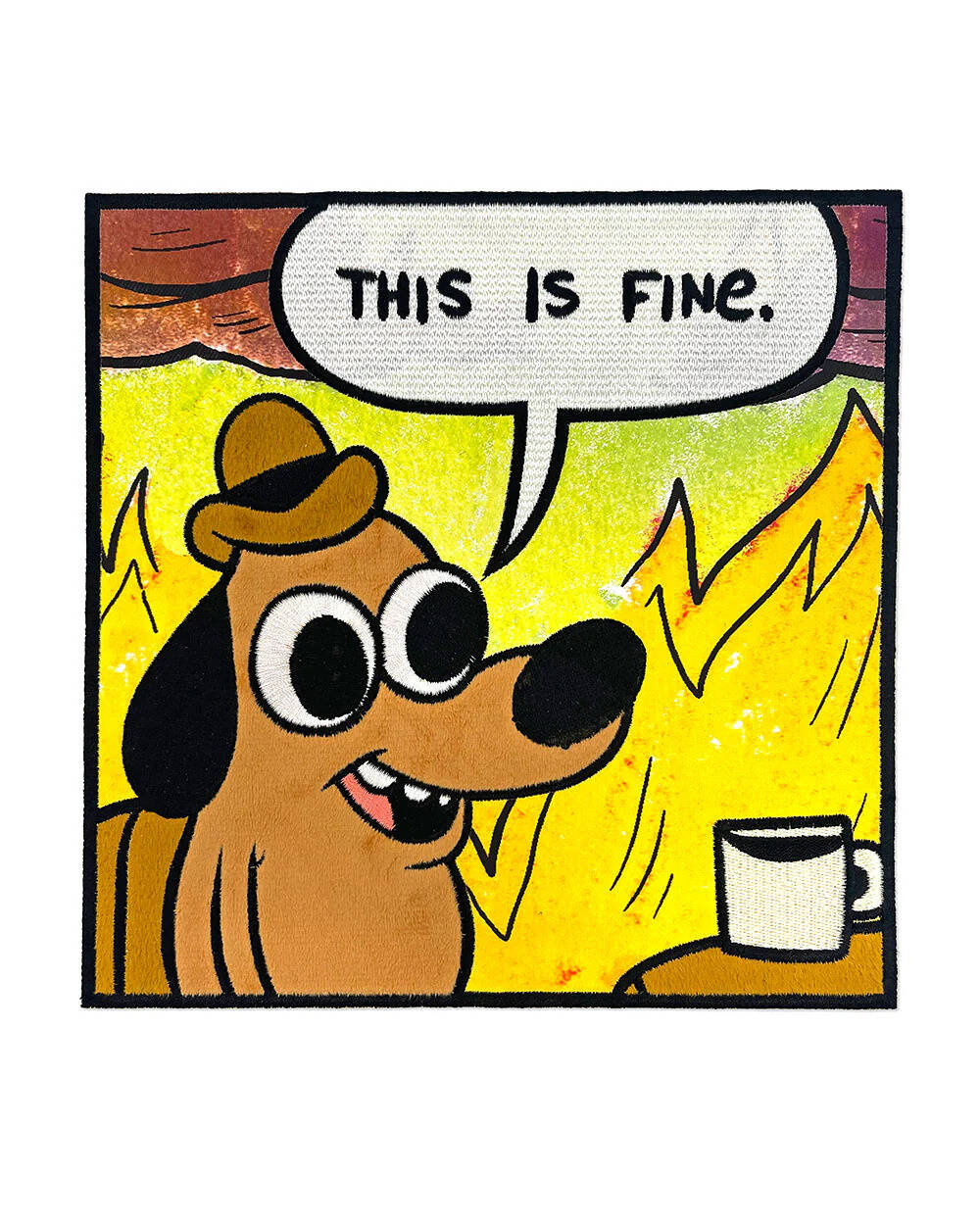
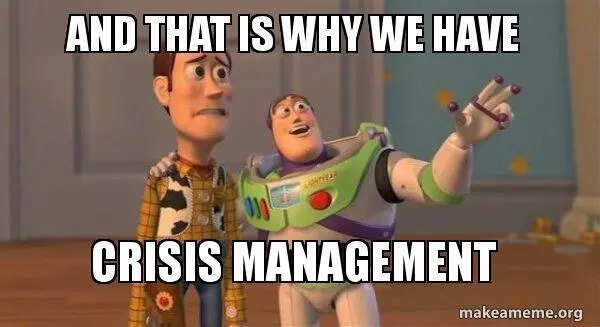
When the world feels like it is actively on fire, sometimes literally, Generation Z does not reach for a newspaper or a therapist first. They open their phones and make a meme about it.For a generation that grew up with climate anxiety as background noise, watched racial injustice trend on social media, lived through a pandemic in their formative years, and inherited an economic landscape that makes feel like owning a house science fiction, humor has become a primary coping language. The meme is their gallows joke, compressed, shareable, and very precise.During the COVID-19 lockdowns, Gen Z flooded the internet with content that was equal parts absurdist and achingly self-aware. “It’s fine” dog memes depicting a figure calmly sipping coffee in a burning room became shorthand for an entire generation’s relationship with collective crisis.
.
Anxiety, burnout, and existential dread were repackaged into formats that were funny enough to share and honest enough to sting. The humor was not dismissive, it was diagnostic. It helped. They were naming what they felt in the only format that felt native to them.“During large-scale crises—pandemics, wars, economic uncertainty—collective humour becomes almost a parallel communication system. It helps communities by normalising shared fear: “If everyone is joking about it, I’m not alone in feeling this way. Reducing ambiguity: Humour simplifies complex, overwhelming realities into digestible narratives,” Dr Agarwal said.

.
“On a personal level, the dynamic is just as revealing. Gen Z openly jokes about therapy, financial stress, loneliness, and mental health struggles on platforms like X, and Instagram in ways that would have seemed startling to previous generations. What looks from the outside like flippancy is often, on closer inspection, a sophisticated form of community-building. When someone posts “me explaining my trauma to a stranger online at 2am” over a cartoon frog, thousands relate, comment, and feel fractionally less alone,” she added.
The science of laughter as a survival mechanism
Laughter has never just been a social nicety. Beneath every chuckle, snort, and helpless giggle, the body is running a remarkably sophisticated biological program, one that, under stress, begins to look less like amusement and more like armour.When we laugh, the brain releases a cascade of endorphins, the same neurochemicals triggered by exercise and, notably, by pain relief. At the same time, cortisol and epinephrine, the hormones most associated with the body’s stress response, begin to drop. Research has found that even the mere anticipation of laughter can reduce cortisol levels by nearly 39 per cent and epinephrine by as much as 70 per cent, meaning the body begins to heal itself before the joke has even landed. In a crisis, where the stress response can become chronically activated and physically damaging, this is not a trivial effect.
.
Evolutionary biologists suggest this is no accident. Laughter, in its earliest form, predates language. Its origins can be traced back approximately 10 million years, and its primary function appears to have been the creation of profound social bonds, the kind that allowed early human communities to hold together under pressure, coordinate during danger, and signal safety to one another. A group that could laugh together was a group that trusted each other. And trust, in a crisis, is often the difference between survival and collapse.“If someone can laugh and reflect, connect, and process their experience, humour becomes a powerful resilience tool.If laughter is the only response available, it may be worth gently exploring what’s underneath, most importantly masked depression or ‘smiling depression’,” Dr Saloni said.