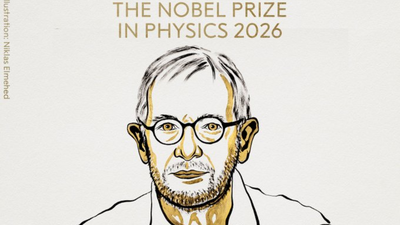
The Nobel Prize in Physics 2026 has been awarded to a Belgian particle physicist, Prof Francis Halzen, for his fundamental contribution to establishing an enormous ice block observatory in the South Pole that detects neutrinos, the ghost particles from outer space.Let us understand what these ghost particles are and why Halzen’s contribution is so relevant
What are ‘ghost’ particles
The neutrino is a tiny subatomic particle that has no charge. It weighs so little that its mass couldn’t be measured yet. However, they are the most abundant particles, with a mass, in the universe.
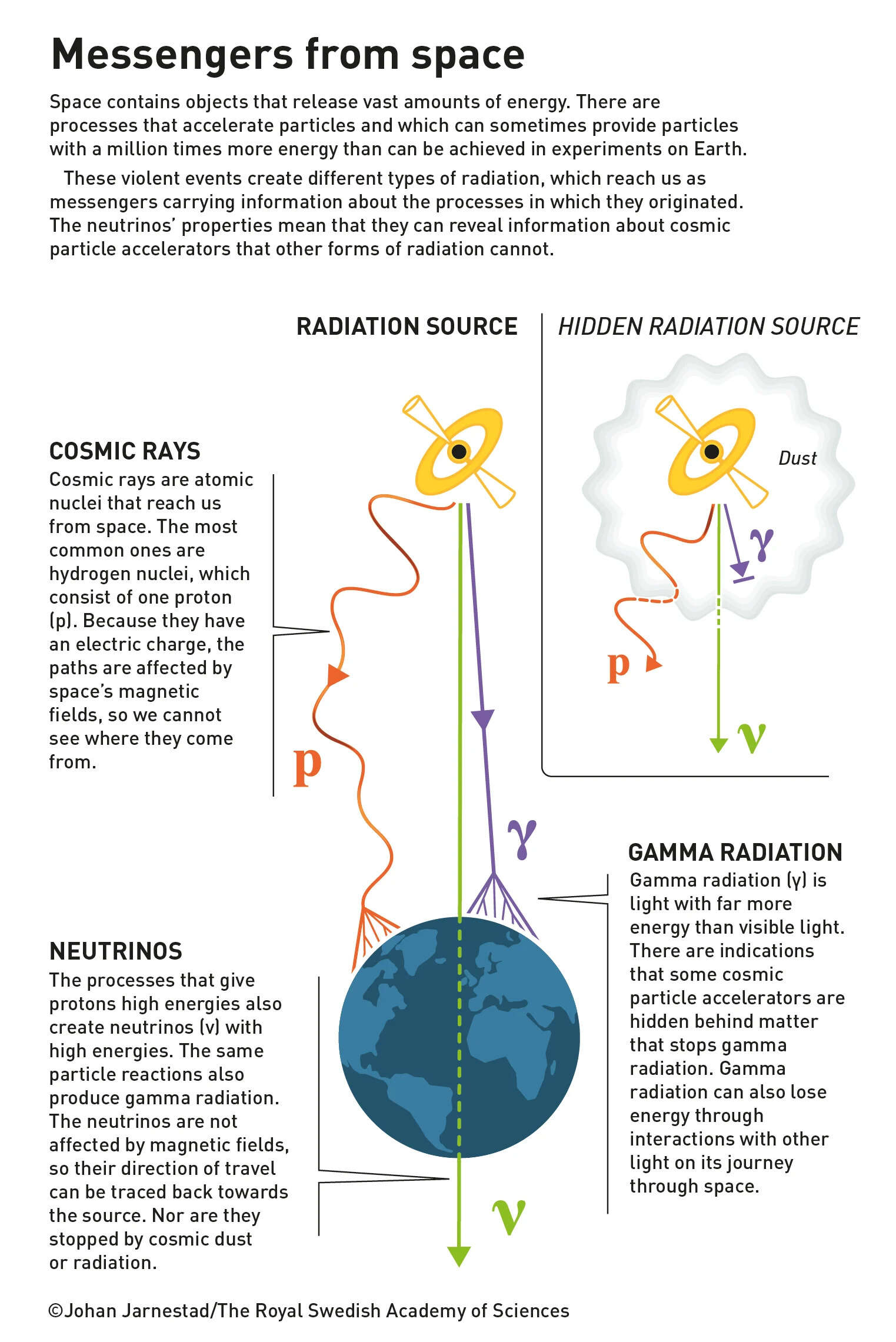
Difference between the neutrinos and other radiation (Credit: The Nobel Prize).
They are generated whenever atomic nuclei fuse, as occurs in the Sun, or split apart, as occurs in a fission reactor or a particle accelerator.These “ghost particles” are elusive and almost never interact with other matter. In fact, trillions of neutrinos from the Sun stream through our body every second, but we can’t feel them.Since the neutrinos are not affected by the magnetic field, they travel without deviation and hence can be traced back towards the source. So a neutrino essentially a messenger that carries information about its powerful place of origin.However, this is only possible if the neutrinos can be detected. This is where Halzen’s contribution becomes relevant.
Antarctica’s massive ice cube observatory
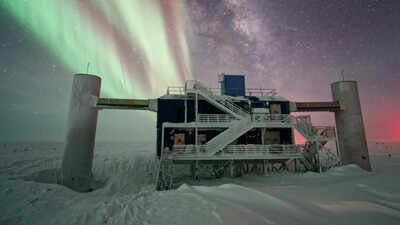
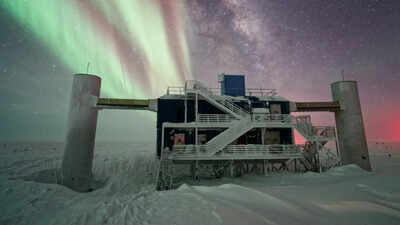
Though extremely rare, when a neutrino collides with an atomic nucleus, it produces a flash of light that can be tracked by sensors in the clear glacial ice, detecting the presence of a neutrino.
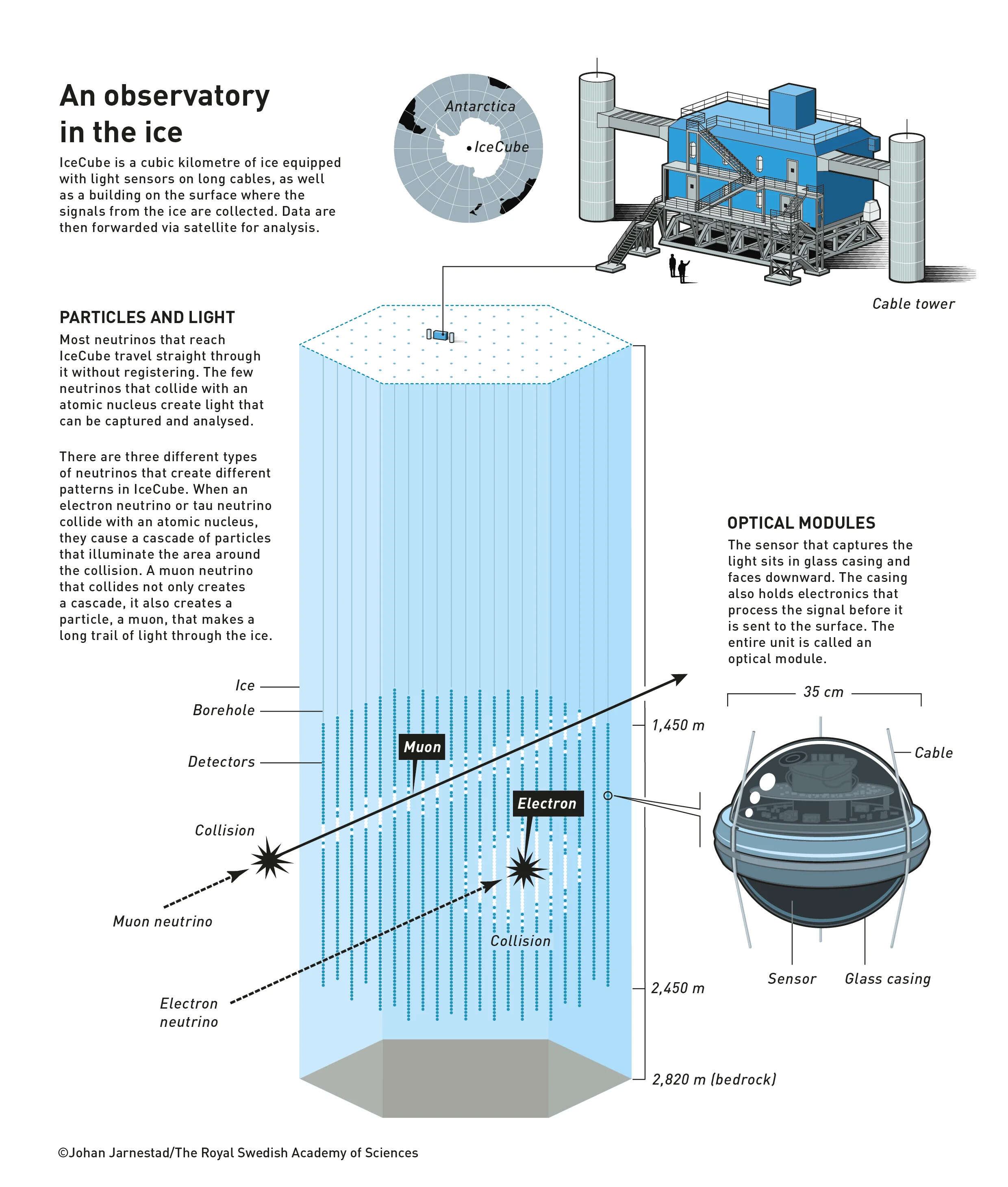
Functioning of the Neutrino IceCube observatory (Credit: The Nobel Prize).
In 1988, Halzen presented his idea of capturing these ghost particles at the South Pole. A laboratory at the South Pole was proposed owing to several advantages offered by the location.Antarctica’s ice is extremely clear and is also free from any kind of interference. The location is geologically stable, with no earthquakes.The IceCube neutrino observatory recorded the first detection of high-energy extraterrestrial neutrinos in 2013, after it began operating in 2011.To construct it, scientists, technicians and engineers placed thousands of basketball-sized light sensors within a cubic kilometre of ice to pick up the faint flashes of light that can occur as neutrinos from space collide with atomic nuclei.
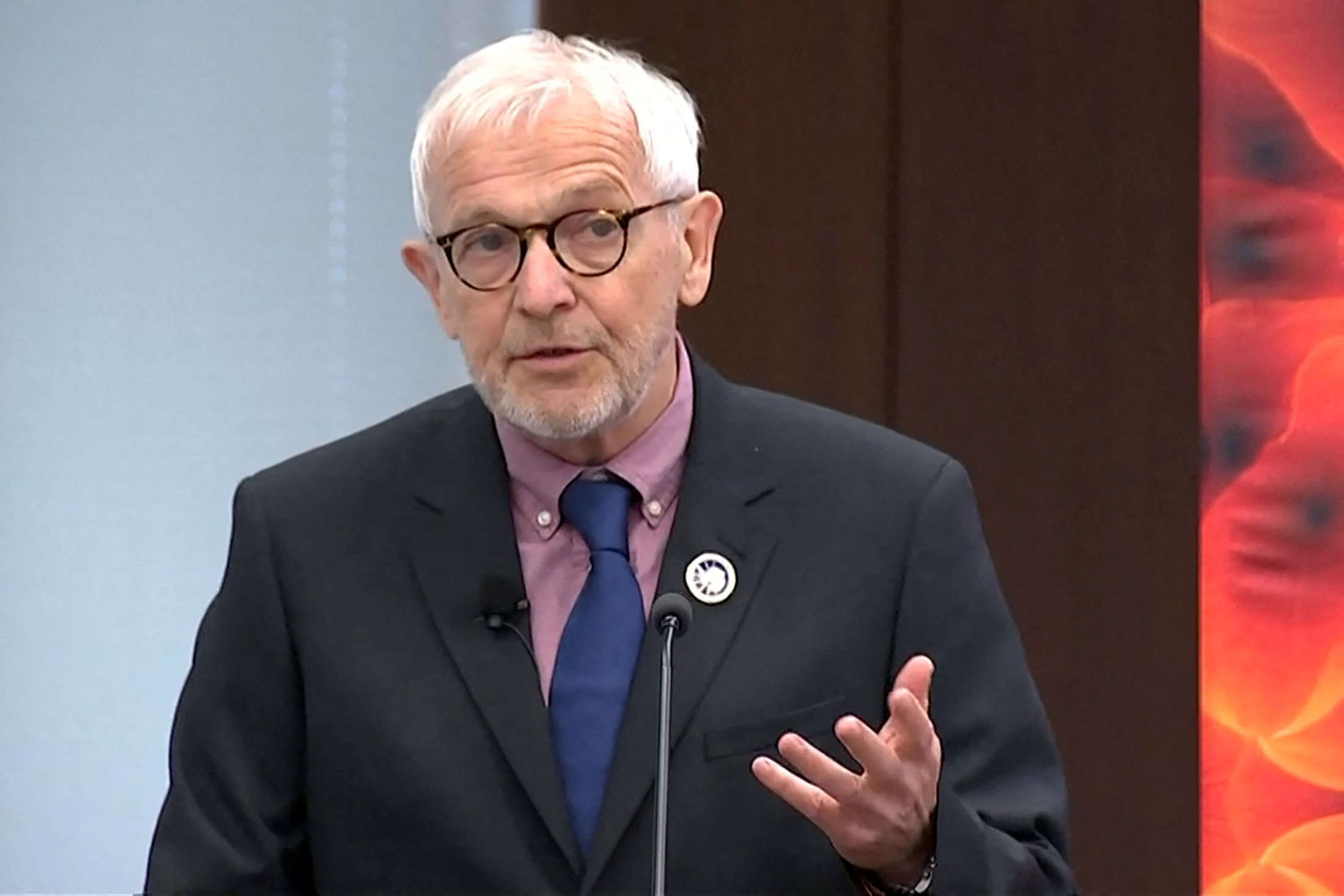
Belgian-American particle physicist Francis Halzen (Photo: Reuters)
The massive one-kilometre cube observation area is used because scientists need an enormous volume of material to increase the odds that a neutrino will occasionally smash into an atomic nucleus.“Francis Halzen has led an international team of researchers and engineers who have provided us with a fantastic instrument. His tenacity and scientific vision have paved the way for a new kind of astronomy,” said Mark Pearce, chair of the Nobel Committee for Physics.