
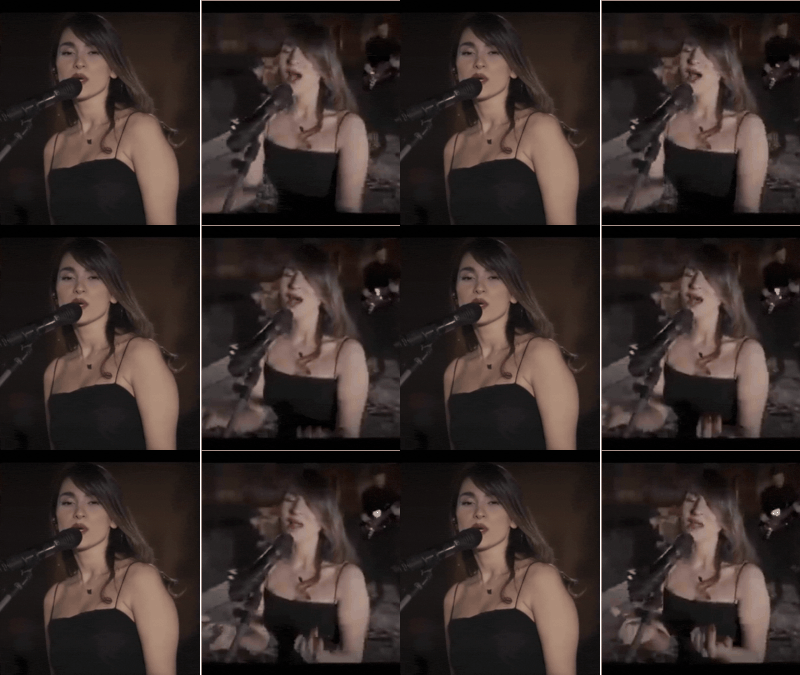
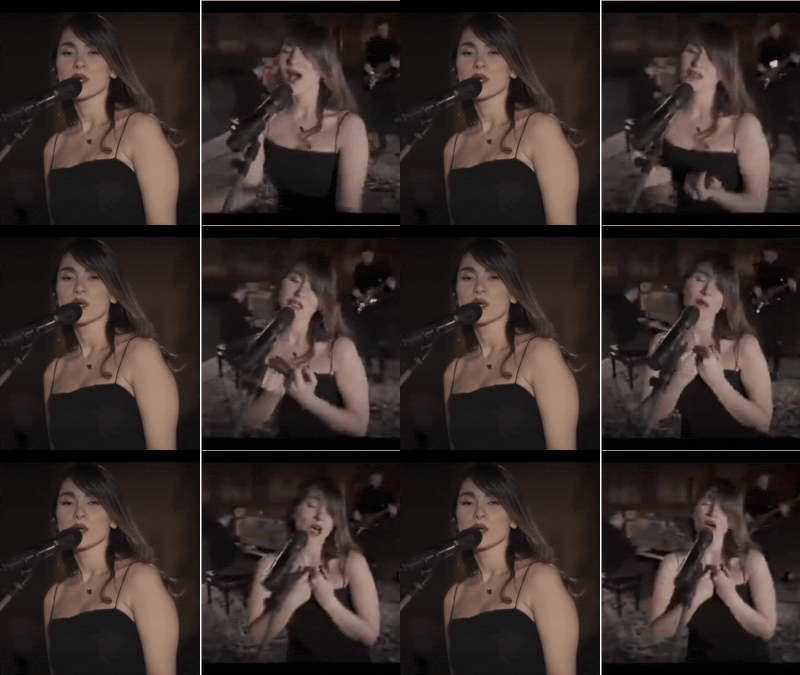
Four years after the death of Mahsa Amini in police custody sparked nationwide protests against Iran’s compulsory hijab laws, Tehranian singer Parastoo Ahmadi has been flogged 74 times for performing without a head covering.Ahmadi and four members of her concert team were given 74 lashes each in the city of Qom on Monday, according to defence lawyer Mostafa Nili, cited by Iran Human Rights (IHRNGO). The punishment was carried out at the Criminal Sentence Enforcement Office in Qom, according to the lawyers.The singer was punished for performing in a sleeveless dress with her hair uncovered during an online concert in December 2024, in “defiance of Iran’s mandatory hijab rules.”Ahmadi’s “Caravanserai Concert” was filmed in December 2024 at the historic Deir-e Gachin Caravanserai near Qom, a city known for its religious seminaries and conservative religious establishment.The performance, which had no live audience, featured Ahmadi singing alongside male musicians. She wore a long black sleeveless dress and performed with her hair uncovered.Iranian authorities subsequently opened a case against Ahmadi and members of her production team over an “illegal concert”. The judiciary-affiliated Mizan News Agency said the performance did not comply with the country’s “legal and religious standards”.A criminal court in Qom convicted Ahmadi and eight others in June of “offending public decency” through the publication of “obscene and indecent material”. The defendants denied the charges.In addition to the flogging sentence, they were banned from audiovisual activities and leaving the country for two years. An appeals court upheld the ruling in September, according to her lawyers.
Four members of her team also flogged
The four men flogged alongside Ahmadi were identified as musicians Soheil Faghih-Nasiri, Amin Taheri and Amir-Ali Pirnia, and concert organiser Mohsen Lashkari.A member of the defence team told the BBC that lawyers had tried to get the verdict overturned, reduce the punishment or suspend its execution.“We did everything in our power to have the verdict overturned, or at least to secure a reduction in the sentence or a suspension, but it didn’t work out,” he said.“The other lawyers and I even tried to get the enforcement of the sentence postponed, but the enforcement branch insisted on carrying it out immediately,” he added.The United Nations Human Rights Office condemned the flogging, describing it as “abhorrent” and calling on Iranian authorities to abolish the practice.“Flogging is a form of torture or other cruel, inhuman or degrading punishment, absolutely prohibited under international law in all circumstances. Iran must abstain from carrying out other flogging sentences and eradicate this practice from its laws,” it added.Mahmood Amiry-Moghaddam, director of IHRNGO told CNN that Ahmadi’s clothing was an important factor in the punishment, but the case also involved her decision to sing publicly and her broader challenge to Iranian authorities.“A government that is incapable of resolving the crises of livelihoods, water and electricity, yet does not hesitate to flog a woman for her voice, has reached the end of its life,” he wrote on X.
Iran’s compulsory hijab laws
Under Iranian law, women and girls above the age of puberty are required to cover their hair and wear long, loose-fitting clothing. Public performances by women are also restricted.In September 2022, protests erupted across Iran following the death of Mahsa Amini, a 22-year-old Kurdish woman detained by morality police in Tehran for allegedly wearing her hijab “improperly”. She died in custody, triggering demonstrations against the country’s clerical establishment.Women took to the streets, burning or waving their headscarves, while hundreds were killed in a crackdown by security forces.Since then, many women have stopped covering their hair in public in open defiance of the dress code. Authorities have responded with arrests, warnings, business closures and other punitive measures.The pressure on female performers has also continued. Singer Hiva Seyfizadeh was sentenced by a lower court to four years in prison for allegedly “encouraging corruption and prostitution” after performing traditional Iranian music in Tehran in February 2025.In a video posted on social media in August, Seyfizadeh said she had sung only several verses by 13th-century Persian poet Saadi Shirazi and questioned how her performance could amount to encouraging corruption or prostitution.Ahmadi’s flogging also reignited accusations of double standards in the Islamic Republic’s treatment of female singers, the Iran International reported.In April, as Iran was at war with the United States and Israel, footage of Lebanese singer Julia Boutros was screened at nighttime gatherings of government supporters in Tehran’s Ferdows Garden. Boutros is known for her songs in support of the Lebanese resistance.