
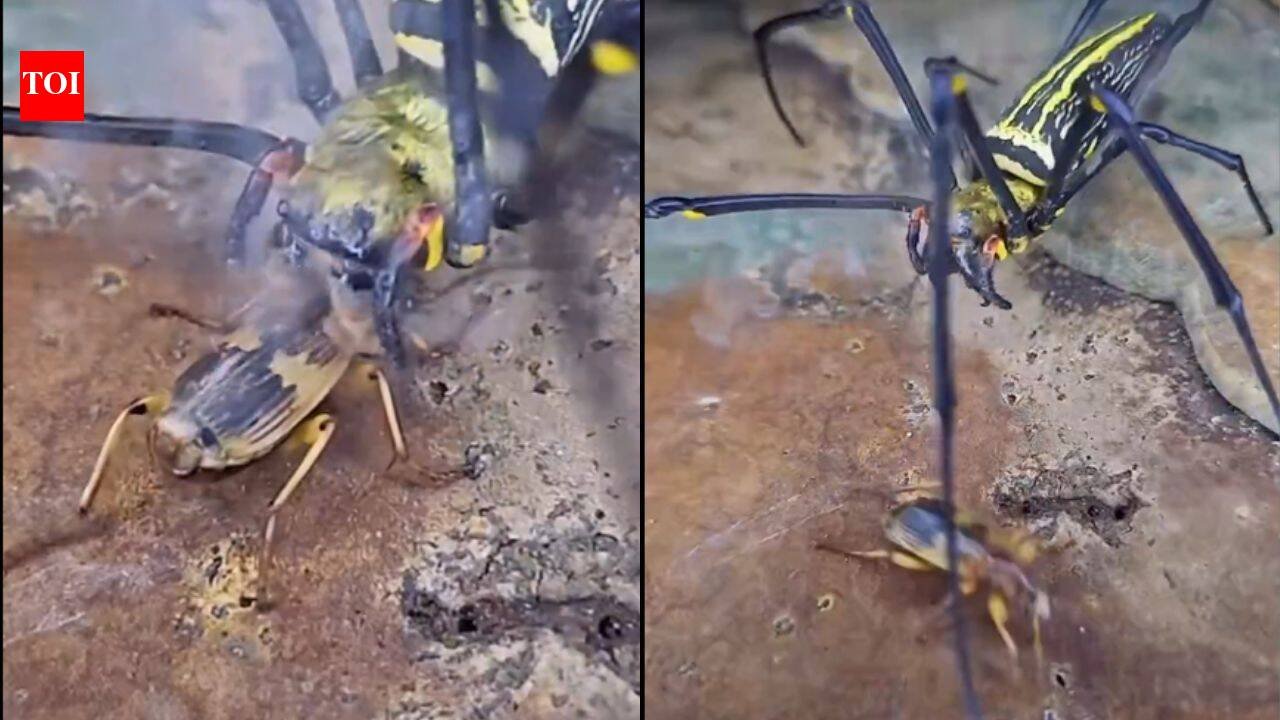
One can do anything when cornered by a threat, all in order to save themselves. Some scurry away in fear, others attack first. And then there are the bombardier beetles that go a step ahead and make a bomb! All insects are born with some kind of defence mechanism to protect themselves, it’s just that these ones have a special weapon in their armour.Why? Well, beetles are different from other insects. While they can fly, they cannot do so instantly. Their wings are stored under wing covers and have to be released before they can take to the air. Sort of like Hulk having to shed his everyday clothes before transforming into the green giant everyone knows. Since beetles cannot fly away when attacked, they have evolved emergency defences to use while they plot their escape plan.
The bombardier beetle
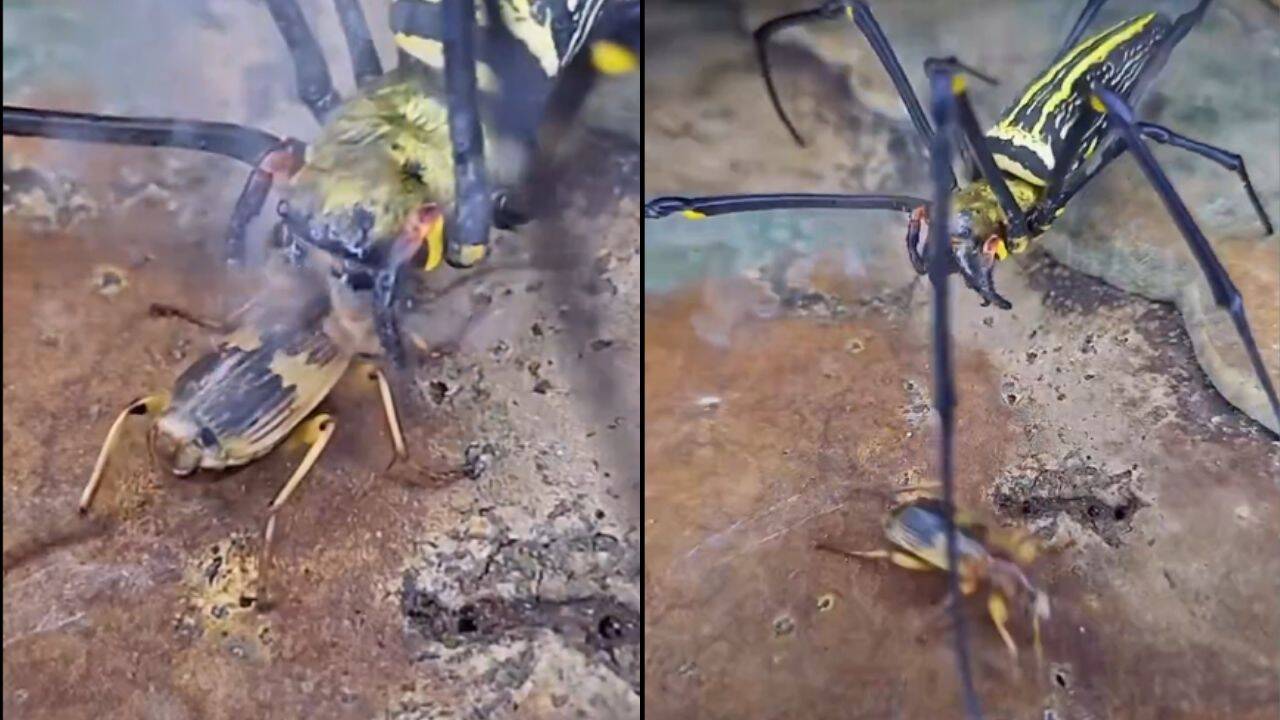
A bombardier beetle escaping a predator with the help of its defensive chemical bombs
There are more than 500 species of Bombardier beetle, in the tribes Brachinini, Paussini, Ozaenini, or Metriini and more than 40 species in US alone. They all display a highly effective defence mechanism. They have a highly accurate and violent chemical attack brought on when someone tries to touch them. The spray originates from a turret-like appendage under its abdomen which the beetle manoeuvres to achieve remarkable accuracy. It explodes out with an audible popping sound, in a volley of rapid-fire blasts, in a manner likened to the pulsing propulsion system of Germany’s V-1 “buzz bomb” in WWII. The consequent foul chemical burn incapacitates smaller attackers like ants, and deters larger predators such as frogs.But it is the chemistry of the spray that is truly astonishing. The irritant chemical is formed just prior to the launch by mixing the contents of two separate glands. One contains hydrogen peroxide and hydroquinone, while the other harbours a mixture of enzymes known as catalases and peroxidases that can react with hydrogen peroxide to form oxygen gas and water. When the contents of the two glands are mixed, oxygen forms and in turn reacts with hydroquinone to convert it to benzoquinone. This reaction is so highly exothermic that the chemical mixture can reach a temperature of 100 degrees C. Pressure due to the buildup of oxygen then causes the hot mixture of water and benzoquinone to be expelled with a “pop”.Bombardier beetles can launch their “chemical bombs” up to twenty times before running out of ammunition. They also aim the chemical sprays at the prey, using their rear ends like a noxious water pistol. And by that time, they will have succeeded in unfurling their wings and are ready to leave their attackers behind wallowing in their hot, toxic wake.
How do bombardier beetles survive their own explosions?
The beetles produce high-temperature reactions without injuring themselves, thanks to their internal structure and mechanisms of control. The nitrogen and hydroquinone are stored separately and then mixed in the beetle’s reaction chamber. The walls of the reaction chamber are designed to withstand the heat and pressure generated during the explosive reaction, thereby protecting its insides from injury.A 2022 study published in the journal PeerJ, explained how the structural adaptations and controlled mechanisms of release of the beetle allow it to create multiple explosive reactions without injuring itself. The pulsed releases of the hydroquinone-nitrogen reaction also prevent overheating, allowing the beetle to maintain its efficiency when creating multiple explosions.
How to spot a bombardier beetle?
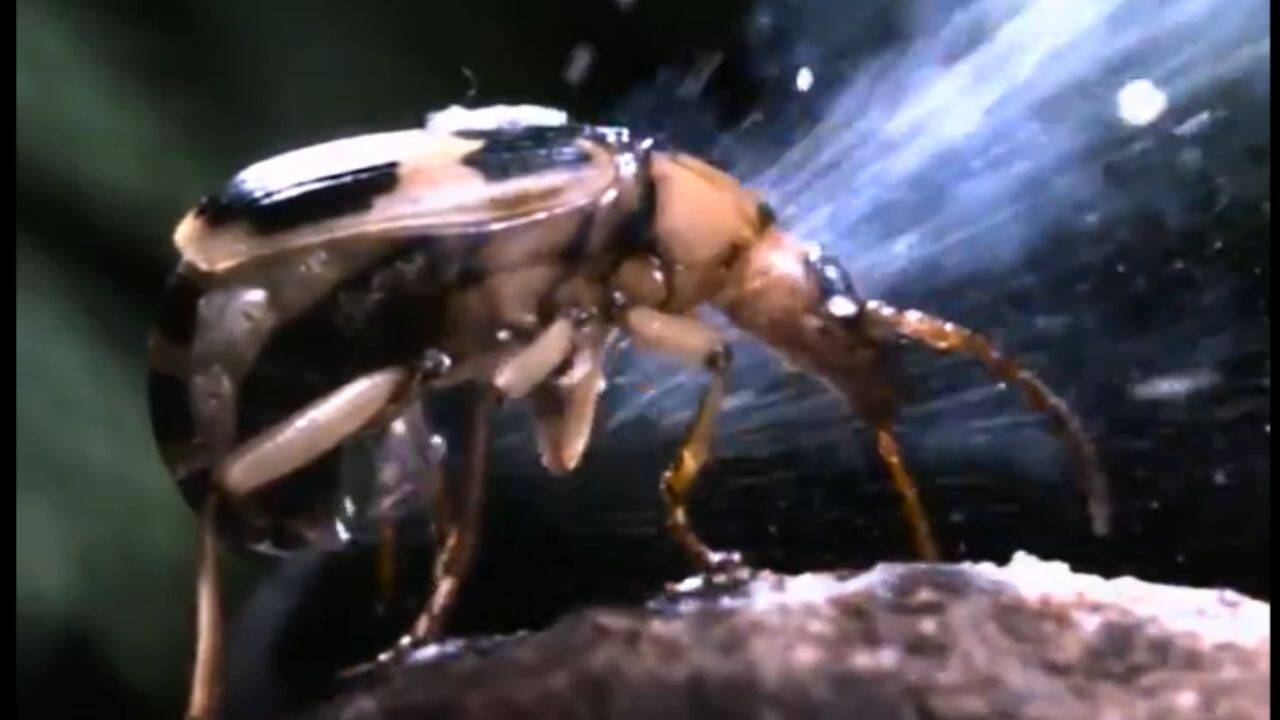
Most are around the size of a fingernail, and many have dark-colored abdomens with reddish legs, heads, and antennae.
Bombardier beetles live in many different ecosystems, from forests to grasslands to deserts. Most are around the size of a fingernail, and many have dark-colored abdomens with reddish legs, heads, and antennae. Their defences are hot enough to burn and stain human skin. To their fellow predators, they irritate their eyes and respiratory system, often inflicting painful but temporary incapacitation.Sometimes, their explosive emissions can even save their lives once they’ve been swallowed. Frogs, for example, have been known to regurgitate bombardiers after realising the insects weren’t exactly palatable.During mating, the male beetle deposits a sack of sperm into the female’s reproductive tract, where the eggs are fertilised. Though choices can differ by species, female bombardier beetles often lay their eggs in decaying, moist vegetation, where their worm-like larvae hatch.The larvae go through a series of moults as they grow, before reaching their final adult stage. As adults, they only survive for a few weeks and generally prefer feeding on young insects, but they will also scavenge on detritus helping decompose decaying vegetation. Bombardier beetles can navigate and hunt prey using a combination of eyesight and touch, relying on their antennae and sensitive hairs along their body to pick up vibrations.All bombardier beetles are in one of two subfamilies of ground beetles called Brachininae and Paussinae, with more than 50 genera combined.The bombardier beetle has fascinated many, including Charles Darwin, who reported that one of them fired “acid” into his mouth, apparently, he placed one in his teeth, unaware of its noxious emissions, while reaching for another specimen in the field. But the insects have also interested creationists, who’ve argued that this complex ability can’t be explained by Darwin’s famous theory of evolution.Biologists remain of the view that the beetle’s explosive emissions likely evolved incrementally. They theorise that the enzyme that allows the two chemical precursors to react started out weaker but became more specialised and effective over time, as has been shown to happen with other catalytic enzymes.