
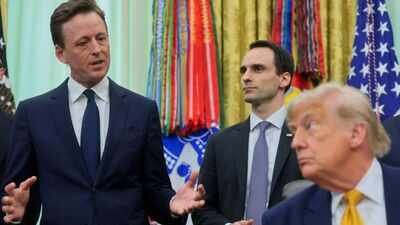
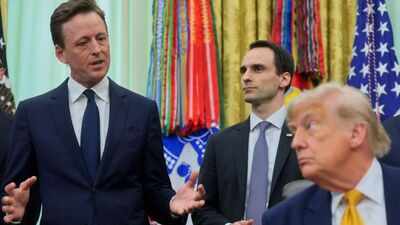
White House national cyber director Sean Cairncross is set to leave his post amid a spate of technology disruptions affecting critical infrastructure, financial institutions and government networks across the country. Kirsten Davies, currently the chief information officer at the Department of Defense, is expected to take over in an acting capacity.The reported departure comes amid a series of technology-related disruptions affecting critical infrastructure, financial institutions and government networks across the United States. Axios was first to report the personnel changes.A person close to the White House told news agency AFP on Thursday that Cairncross had been “fired” from the position. The source also said that US president Donald Trump “fully supported firing Sean Cairncross from his position”, citing concerns that he lacked the appropriate credentials for the role.However, a separate account cited by Fox News suggested that Cairncross did not wish to serve another two years in the position. His departure date remains unclear.According to NBC News, Davies, who currently serves as the Defence Department’s Chief Information Officer, will take over temporarily. The source said she had more appropriate credentials and had been confirmed by the US Senate.The National Cyber Director’s position requires Senate confirmation, making the appointment of a permanent successor a separate process. Cairncross has headed the Office of the National Cyber Director since August 2025. The office is responsible for coordinating cybersecurity policy and strategy across the federal government.Before taking up the position, Cairncross held several roles in the White House during Trump’s first administration. He also served as the Republican National Committee’s Chief Operating Officer during the 2016 election cycle. Cairncross declined to comment on his departure.The personnel change comes after a series of disruptions affecting major American technology and public services. These included a nationwide Federal Aviation Administration (FAA) ground stop, an outage affecting Microsoft’s Outlook email services, disruptions involving United Airlines and major banks, and a temporary interruption to an internal National Security Agency (NSA) communications network.The developments have prompted questions about the resilience of critical infrastructure and the administration’s handling of the incidents. However, the country’s top intelligence official said on Wednesday that the disruptions were separate service outages linked to maintenance and technical changes, rather than evidence of a coordinated or state-sponsored cyberattack.Financial institutions have also reported security concerns. JPMorgan Chase disclosed on Thursday that third-party service providers working with the bank had been targeted in a cyberattack. According to reports, information potentially exposed included customer names, email addresses, phone numbers and account identifiers. The bank said its investigation indicated that attackers accessed certain marketing data held by vendors.Trump, meanwhile, sought to play down public concerns over the disruptions. Speaking to Fox News ahead of the APEC Summit, he said, “Tell them to relax. Everything’s good. These are individual events. So, Chase Manhattan Bank, JPMorgan, it goes out. Somebody else goes out. And I also think that, the press is sort of having a lot of fun with it.”