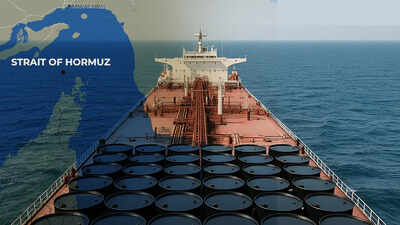
While Trump has described the blockade as highly effective, the continued flow of shipments points to the resilience of Tehran’s oil trade. (AI image)
US President Donald Trump has called the US naval blockade of the Strait of Hormuz a ‘tremendous success’ but its limitations are increasingly evident. Despite the US naval blockade, at least two fully loaded Iranian oil tankers have managed to exit the Persian Gulf this week, joining a group of vessels that successfully navigated past warships and delivered an estimated 9 million barrels of crude to global markets.Satellite imagery tracked by data intelligence firm Vortexa, quoted in a Bloomberg report, shows the Iran-flagged very large crude carriers, Hero II and Hedy, crossing beyond the US-designated line and entering the Arabian Sea on April 20. Together, these ships have the capacity to transport up to 4 million barrels of oil.
Their movement highlights the challenges faced by US efforts to restrict Iran’s oil exports. While Trump has described the blockade as highly effective, the continued flow of shipments points to the resilience of Tehran’s oil trade. Since the blockade was started last week, US naval forces have intercepted an Iran-linked cargo ship and boarded a sanctioned tanker in waters east of Sri Lanka, expanding the scope of enforcement.At the same time, tensions in the region remain elevated. According to the UK Navy, Iranian forces fired upon and severely damaged a container vessel near the strategic waterway on Wednesday.Also Read | Strait of Hormuz blockade: India, China’s alternate oil supply cushion fades as Russian crude on water runs low
Iran’s oil exports continue
Data from Vortexa indicates that Iranian exports have persisted despite mounting pressure. At least 34 vessels linked to Iran, including tankers and gas carriers, have crossed through the Strait of Hormuz and the US blockade zone, the Bloomberg report said. This monitored corridor extends from the Omani coast near Ras al Hadd up to the Iran-Pakistan border, as illustrated in a map shared by the US Navy.Among the ships that have passed through since early last week, 19 were outbound from the Persian Gulf, with 17 of them carrying cargo.Vortexa identified these movements through satellite tracking, as ships attempting to avoid US surveillance have largely switched off their transponders. The Hero II had last been spotted over a month earlier while heading north in the Strait of Malacca, while the Hedy’s most recent signal was recorded off Khor Fakkan toward the end of February.
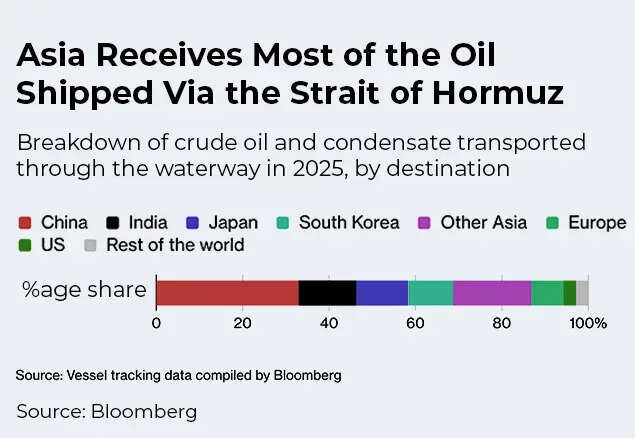
Where these cargoes are ultimately headed remains uncertain. Most of Iran’s crude shipments typically go to China, although India had taken delivery of two consignments in recent weeks before a US waiver lapsed.More vessels appear to be probing the limits of US enforcement. The G Summer, a small LPG carrier under US sanctions, passed through the strait on Tuesday and has since moved beyond the zone where the US Navy indicated it was maintaining a blockade. Similarly, the Gambia-flagged cargo vessel Lian Star, which crossed Hormuz the same day, is now positioned near that boundary and is sailing close to Iran’s coastline.Another ship, the Atlantis II, a long-range fuel tanker sanctioned by the US, began heading toward the strait late on Tuesday and is currently near Larak Island in Hormuz, according to tracking data. It was not immediately clear whether it was carrying any cargo.The LPG tanker Sevan is also nearing Hormuz, even though it has listed Sharjah in the UAE as its destination within the Persian Gulf. This vessel has previously transported Iranian cargo. Close by is the medium-range tanker Ocean Jewel, which has no known ties to Iran but is indicated by tracking data to be Chinese-owned and operated.Shipping database Equasis lists Al Anchor Ship Management FZE, based in the UAE, as the manager of Atlantis II, with ownership linked to the same address. LPG Sevan is owned and operated by Dubai-based Anka Energy & Logistics Co., while Ocean Jewel is managed by Shanghai-based Ocean Jewel Shipping Co. Ltd. None of these companies immediately responded to requests for comment.On Tuesday, President Donald Trump announced an indefinite extension of the ceasefire with Iran, while confirming that the blockade would continue. Meanwhile, roughly 800 vessels remain stranded in the Persian Gulf. The International Maritime Organization said it is working on a plan to evacuate these ships, subject to a reduction in hostilities.