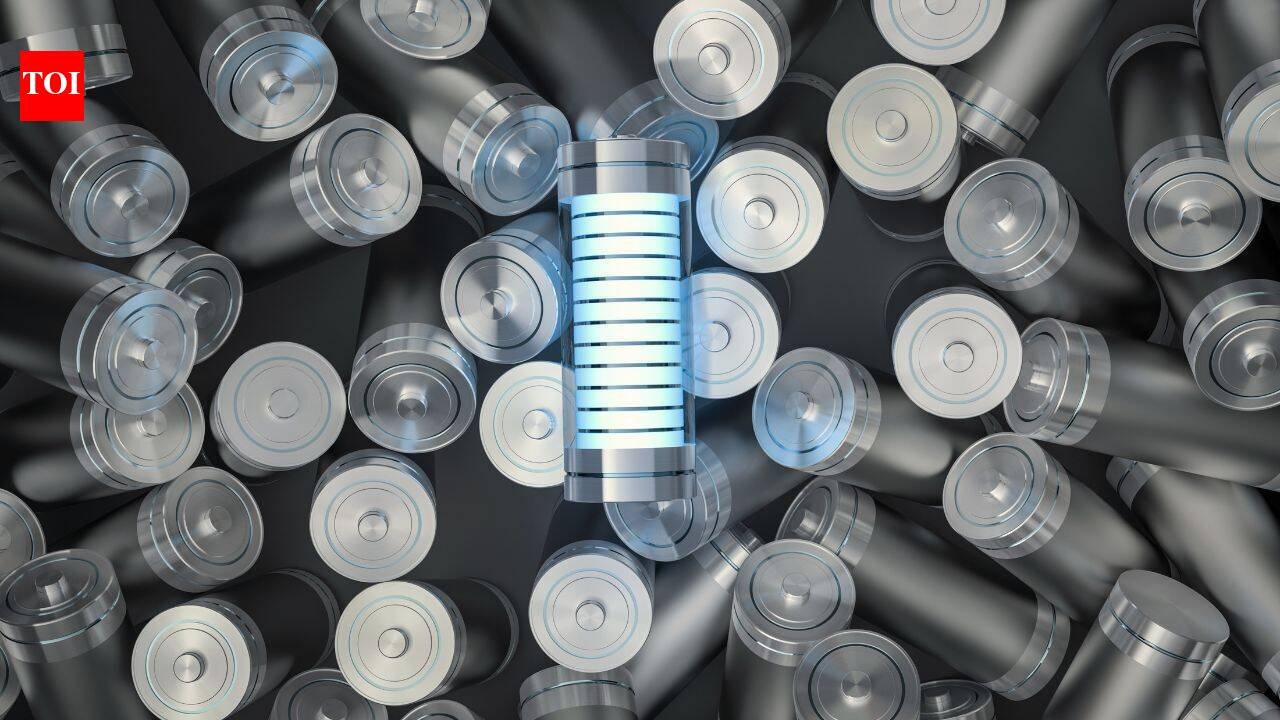
Batteries are a significant part of our everyday lives. We rely on them, from charging our phones to powering our electric vehicles. But as storing electricity safely, particularly on a large scale, remains a challenge, the question that arises is how we can find safer and more sustainable ways to do so?Researchers at University College London (UCL) have now developed a new chemistry that could make water-based batteries more capable of storing energy while retaining one of their biggest advantages: safety. According to UCL’s latest report on November 13, 2026, the research team has increased the energy-storage capacity of iodine, the material at the heart of their battery, by making it possible for it to participate in a reaction with four electrons instead of the usual two. The developed chemistry, published in Nature, with Dr Ruwei Chen as the first author and Professor Guanjie He as the corresponding author, helps address one of the longstanding limitations of aqueous batteries and brings them closer to practical use.
Why water-based batteries are attracting attention
Lithium-ion batteries are present in almost all major devices in our lives, from our laptops and smartphones to electric cars, and they are also being deployed in large facilities designed to store electricity generated by renewable sources. But the use of these batteries comes with its own great concerns, with the risk of fire heightened and possible environmental impacts from mining materials such as cobalt. It is to address this problem that researchers at UCL made a major breakthrough.A solution: Water-based, or aqueous, batteries use water-containing electrolytes, which are liquids that allow ions to move between the battery’s electrodes while charging and discharging. Since the chemistry behind this function is built on water, these batteries are less prone to fire than conventional lithium-ion systems. However, the catch is that, given the low energy density of these aqueous batteries, their practical use can be rather limited, despite being an appealing option. The researchers at UCL tackled precisely this problem.
The chemistry behind the breakthrough
The researchers focused on iodine, which has already been explored as a material for aqueous batteries. In conventional iodine-based battery reactions, iodine transfers two electrons during charging and discharging. The team found a way to enable it to transfer four instead, increasing the amount of energy that the material can store through the reaction.This was not simply a matter of adding more iodine to the battery. The challenge was getting the chemistry to work in water without triggering unwanted reactions. One of the forms of iodine involved in the process, known as hypervalent iodine cations, is highly reactive in aqueous environments. Previous approaches attempted to control this by using very concentrated halogen-containing electrolytes, but these could be corrosive, expensive and difficult to manufacture on a larger scale.Instead, the UCL-led team designed a new electrolyte chemistry that manages iodine’s reactivity at a molecular level. Some of the molecules in the electrolyte help prevent water from reaching the iodine, while others bind to reactive forms of iodine, helping to keep the chemical reactions under control. This allowed the researchers to work around the need for the highly concentrated, corrosive electrolytes used in earlier approaches.
Testing how well the battery holds up
The researchers tested their design in different configurations, such as pouch cells, which were similar in shape to those used in mobile phones and laptops, and coin cells, the small disc-shaped batteries that are typically used in devices with lower energy requirements.The team also examined how the battery performed over repeated charging and discharging cycles. In zinc-iodine batteries, the design retained almost all of its storage capacity even after thousands of cycles.The approach may not be limited to zinc-iodine batteries either. The researchers indicated that it could also be adapted to aluminium-iodine batteries. As reported by UCL, Professor Guanjie He stated, “This research demonstrates how fundamental chemistry and engineering can come together to address long-standing challenges in energy storage.”
Future of renewable energy
The potential of the study extends beyond just small electronic devices. Large-scale battery storage is important for making renewable energy sources more reliable, especially since solar and wind power are not always available at the exact same time as electricity is needed.At the centre of most scientific breakthroughs sits the curiosity and desire to address an issue, developing solutions that can help allay concerns in the real world. The scientists at UCL have hit the nail on the head with their new development, possibly designing safe and sustainable battery alternatives that are more viable in the future. As demand for energy storage continues to grow, breakthroughs like this could help bring safer ways of storing electricity a little closer to everyday use.