
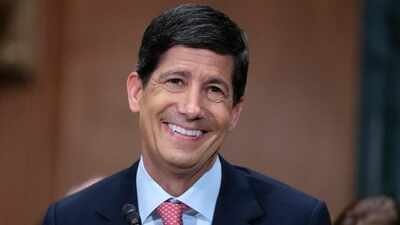
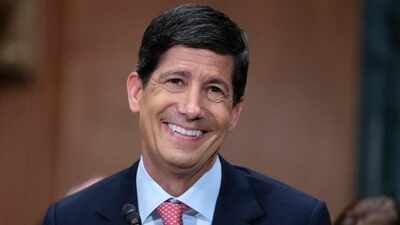
Kevin Warsh-led Federal Open Market Committee (FOMC) decided to keep the interest rate unchanged in the 3.5-3.75% range. The US Federal Reserve announced the monetary policy review after deliberations on July 28 and July 29. “The Committee decided to maintain the target range for the federal funds rate at 3-1/2 to 3-3/4 percent, in support of the Federal Reserve’s dual mandate. The Committee is continuing its policy of maintaining ample reserves in the banking system,” the statement read.“Economic activity is expanding at a solid pace despite elevated uncertainty that owes, in part, to the conflict in the Middle East. Productivity growth and capital investment are strong. Job gains have kept pace with the workforce, and the unemployment rate has changed little. Inflation remains elevated relative to the Committee’s 2 percent goal, in part reflecting supply shocks that have driven price increases in certain sectors, including energy,” the statement added.The US Federal Reserve, which began its two-day policy meeting on Tuesday, was widely expected to leave its benchmark interest rate unchanged. Inflation has remained above the US Fed’s 2% target for more than five years. Earlier this month, new Federal Reserve Chair Kevin Warsh told Congress that he had “no tolerance’’ for persistently high inflation. This week’s meeting is the second monetary policy meeting under his leadership.Oil prices have been highly volatile in recent weeks. Brent crude fell to as low as $72 per barrel earlier this month before surging to $102 last week amid uncertainty over whether the United States and Iran could reach an agreement to restore the free movement of oil tankers through the Middle East.These sharp fluctuations have revived concerns that inflation could accelerate again, just as price pressures had begun easing faster than economists had anticipated.Although higher interest rates help contain inflation, they can also slow economic growth and weigh on stock prices as well as other financial assets.Expensive growth stocks are particularly sensitive to higher borrowing costs, and investors have become increasingly cautious about semiconductor companies and other firms that have benefited from the artificial intelligence boom.Inflation has remained above the Federal Reserve’s 2% objective since early 2021, when the US economy rebounded strongly following COVID-19 lockdowns. It peaked at just over 9% in mid-2022 before gradually easing after the Fed raised interest rates 11 times during 2022 and 2023. Since then, however, progress in bringing inflation down has largely stalled.Apart from the conflict involving Iran, inflationary pressures have also been driven by President Donald Trump’s tariffs on imported goods and a surge in investment in AI-focused data centres, which has increased demand for computer chips, equipment and electricity.Core inflation, which excludes food and energy prices, moderated in June, partly because rental inflation slowed. A temporary decline in petrol prices during the month also helped keep overall inflation in check.Even so, several Federal Reserve officials have argued that further interest rate increases may be required to bring inflation back to the central bank’s 2% target.