
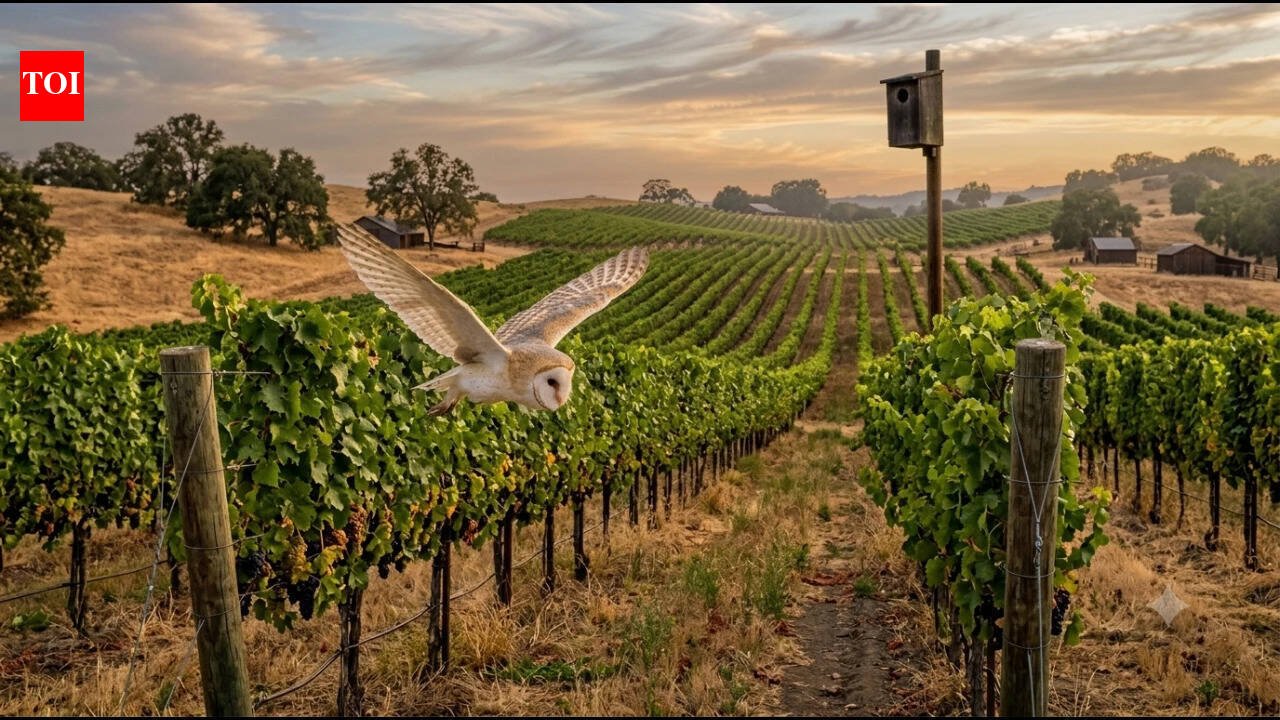
Barn owls can help vineyards reduce rodent damage in a natural way, by making rodents more cautious, and reducing their activity in vineyards, according to a new study from researchers in California.The study was focused on vineyards in Napa Valley, California, where rodents damage grapevines during the growing season. According to Science X, researchers found that vineyards with more barn owls had fewer rodents than those with very few or no owls. The findings suggest that having barn owls on vineyards could help farmers rely less on harmful pesticides for pest control.As temperatures rise in summer, vineyards provide ideal conditions for grape production. However, it also brings an increase in rodents that feed on and damage vines. Finding ways to control these pests has become an important goal for many growers.The research was carried out by Wildlife Professor Matt Johnson and graduate student Katherine Larson from Cal Poly Humboldt, along with Wildlife Professor Roger Baldwin from the University of California, Davis. Their findings have been published in the journal Ecological Applications.
The owl research programme
The new study is part of a larger barn owl research programme that began in 2015. Over the past decade, Johnson and his team have monitored more than 500 nest boxes installed across California’s wine-producing regions.The researchers carried out their study in six vineyards in Napa Valley during 2023. They wanted to understand not only whether barn owls reduced rodent numbers, but also whether the birds changed rodent behaviour.To measure this, the team used food trays placed in vineyards. By checking how much food rodents left behind, researchers estimated how threatened the rodents felt. Animals that fear predators usually spend less time feeding and leave more food untouched.At the same time, the scientists monitored nearby barn owl nest boxes to measure owl activity in each vineyard. They then compared rodent numbers and behaviour between vineyards with high and low barn owl activity.Vineyards with more barn owls had between 38% and 52% fewer rodents than vineyards where few or no owls were present.It was also found that rodents behaved more cautiously in places where barn owls were active. Their fear of predators increased by 16% to 38%, making them spend less time feeding.
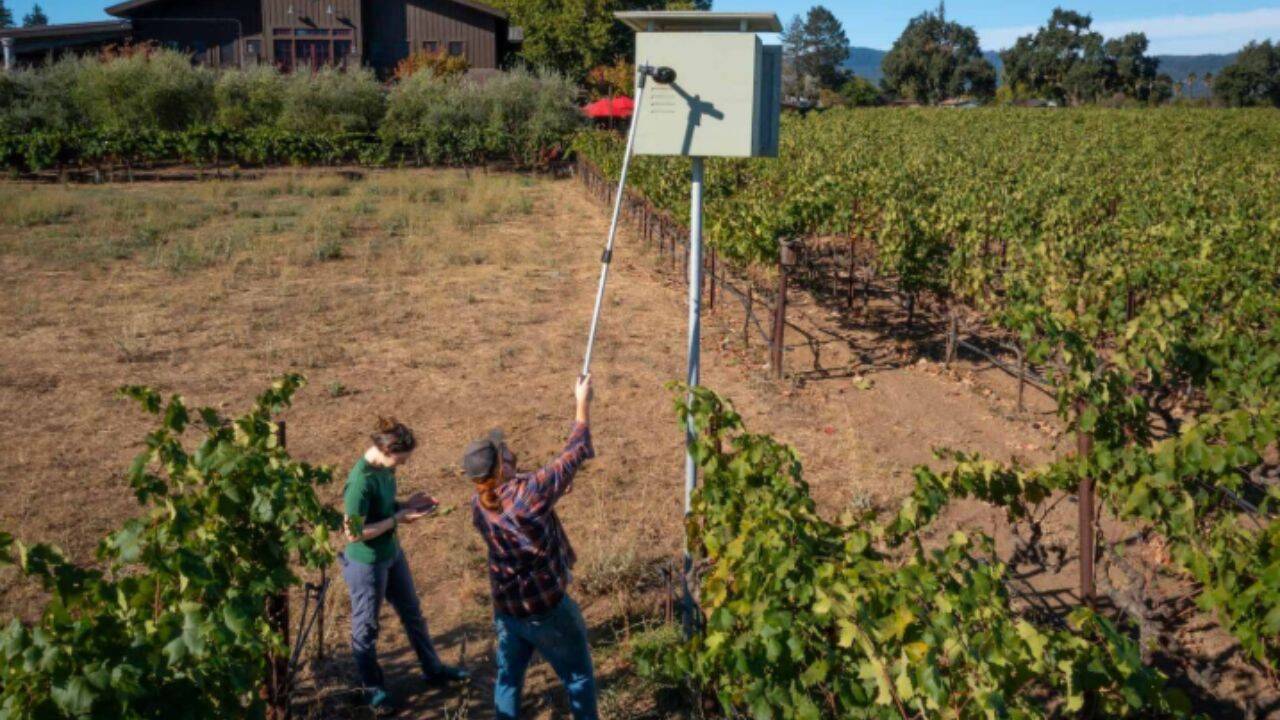
It can take between one and three years before a barn owl moves into a new nest box. Robert Biale Vineyards photo
How owls influence rodents
Researchers say predators do not always have to kill prey to reduce damage. When rodents know barn owls are nearby, they become more alert and avoid spending long periods feeding in open areas.The researchers also found that vegetation affected how well barn owls hunted. Barn owls mainly depend on their hearing to locate prey, while rodents rely largely on their eyesight to spot danger. Areas with more plant cover appeared to give the owls an advantage, allowing them to approach rodents more effectively.The researchers also found that between 30% and 75% of the nest boxes are occupied by breeding barn owls in any given year. The team has also identified the type of nest boxes that work best. Barn owls prefer tall wooden nest boxes around 24 inches high. The boxes are most successful when mounted on poles taller than 12 feet in areas with plenty of grassland and little nearby forest cover.According to the findings, one family of barn owls can remove up to 4,000 rodents in a year.
Natural pest control
The researchers say the study adds to the fact that natural predators can play an important role in agriculture, much more than chemicals would ever do.While encouraging natural predators such as barn owls could reduce dependence on chemical pest control, it can also supporting biodiversity.“For years, we’ve studied how wildlife and agriculture can work together. Wine grape systems provide a unique opportunity to demonstrate that biodiversity and farming can not only coexist but can create mutual benefits,” Johnson says.According to Ivo Jeramaz of Grgich Hills Estate in Napa Valley, one of the vineyards involved in the research, “We’ve been a part of Professor Johnson’s study since its inception in 2015, and the data he has shared with us over his years of research has been invaluable. It has allowed us to make informed decisions regarding our integrated pest management system, which has reduced rodent pressure significantly in our vineyards over the years,” he said.