
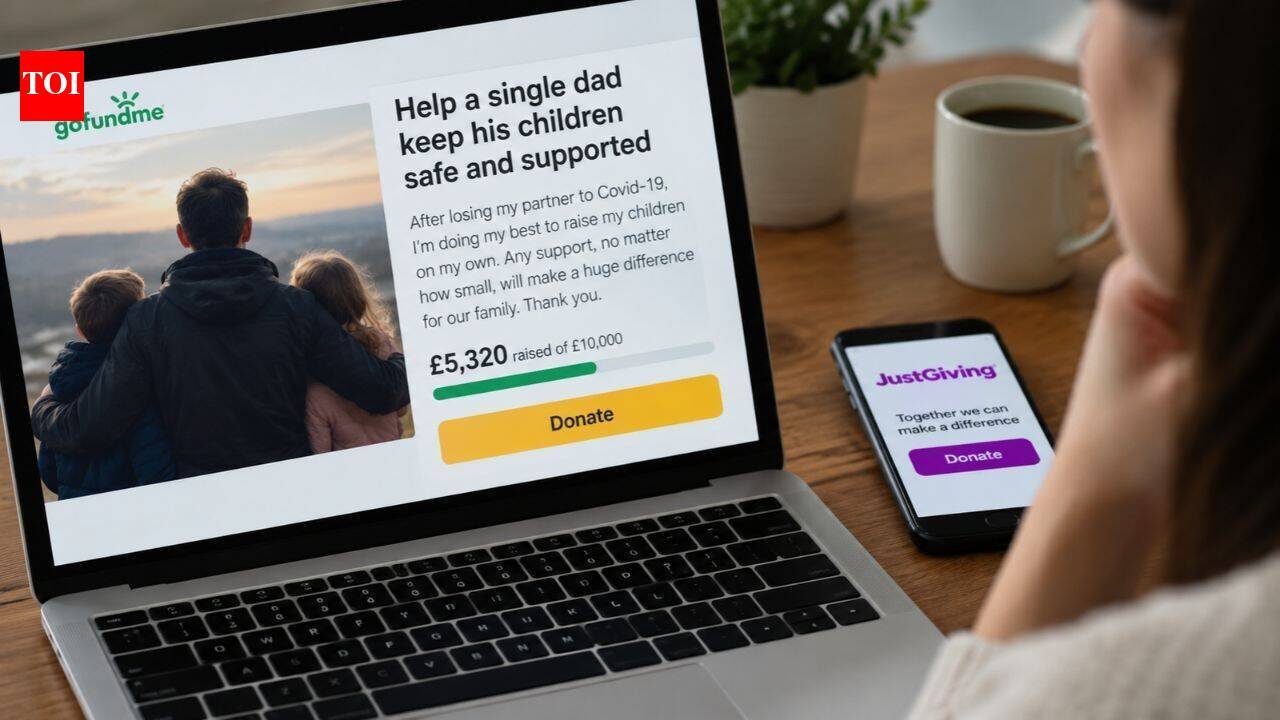
A man from Letchworth Garden City, Hertfordshire, used a heartbreaking story to persuade people to donate more than £10,000 to fake online fundraising appeals. Robert Ashton claimed that his partner had died from Covid-19 and that he was left to raise their children alone. People who believed his story donated money through GoFundMe and JustGiving, hoping to help a father going through a difficult time. But the tragedy he described was fabricated, and dozens of people ended up giving money under false pretences.
How did the UK man use fake GoFundMe and JustGiving appeals
According to Hertfordshire Constabulary, Ashton began creating fake social media accounts in early 2020, during the Covid-19 pandemic. He presented himself as a father who had lost his partner, the mother of his children, to the virus and was struggling to cope with the financial pressure of raising his family alone.He directed people to fundraising pages on GoFundMe and JustGiving, asking for money to help cover bills and support his children. The claims appealed to people who wanted to help a family they believed was dealing with bereavement and financial hardship.However, the story was fabricated. Instead of raising money for the reasons described in the appeals, Ashton obtained donations by misleading people about his personal circumstances. His activity continued over several years, eventually bringing in more than £10,000.
The human cost of the fundraising fraud
The impact went beyond the amount collected. Hertfordshire Constabulary reported that dozens of people had been affected, with many donors being elderly or vulnerable. Some could barely afford to give away the money they contributed.The donors believed they were helping a bereaved parent and his children during an exceptionally difficult period. Discovering that the story was false meant that their generosity had been exploited.The case also demonstrated how emotional appeals can influence people’s decisions. Stories involving the death of a loved one, struggling families and children in need can encourage people to donate quickly, particularly when they believe their contribution will make an immediate difference.Police also warned that there might be further victims who had not reported their experiences or had not realised they had been deceived.
Ashton received a prison sentence for his actions
Ashton, who was 37 at the time of sentencing and lived in Pascal Way, Letchworth Garden City, pleaded guilty to fraud. On 5 December 2023, St Albans Crown Court sentenced him to 12 weeks in prison and ordered him to pay £290 in compensation to victims, according to Hertfordshire Constabulary.The sentence followed a scheme that had taken advantage of people’s willingness to help someone they believed was facing personal tragedy. Although individual donations may have seemed small, together they amounted to more than £10,000.Police urged anyone who believed they had been affected by similar fraud to report it to Action Fraud, the UK’s national reporting service for fraud and cybercrime. Reporting suspected scams can help authorities identify patterns of offending and establish whether other people have suffered losses.

St Albans Crown Court. Image Credit: Wikipedia
How crowdfunding platforms work to prevent fraudulent appeals
Crowdfunding platforms give people a way to support individuals, families and causes by collecting donations online. However, the ease of setting up and sharing a fundraising page can also create opportunities for people to misrepresent their circumstances.GoFundMe explains that misleading information about an organiser, the intended recipient or the purpose of a fundraiser can raise concerns. The platform encourages people to report suspicious campaigns so they can be reviewed.It also describes safeguards intended to help protect donations. These include identity checks and reviews of fundraising activity by its Trust and Safety team, particularly when organisers prepare to withdraw money.Such measures can help identify problems, but donors should still examine an appeal carefully. A convincing personal story alone does not establish that the organiser’s claims are genuine or that donations will be used as promised.
What donors should do when a fundraising page looks suspicious
JustGiving provides advice for people who have concerns about a crowdfunding page. Its official guidance recommends contacting the page owner for clarification where appropriate. If the information appears misleading or the money may not be used for the stated purpose, the platform can be contacted to review the concern.Before contributing, donors should check who organised the appeal, who will receive the money and how the funds are expected to be spent.