
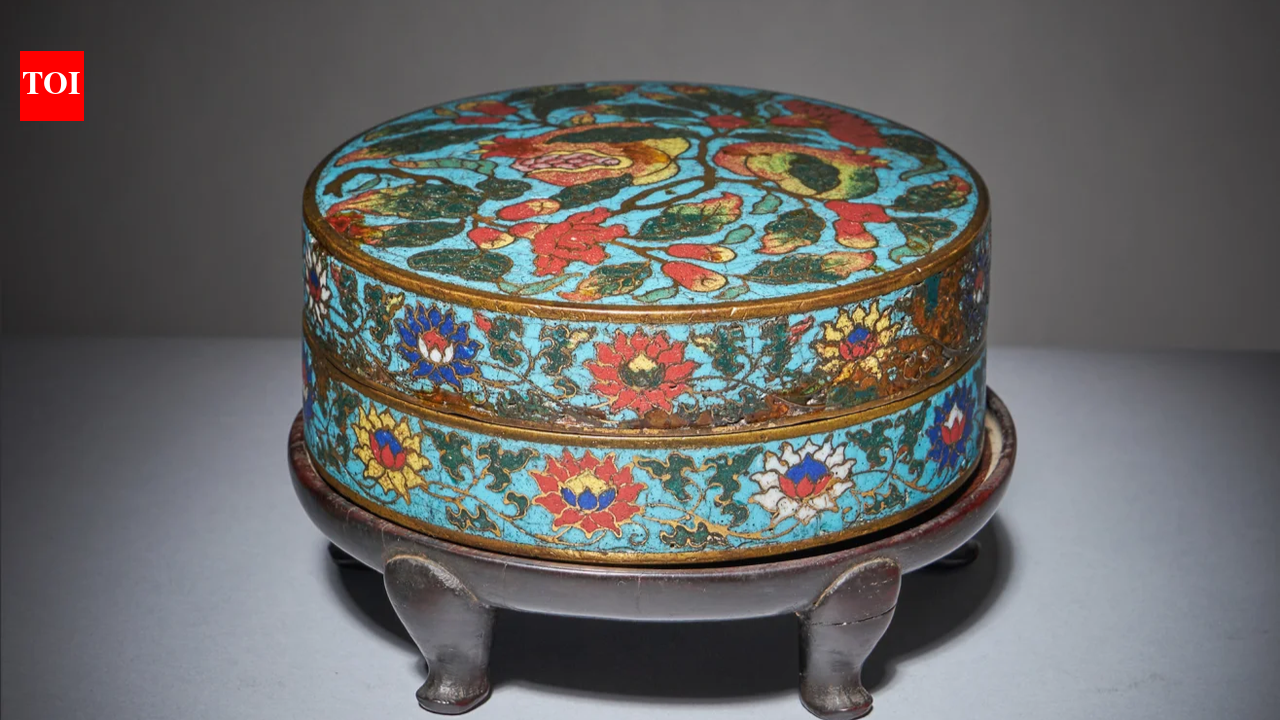
A Chinese enamel box bought for £19 at a London auction in 1946 has sold for £288,000 after being rediscovered in a family attic, where it had remained largely unnoticed for decades.The 15th-century object, known as a cloisonné pomegranate box, went under the hammer at Dreweatts auction house in Berkshire with an estimate of £6,000 to £10,000. Competitive bidding pushed the final price far beyond that range, with an Asian private collector securing the piece.The box belonged to Major Edward Copleston Radcliffe, who bought it at Sotheby’s in 1946. After he died in 1967, it remained among other objects in his collection until his family sent the items to Dreweatts for assessment.
Rare Chinese box dates back to 15th century
Dreweatts specialists Mark Newstead and Yingwen Tao recognised the box’s significance during their examination of the collection. The piece dates to the Ming dynasty and bears the reign mark of Xuande, the fifth emperor of the dynasty, who ruled from 1426 to 1435.The box was made in the 15th century in imperial workshops near Beijing’s Forbidden City, according to the auction house. It is decorated with pomegranates, branches and blossoms. The fruit was associated with fertility in Chinese symbolism.Cloisonné is a decorative technique in which thin metal strips form compartments that are filled with enamel. Early Ming examples bearing the Xuande mark are particularly scarce, as production was closely controlled by the imperial court.Newstead, Dreweatts’ director of Asian ceramics and works of art, said the box’s discovery among less valuable items in an attic was remarkable.He said the auction attracted strong competition from nine telephone bidders before a private collector in Asia won the lot.
One of few surviving examples
The box is among a small number of known examples of Xuande-marked pomegranate boxes. According to Dreweatts, only five are known to exist, with three held by museums or other institutions and one in another private collection.The newly rediscovered box had previously been displayed at the National Gallery of South Africa during a Chinese exhibition in Cape Town in 1953. It was subsequently believed to have been lost from public view.Its sale price of £288,000 was substantially above the upper estimate of £10,000. The result also returned the object to the auction market for the first time since Radcliffe purchased it in 1946.“There was very strong bidding between nine telephone bidders, with a private collector in Asia finally winning out,” Newstead said.