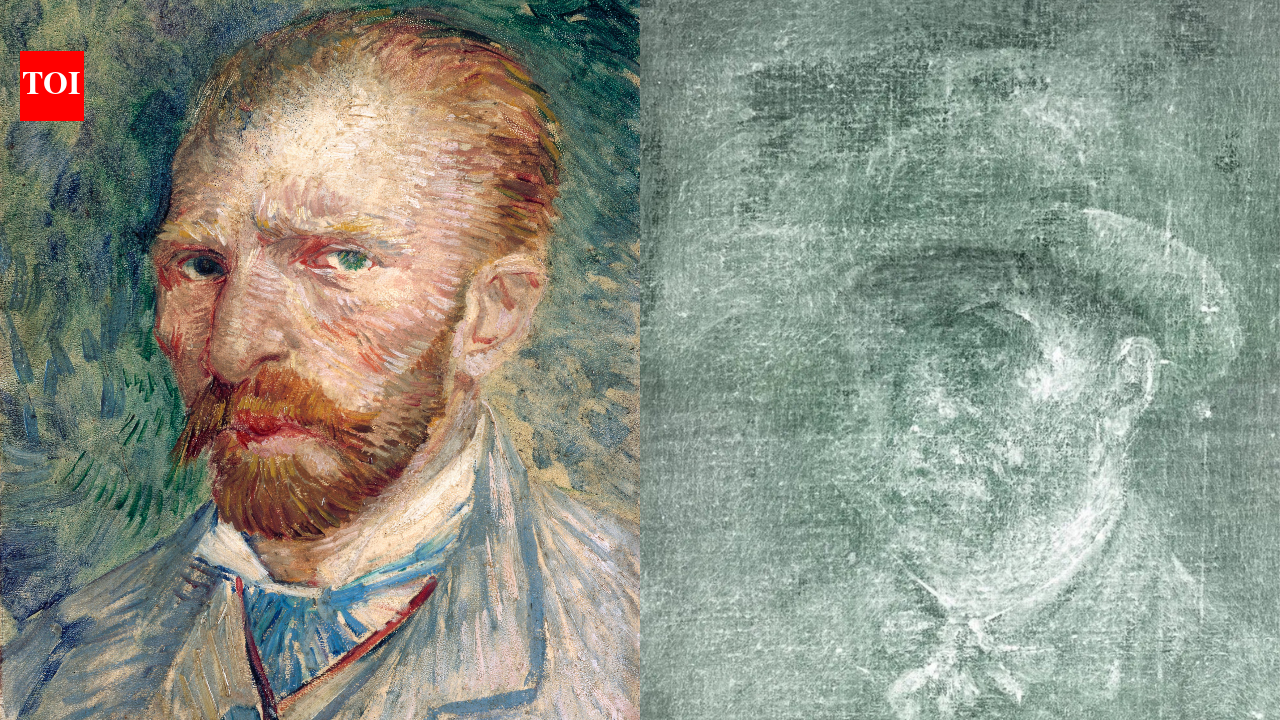
“How can I be useful, of what service can I be? There is something inside me, what can it be?” Van Gogh said. Although the quote referred to the internal world, the news coming from the National Galleries of Scotland is proving it true for his art as well. Whenever we talk about art, among the few pictures that come to mind is the beautiful Starry Night by the famous Vincent van Gogh. So much so that it has now become a part of pop culture. You can see Van Gogh-inspired art everywhere, from tote bags to T-shirts. The once lesser-known artist has become the embodiment of omnipresence.Do you know that a few years ago, in 2022, experts at the National Galleries of Scotland found a centuries-old, previously unknown self-portrait of the artist? Before the commencement of an exhibition, conservators were examining the canvas using X-rays when a hidden portrait was discovered. The self-portrait, concealed for more than a hundred years, was covered by layers of glue and cardboard on the back of an earlier work called Head of a Peasant Woman.All the members, including senior conservator Lesley Stevenson, were shocked to find the artist’s eyes looking back at them.Van Gogh lived a humble life; his work did not sell during his lifetime, and the craze for his art came only after his death in 1890, at the age of 37. Due to poverty, the artist often reused canvases to save money, mostly by turning them over and working on the other side. Who knew that the once-unknown artist would become the face of Western art history?
What did the X-ray reveal about the hidden portrait?
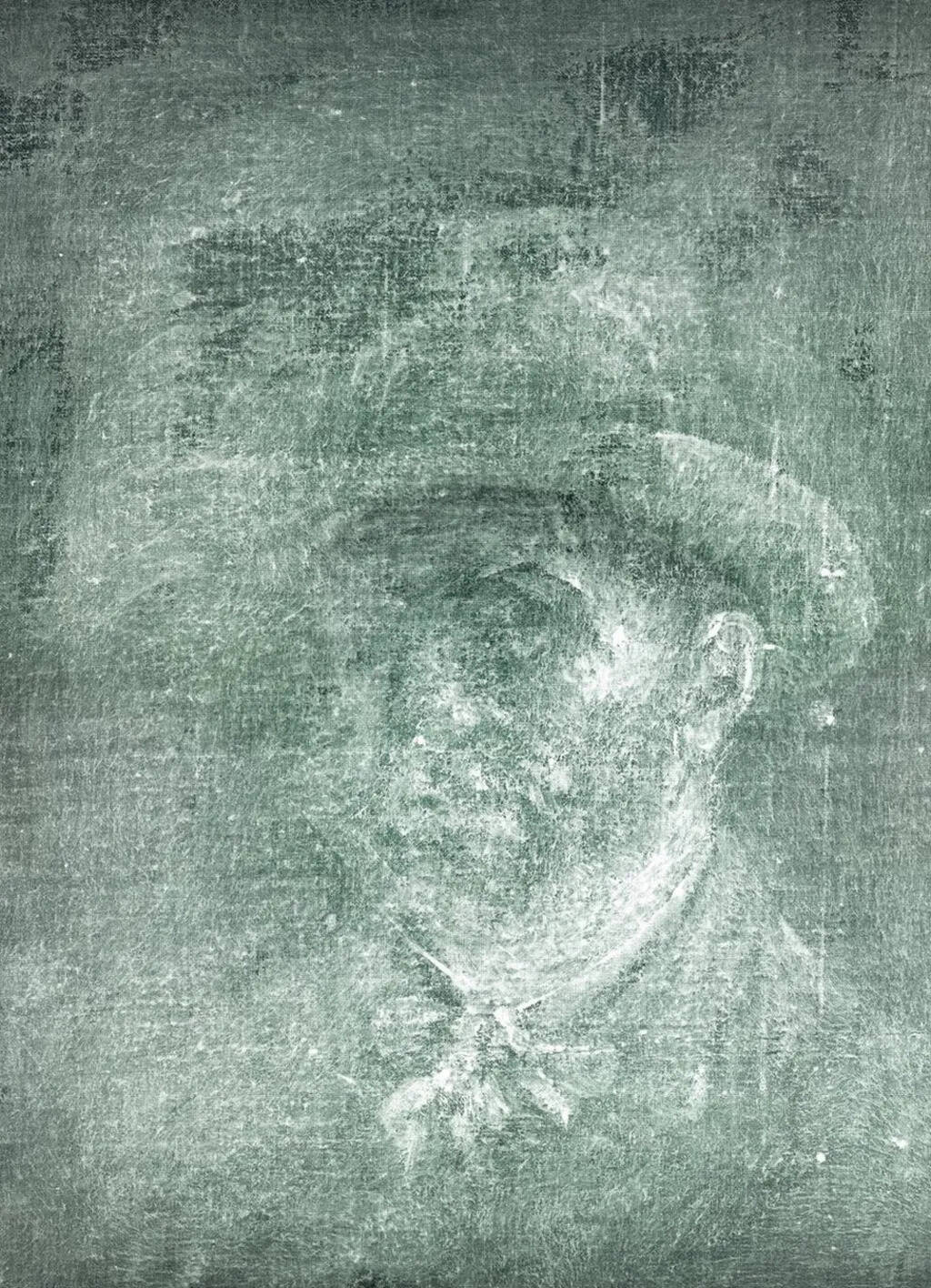
The hidden portrait of van Gogh (National Galleries of Scotland)
Sometimes, what we are looking for outside is sitting right next to us. The exclusive painting was not found at another exhibition or auction; it was discovered during a routine check of Head of a Peasant Woman, painted in 1885. Conservators at the National Galleries of Scotland were examining the artwork as part of a cataloguing exercise ahead of the exhibition A Taste for Impressionism when the X-ray images revealed the face hidden on the reverse side of the canvas.The image showed a bearded man wearing a brimmed hat and a loosely tied neckerchief, staring directly at the viewer. One side of his face appeared in shadow, while his left ear was clearly visible. The intense gaze and recognisable features helped experts identify the figure as Van Gogh himself. What makes the discovery particularly interesting is that the portrait had remained concealed even though the painting had been part of the gallery’s collection for decades.
Why was the self-portrait covered up?
As mentioned earlier, Van Gogh had a habit of reusing canvases due to extreme poverty. The layers of glue and cardboard covering the portrait were believed to have been added in the early twentieth century, possibly when the painting was being prepared for an exhibition. They concealed the image on the reverse, leaving it hidden for more than a hundred years, away from the eyes of viewers.The habit of reusing canvases was not limited to this painting. He created several works on the reverse sides of earlier canvases, particularly during periods when money and art supplies were limited. The National Galleries of Scotland noted that other examples of double-sided paintings by the artist exist in collections around the world, including the Van Gogh Museum in Amsterdam.The discovery therefore adds to an already known aspect of his working life. Instead of treating the canvas as a surface that could be used only once, Van Gogh sometimes turned it around and began again. In this case, the decision left behind an unexpected second work, one that remained out of sight long after the artist’s death.
What happened to the hidden portrait?
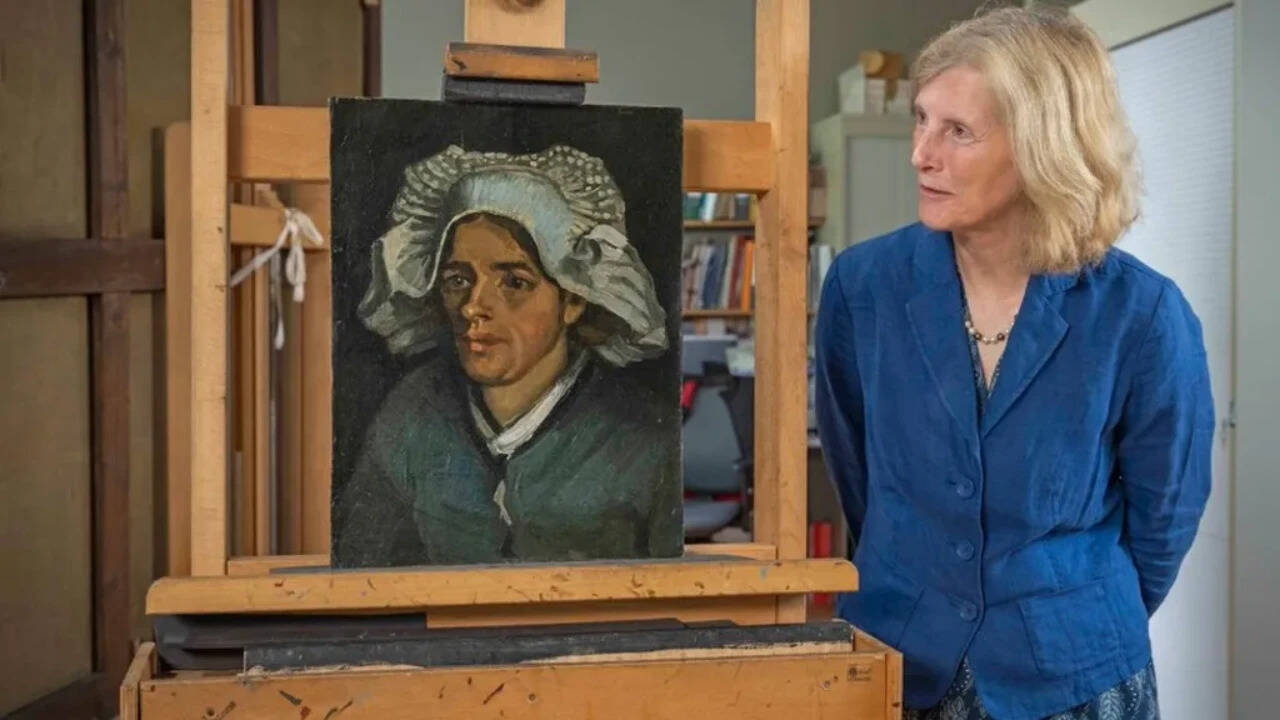
Image- National Galleries scotland
While the X-ray allowed experts and art lovers to view the portrait, uncovering the original painting was a much more complicated task. The layers of glue and cardboard had been attached to the canvas for decades, and removing them without damaging the delicate paint beneath required extensive conservation work.The challenge was to reveal the portrait without harming either artwork. Head of a Peasant Woman itself is an important work, and any attempt to remove the backing would have to account for the condition of both paintings. Conservators therefore had to investigate whether the materials could be separated safely before proceeding.In the meantime, visitors to the 2022 exhibition A Taste for Impressionism at the Royal Scottish Academy in Edinburgh could see the hidden portrait through an illuminated display of its X-ray image. It offered a rare opportunity to look at a painting that had remained concealed for more than a century, without disturbing the original canvas.