

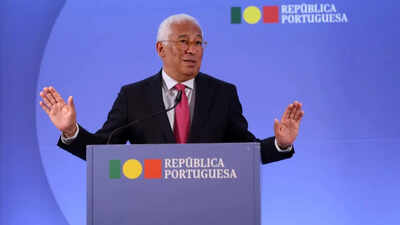
Europe wants Big Tech to pay its bills for the next seven years, turning the world’s largest digital companies into a potential source of fresh revenue.The move comes as the bloc grapples with competing spending priorities, mounting financial demands and disagreements among member states over how much money should be spent.European Council President Antonio Costa proposed taxing the world’s biggest digital companies on Saturday while unveiling a revised spending plan for 2028-2034. He also suggested cutting 204 billion euros ($224 billion) from the European Commission’s original budget proposal as the bloc seeks to reach an agreement on its long-term finances before the end of the year.The proposed tax would make some of the world’s largest digital companies contribute directly towards the European Union’s common budget. The move reflects Brussels’ push to find new sources of revenue beyond contributions from member states, particularly as the bloc faces growing demands for investment in defence, technology, infrastructure and economic competitiveness.Major American technology companies, including Google, Apple, Amazon, Meta and Microsoft, could come under scrutiny if the proposal takes shape. However, Costa’s announcement does not specify the tax rate, the companies that would be covered or how the levy would be collected.What is the EU budget and why does it need the moneyThe European Union’s long-term budget, formally known as the Multiannual Financial Framework (MFF), is a seven-year financial plan that determines how much money the bloc will collect and spend on common priorities.The European Commission had proposed a budget of nearly 2 trillion euros for 2028-2034, aimed at strengthening Europe’s economy, security and global competitiveness.The money is used to fund a wide range of programmes, including agricultural support for farmers, regional development, infrastructure, scientific research, education, climate initiatives, border security and defence. It also supports European industries, technological innovation and development partnerships with countries outside the bloc.Under the Commission’s original proposal, 865 billion euros was earmarked for regional development and cohesion, while 409 billion euros was allocated to improving Europe’s competitiveness through research, innovation and industrial investment. Another 200 billion euros was proposed for international partnerships.However, the proposed budget has faced resistance from several member states, which want to limit spending and reduce their financial contributions. Costa’s suggested 204 billion euro reduction is an attempt to bridge these differences while keeping the bloc’s spending priorities intact.Why is the EU proposing budget cutsThe proposed 204 billion euro reduction highlights a growing disagreement among EU member states over how much the bloc should spend and who should bear the financial burden.Wealthier countries, including Germany, Sweden, Denmark, the Netherlands, Austria and Finland, have pushed for a smaller budget and lower national contributions.On the other side, France and several southern, central and eastern European countries want to protect funding for agriculture and regional development. They argue that reducing these allocations could hurt farmers, rural communities and economically weaker regions that depend on EU support.The disagreement comes as the bloc faces pressure to spend more on defence, technological development and industrial competitiveness while managing demands for fiscal discipline. Costa’s revised proposal seeks to strike a balance between these competing priorities and secure an agreement before the end of 2026.What does this mean for the USThe proposed tax could put American technology companies at the centre of a fresh dispute between Washington and Brussels, as many of the world’s biggest digital firms, including Google, Apple, Amazon, Meta and Microsoft, are headquartered in the United States.If adopted, an EU-wide digital tax could increase the financial burden on these companies for doing business in the European market. It could also revive concerns in Washington that European tax and regulatory measures disproportionately target American technology firms.For US President Donald Trump, the proposal could become another point of friction with European leaders, particularly given his administration’s previous criticism of EU actions against American technology companies. Any move perceived as unfairly targeting US businesses could complicate trade relations between the two sides.