
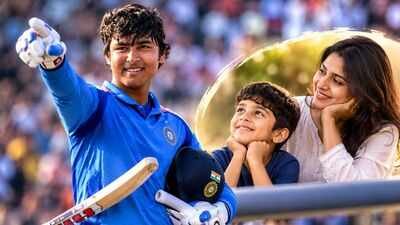
A fast bowler runs towards the crease, sends a delivery flying at the batter and expects a defensive response. But 15-year-old Vaibhav Sooryavanshi often seems to have a different plan. Instead of allowing the speed of the delivery to dictate his next move, he looks for an opportunity to attack. His fearless approach to fast bowling has made him one of the most exciting young batters in Indian cricket. But beyond the sixes, records and remarkable strokeplay, there is an interesting lesson for parents.How do children develop the confidence to face situations that appear intimidating? Why do some children attempt difficult things while others hesitate because they are afraid of making mistakes? Psychology research offers some useful answers. And while a cricket match cannot be directly compared with the challenges children face while growing up, Sooryavanshi’s journey provides an interesting starting point for understanding confidence, preparation and the importance of believing in one’s abilities.
5 Oct 2026 | 12:06
Parents, when your child refuses to greet relatives, do you make them say hello or respect their choice?
The lesson is not to raise children who never feel afraid. It is to help them develop the confidence to try, even when something feels difficult.
Confidence grows when children get opportunities to practise
One reason Sooryavanshi’s batting stands out is that his aggressive approach was not developed overnight. According to a report by Hindustan Times, his childhood coach Manish Ojha revealed that the youngster would sometimes face 500 to 600 deliveries during a practice session. If he wanted to improve a particular shot, he would repeatedly practise that stroke.He was also exposed to older and more experienced bowlers from a young age, including Under-19, Under-23 and Ranji Trophy players. This gave him opportunities to face challenges beyond his age group and become familiar with different bowling styles.This connects with an important psychological concept called self-efficacy, which refers to a person’s belief in their ability to accomplish a particular task. Psychologist Albert Bandura identified successful experiences of overcoming challenges as an important source of self-efficacy. When children attempt something difficult and gradually become better at it, they develop greater trust in their abilities.For parents, the takeaway is simple: do not always make things easier for children. Give them age-appropriate challenges and opportunities to practise. Whether it is learning to ride a bicycle, speaking in front of a class or participating in a competition, allowing children to try repeatedly can help them recognise their own progress.
Let children experience challenges instead of protecting them from everything
A parent’s first instinct is often to protect a child from disappointment, embarrassment or failure. However, preventing children from experiencing every uncomfortable situation can also limit their opportunities to develop confidence. A study published in the Journal of Anxiety Disorders in 2013, titled ‘You can do it! The role of parental encouragement of bravery in child anxiety treatment’, examined how parents encouraged children to approach situations that made them anxious.The researchers found that children whose parents encouraged brave behaviour tended to show better treatment outcomes. The study highlighted how allowing children to approach difficult situations, make mistakes and experience discomfort can help them develop confidence in their ability to cope.This does not mean parents should force children into situations that overwhelm them. Instead, they can provide reassurance while encouraging small steps towards overcoming a challenge. For instance, if a child is nervous about participating in a school competition, parents can help them practise, acknowledge their concerns and encourage them to give it a try. The goal is not to remove every fear but to help children discover that they can handle situations even when they feel nervous.
Allow children to make decisions and trust their abilities
Another important part of developing self-confidence is giving children the freedom to make age-appropriate decisions. A 2024 study published in Behavioral Sciences, titled ‘The Relationship between Parental Autonomy Support and Children’s Self-Concept in China: The Role of Basic Psychological Needs‘, examined 3,109 children aged 6 to 13.The researchers found a significant relationship between parental autonomy support, children’s psychological needs and their self-concept. The study suggested that allowing children to make choices, respecting their perspectives and supporting their interests can contribute to how they see themselves.It also found that parental control had a consistently negative relationship with children’s self-concept. The researchers emphasised that children need both appropriate independence and parental involvement. This offers an interesting parenting lesson.Parents do not have to make every decision on behalf of their children. Allowing them to choose their hobbies, solve age-appropriate problems and take responsibility for small tasks can help them develop a sense of independence. For example, instead of immediately telling a child how to complete a school project, parents can ask, “How do you think we should approach this?” Such conversations allow children to think independently and understand that their opinions matter.
Teach children that mistakes are part of growing up
Perhaps the biggest lesson from Sooryavanshi’s cricket journey is that confidence does not mean getting everything right. Even talented athletes experience poor performances, difficult matches and disappointing results. What matters is how they respond afterwards. In November 2026, before his record-breaking 204-run innings against UAE in Doha, Sooryavanshi had experienced a relatively lean period. Speaking about that phase, he admitted that he was distracted and worried about his performances.He also revealed that a conversation with his idol Yuvraj Singh helped him work through those concerns. He subsequently reviewed his batting, identified areas he needed to improve and returned to the crease with a clearer approach. This is particularly relevant to parenting. A 2025 study examining 231 recorded conversations between mothers and their eight-year-old children explored how discussions about disappointment and failure were associated with children’s fear of making mistakes.The research highlighted the importance of acknowledging children’s emotions, helping them develop an action plan and identifying resources they can use to deal with setbacks. Parents can put this into practice by changing how they respond when children fail. Instead of asking, “Why did you get this wrong?”, they can ask, “What did you learn from this experience?” or “What would you like to try differently next time?” This helps children understand that one disappointing result does not define their abilities.
Raising children who believe in themselves
Vaibhav Sooryavanshi’s batting offers more than an example of fearless cricket. His early exposure to challenging bowlers, repeated practice and willingness to trust his strengths illustrate how confidence can develop through experience. For parents, the lesson is not to raise children who are fearless all the time or expect them to succeed at everything they attempt.It is to create an environment where children feel supported enough to try unfamiliar things, make mistakes, ask questions and learn from difficult experiences. Sometimes, this means stepping back instead of immediately solving their problems. At other times, it means offering encouragement when they doubt themselves.Children do not become self-assured simply because adults keep telling them they are capable. They develop confidence when they get opportunities to experience their own capabilities. And perhaps that is the most valuable lesson parents can take from the young cricketer’s journey: The aim is not to teach children that they will never face difficult situations but to help them believe they can find a way through them.