QS Asia University Rankings 2027: India has expanded its presence in Asia’s university rankings, but its leading institutions are finding it harder to keep pace with regional competitors. The QS World University Rankings: Asia 2027 feature 325 Indian universities, including 34 new entrants, making India the region’s second most represented higher education system after Mainland China.The rankings, according to the supplied QS release, cover 1,722 universities across 26 higher education systems. Despite India’s growing representation, all six of its highest-ranked institutions have slipped in the latest edition, pointing to the challenge of converting a larger higher education footprint into stronger positions at the top.
IIT Delhi remains India’s highest-ranked university
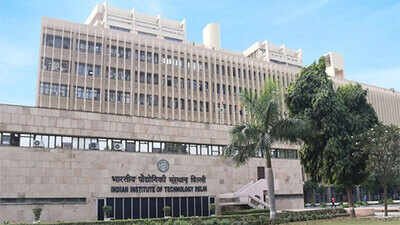
The Indian Institute of Technology Delhi (IIT Delhi) retains its position as the country’s highest-ranked institution, although it falls from 59th to 66th in Asia. The Indian Institute of Science (IISc) Bengaluru stands second among Indian institutions at 79th, followed by IIT Bombay at 83rd.IIT Madras ranks 85th, while IIT Kharagpur and IIT Kanpur occupy the 90th and 97th positions, respectively. All six institutions have dropped compared with the previous edition.The University of Delhi has also moved outside Asia’s top 100, falling from 95th to 106th. Other institutions have recorded more encouraging movements. Chandigarh University rises from 109th to 104th, while Lovely Professional University improves from 187th to 154th.
Where India’s leading universities stand
| Indian institution | QS Asia 2027 rank | Previous rank (2026) |
| IIT Delhi | 66 | 59 |
| IISc Bengaluru | 79 | 64 |
| IIT Bombay | 83 | 71 |
| IIT Madras | 85 | 70 |
| IIT Kharagpur | 90 | 77 |
| IIT Kanpur | 97 | 77 |
| Chandigarh University | 104 | 109 |
| University of Delhi | 106 | 95 |
| Jawaharlal Nehru University | 128 | 130 |
| Lovely Professional University | 154 | 187 |
The broader picture is mixed. India now has 21 universities in Asia’s top 200, compared with 20 in the previous edition and 17 in 2018. At the same time, 71% of its ranked institutions have fallen, while 18% have improved and 11% remain stable.
Regional competition intensifies
The University of Hong Kong retains first place for the second consecutive year, followed by Peking University. Tsinghua University rises from ninth to third, giving Mainland China two institutions in the top three.City University of Hong Kong and The Chinese University of Hong Kong occupy fourth and fifth positions. Singapore’s National University of Singapore and Nanyang Technological University fall to sixth and eighth, respectively.The shifts illustrate how difficult it can be to maintain a position when more institutions enter the rankings and established universities improve their performance.
Research strength offers an opportunity
India’s performance is stronger on specific research indicators than its overall rankings might suggest. Five Indian universities feature in Asia’s top 10 for Papers per Faculty, which measures research publications relative to academic staff. Fifteen Indian universities also share first place for Staff with PhD.However, research impact and international engagement remain areas where Indian institutions have room to improve.The results therefore present two parallel stories: India is expanding its representation and building research capacity, but it must strengthen performance across multiple measures to improve its standing among Asia’s leading universities.For students, the rankings provide a useful starting point for comparing institutions, but an overall position should not be the only consideration. Course quality, faculty expertise, fees, placements and campus opportunities remain important when choosing a university.